PRODUCTS
Sealing & Cushioning Components
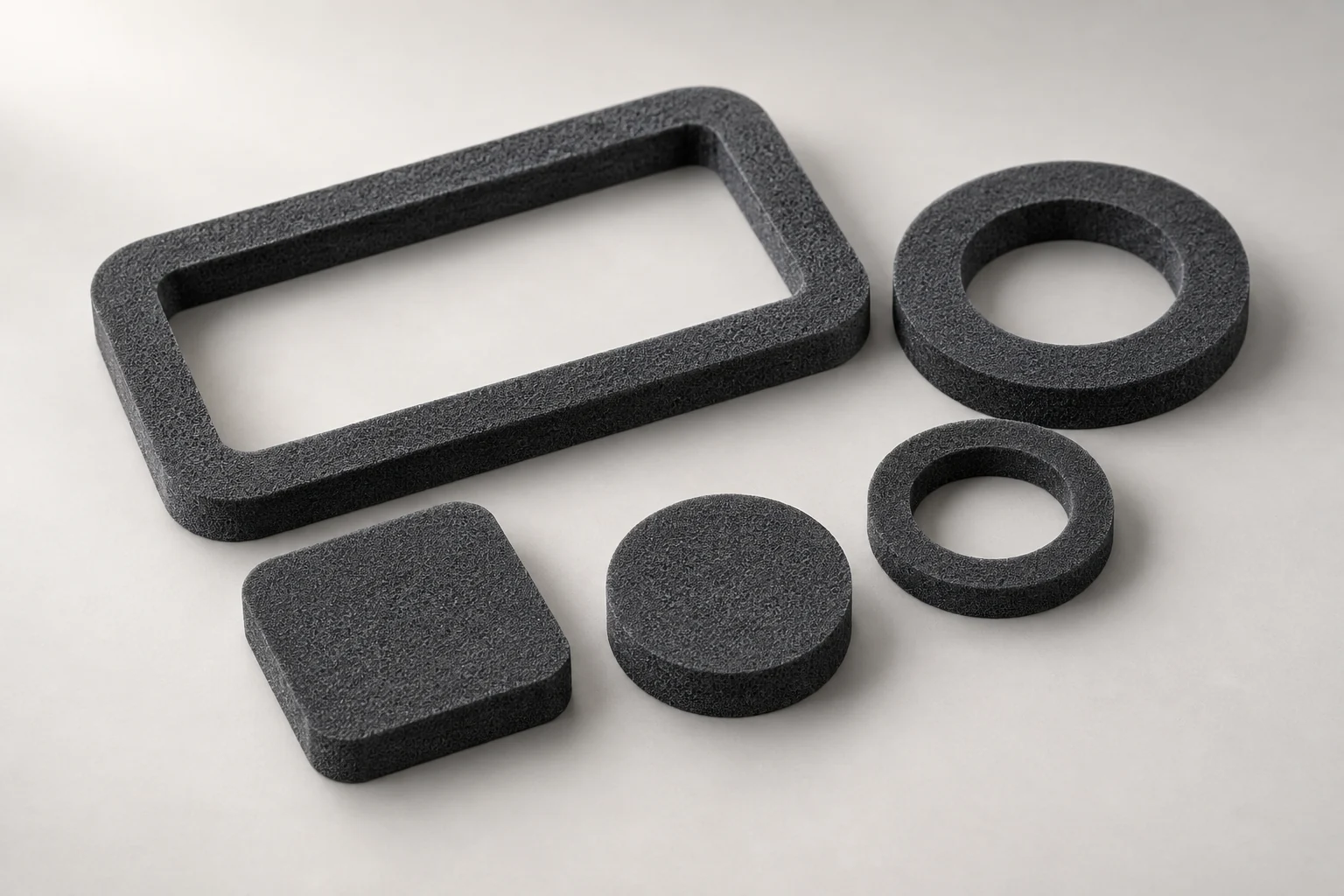
TC Components develops custom die cut gaskets, foam pads and cushioning parts for sealing, gap management and vibration-sensitive interfaces in electronic and industrial assemblies.
PRODUCT OVERVIEW
Sealing and Cushioning Built Around the Interface
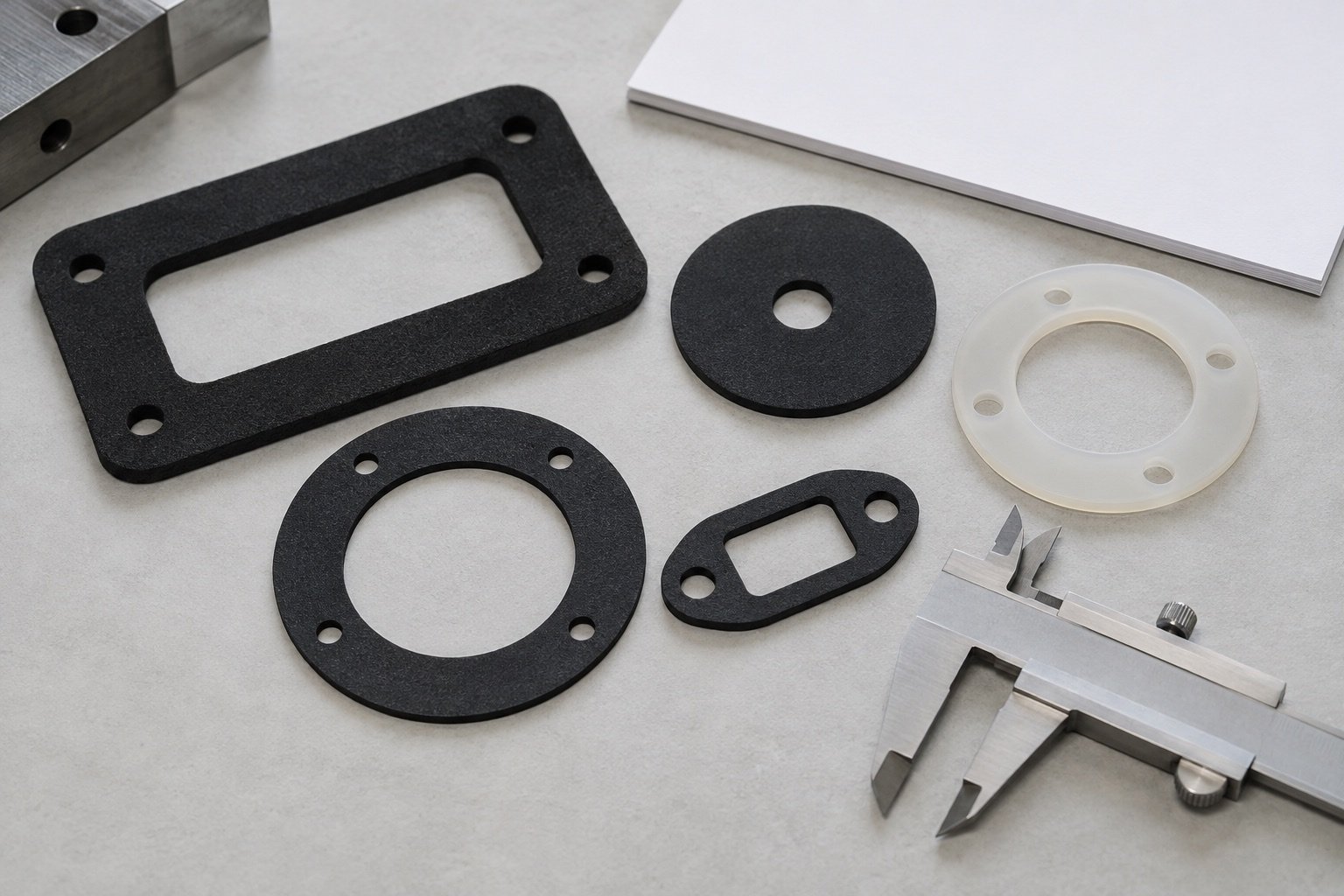
Die cut gaskets and pads are defined by the surfaces they contact, the space available and the compression needed in the assembly. Custom die cut foam, rubber or silicone profiles can be reviewed against the drawing rather than adapted from a standard shape.
COMPONENT FORMS
Typical Component Forms
Gasket geometry and material construction follow the interface, fastening and assembly requirements.
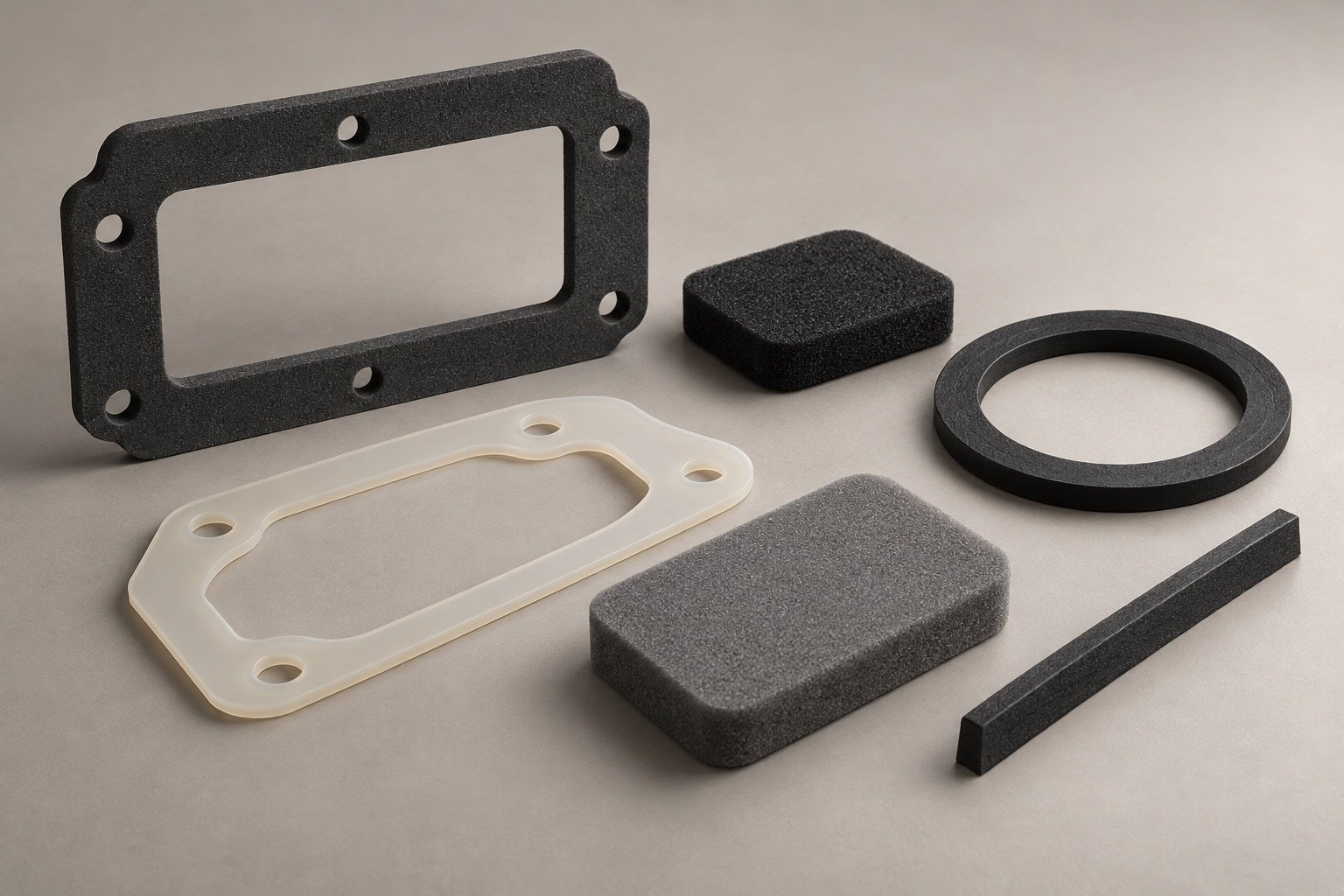
Die-Cut Foam Gaskets
Open and closed profiles for defined sealing areas.
Foam Pads
Individual shapes for cushioning and spacing.
Rubber Gaskets
Cut sheet-rubber profiles for designed interfaces.
Silicone Sheet Gaskets
Sheet-silicone shapes reviewed against the application.
Cushioning Pads
Compliant pieces for contact and vibration-sensitive areas.
Sealing Strips
Narrow profiles around joints and enclosure edges.
MATERIALS
Foam, Rubber & Silicone Materials
Material selection depends on compression, exposure, adhesive need and assembly fit. Foam die cutting and sheet-rubber or silicone conversion can be considered against the project brief; specific grades and properties require confirmation.
Explore Foam, Rubber & Silicone Materials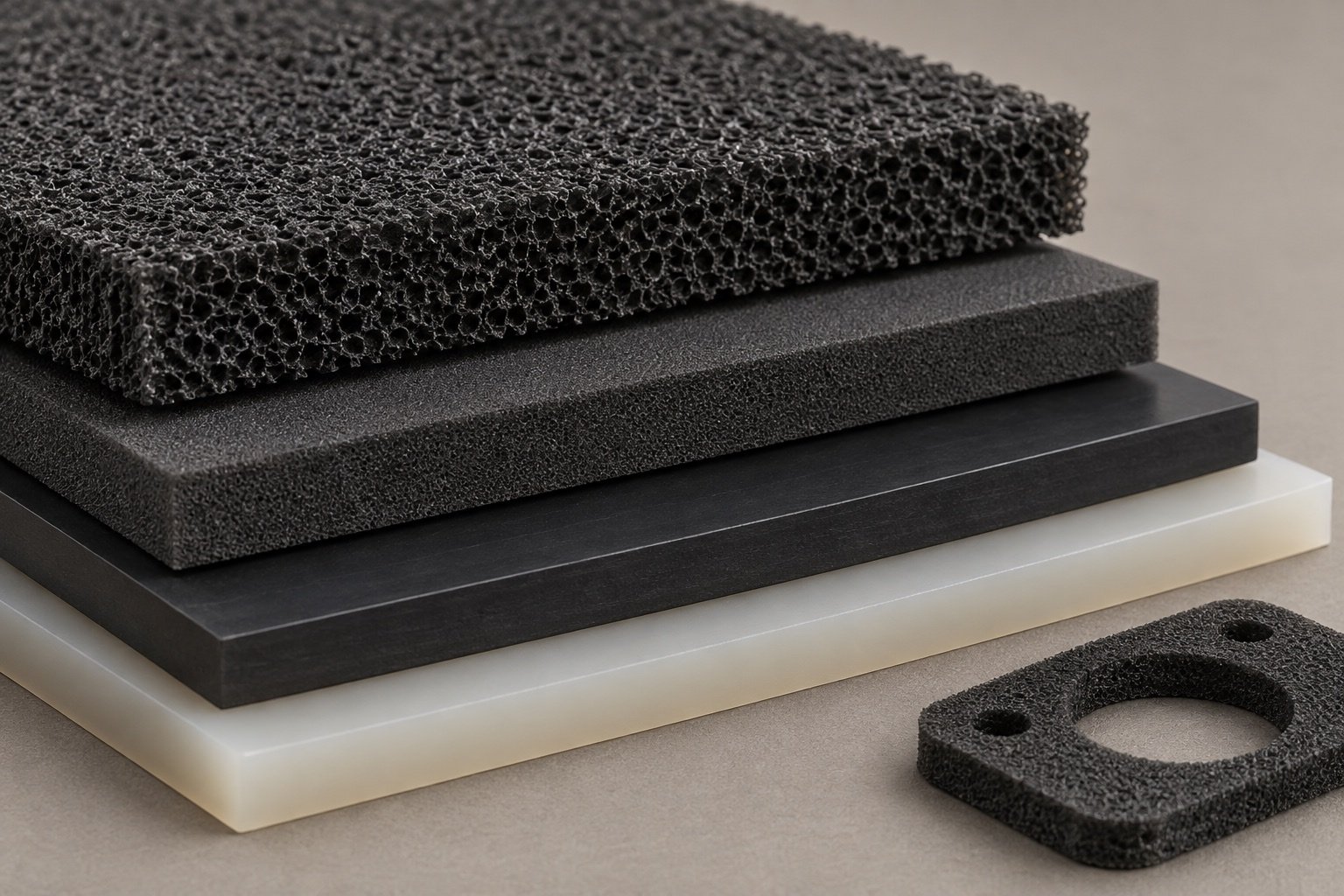
ENGINEERING FIRST
Engineering Considerations
Define how the gasket compresses, meets the surface and stays in position.
Compression & Thickness
Available gap, target contact and material thickness.
Material & Exposure
Foam, rubber or silicone family and operating environment.
Geometry & Assembly
Shape, cutouts, sealing edge and adhesive backing if needed.
APPLICATIONS
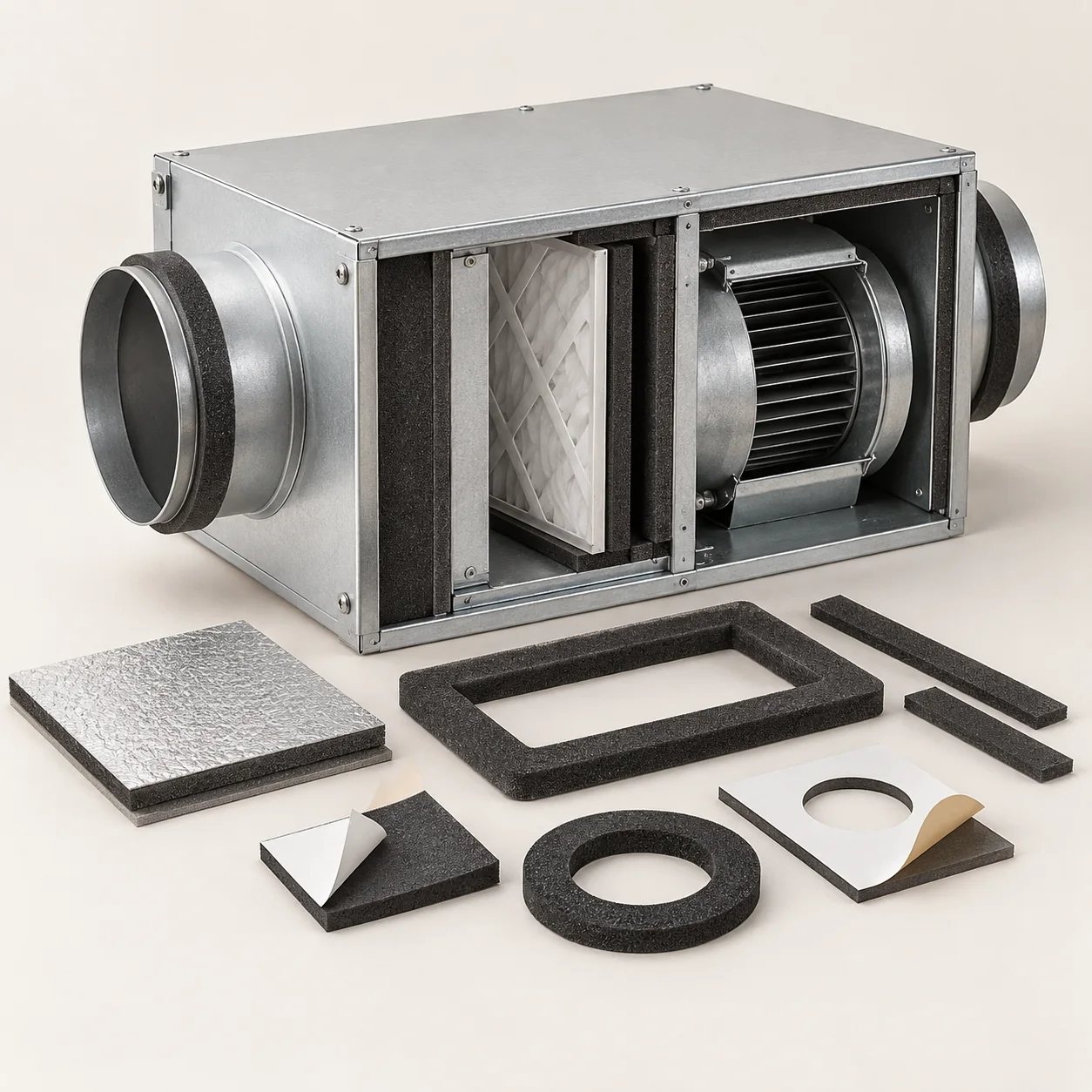
Where These Components Are Used
Sealing and cushioning parts can be designed around enclosures, panels and equipment interfaces where fit and contact matter.
RELATED CAPABILITIES
How We Manufacture Them
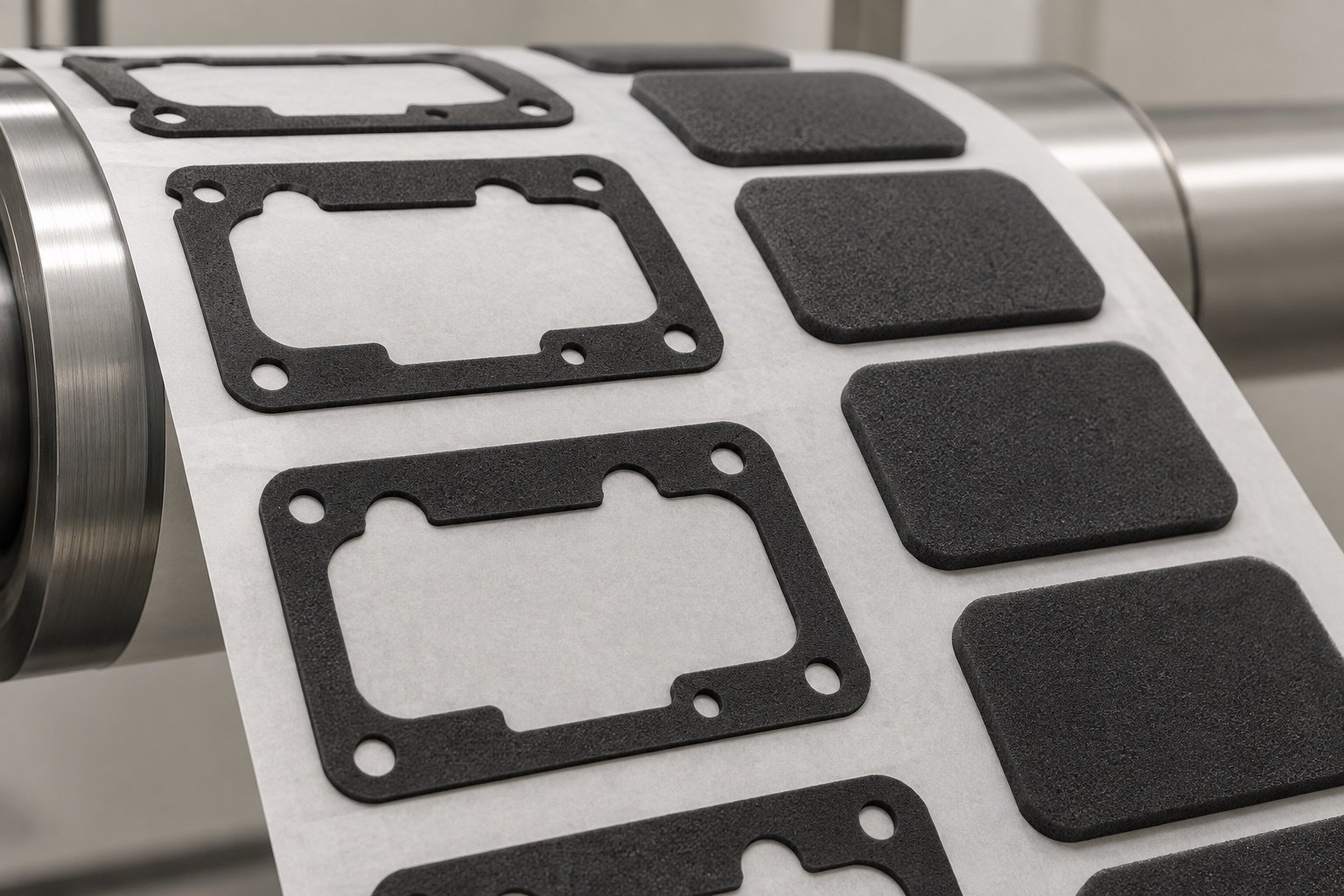
The converting route is selected around the gasket profile, material and any backing or layers.
Precision Die Cutting
Foam die cutting and shaped gasket profiles; prototypes or smaller runs can be discussed.
Lamination & Bonding
Adhesive-backed gasket or multi-layer construction where specified.
Quality & Tolerance Control
Checks are agreed against contact geometry and drawing requirements.
QUALITY / VERIFICATION
Review the Sealing Interface
Verification follows the drawing and the intended sealing or cushioning interface. Contact, profile and material checks are agreed for each project.
- Drawing review
- Material confirmation
- Profile and cutout review
- Dimensional inspection
- Visual inspection
FAQ
Sealing & Cushioning FAQs
Practical answers about gasket design, material selection and project requirements.
Which materials are used for custom die cut gaskets?
Foam, rubber and silicone sheet families may be considered. Selection depends on compression, exposure, contact surfaces and the drawing; a specific grade is confirmed for the project.
Can you add adhesive backing to a foam gasket?
An adhesive layer and release liner can be reviewed when placement or assembly calls for it. The backing must suit the substrate, material and application conditions.
What is the difference between a sealing gasket and a cushioning pad?
A sealing gasket is defined around an interface to limit a path through a joint. A cushioning pad primarily manages contact, spacing or impact; some designs serve both functions.
Can you make die cut silicone gaskets?
Sheet-silicone gasket shapes can be evaluated from a drawing or sample. Material grade, thickness and required performance need confirmation before a construction is agreed.
Can prototypes be made before production?
Prototype or low-volume requirements can be discussed to review shape, compression fit and assembly before a production plan is agreed.
What should I send for a gasket quotation?
Share a drawing or sample, dimensions, proposed material and thickness, sealing interface, operating conditions, adhesive needs and estimated quantity.
RELATED COMPONENTS
Related Components
START A PROJECT
Have a Sealing or Cushioning Component Project?
Send us your drawing, material and interface requirements, dimensions and estimated quantity for review.
Request a Quote