
Adhesive Functional Components
Custom die-cut adhesive parts for bonding, mounting and positioning in electronic and industrial assemblies. Select the adhesive construction around both substrates, bond area, thickness, release-liner requirements and assembly sequence.

Bonding
TWO SUBSTRATES · BOND AREA
Mounting
CUT PROFILE · ASSEMBLY FIT
Positioning
LINER · PLACEMENT SEQUENCE
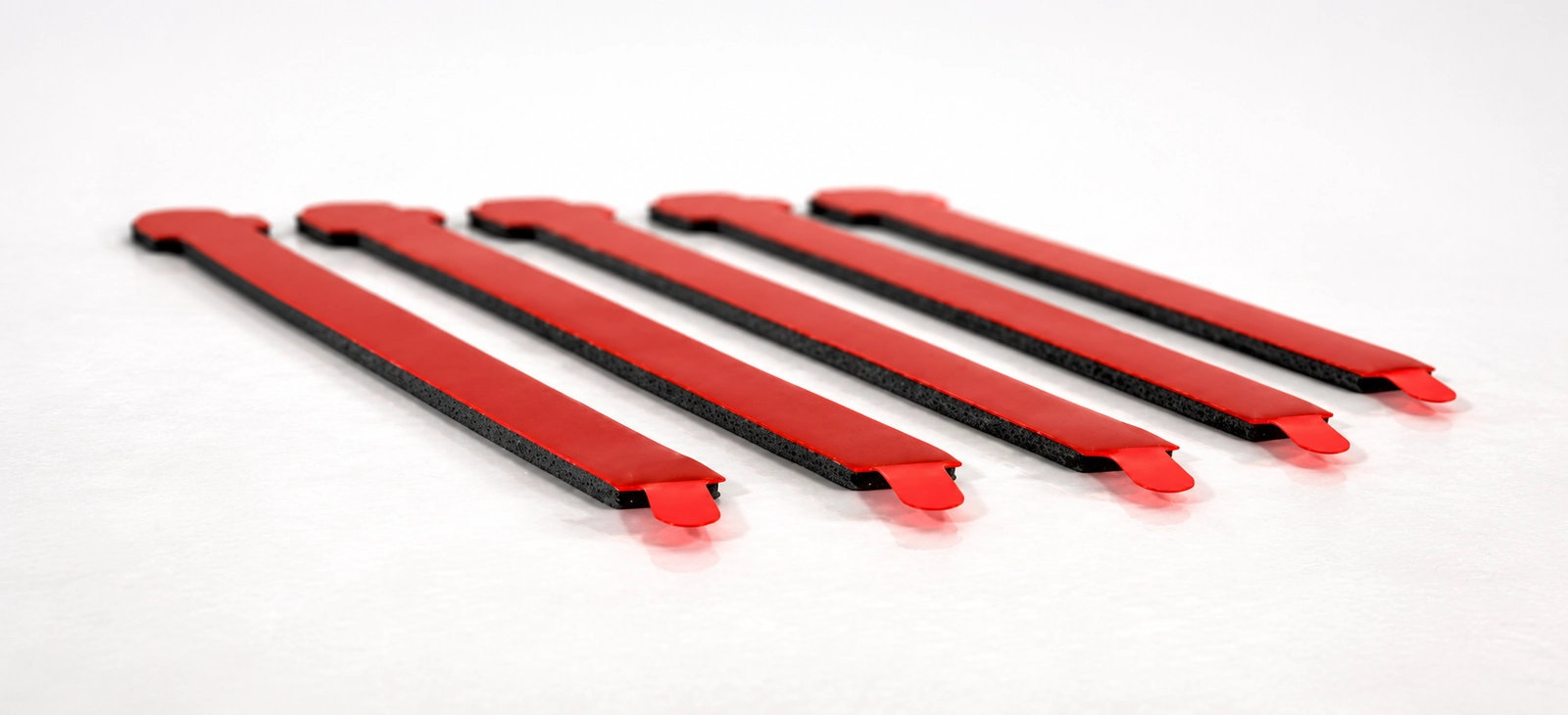
Adhesive Parts Defined by the Bond
Custom die-cut adhesive parts may include frames, rings, mounting pads, strips and other drawing-defined profiles. The construction should identify the bonding surfaces, adhesive faces, any supporting carrier and release-liner arrangement. Cut geometry and handling requirements are reviewed together so the part can be positioned and applied as intended.
Materials We Convert

Pressure-Sensitive Tape
Adhesive selection starts with substrate surface energy, surface condition, bond area and intended assembly method.

Adhesive Transfer Tape
Carrierless adhesive constructions require review of thickness, release-liner handling and die-cut feature geometry.

Double-Sided Tape
Carrier-supported double-sided adhesive die-cut parts define a bond area and liner arrangement.

Adhesive-Backed Materials
Compatible foam or film can be adhesive-backed; adhesive-backed foam components support mounting and positioning.
Engineering
Considerations
Surface & Bond
Confirm both substrates, surface condition, bond area and expected peel or shear loading.
Material & Conditions
Review adhesive construction, thickness, temperature, humidity and any removal requirements.
Liner & Placement
Define liner type, release sequence, part orientation and manual or automated placement needs.
Where These Components Are Used

How We Manufacture Them
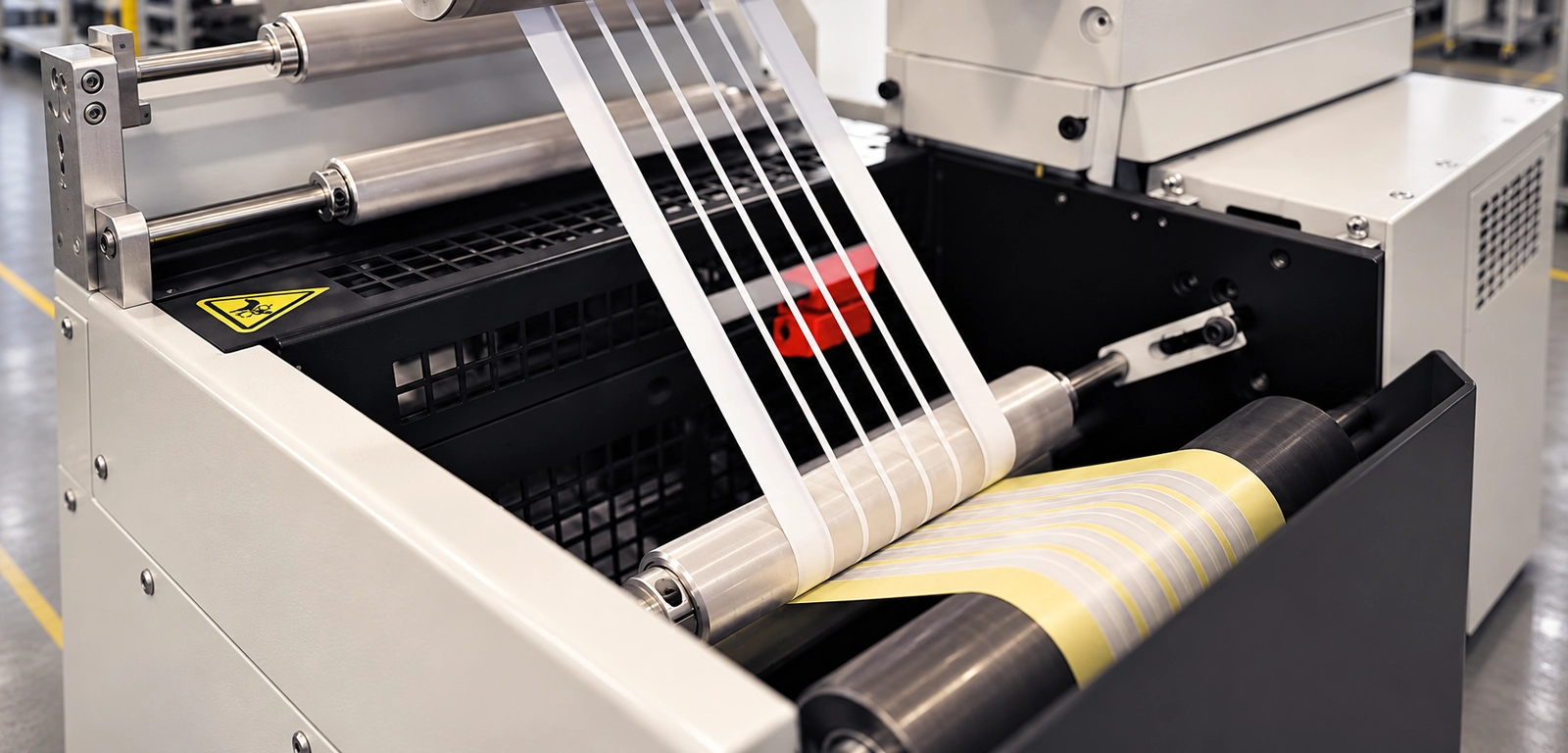
Lamination & Bonding
Review adhesive compatibility, layer sequence, bonding surfaces and liner arrangement before converting the construction.
Precision Die Cutting
Assess frames, holes, narrow sections, cut edges and kiss-cut depth against tape and liner behavior.
Quality & Tolerance Control
Inspect cut boundaries, dimensions, layer alignment and liner integrity against agreed requirements.
Adhesive Component FAQs
Practical answers about adhesive construction, liners and assembly fit.
What types of custom adhesive die-cut components can you provide?
We can evaluate custom adhesive pads, frames, rings, strips and mounting shapes made from suitable double-sided tapes, transfer adhesives or adhesive-backed functional materials. The construction depends on the bonding substrates, required footprint, thickness, liner handling and assembly method. Material availability and converting feasibility are confirmed for each project.
What is the difference between transfer adhesive, double-sided tape and adhesive-backed foam?
Adhesive transfer tape has no permanent internal carrier and is generally supplied with a release liner. Carrier-based double-sided tape contains a film, tissue, foam or another supporting layer with adhesive on both sides. Adhesive-backed foam combines a functional foam substrate with an adhesive mounting face. Select the construction according to thickness, bonding, cushioning and handling requirements.
How do you select adhesives for plastics, metals and coated surfaces?
Identify both substrates, their surface finishes and the required bonding conditions. Low-surface-energy plastics such as PE and PP may need a specifically formulated adhesive or suitable surface treatment, while coated metals require review of the coating itself. Surface cleanliness, application pressure and service conditions also matter. Validate the selected adhesive on representative surfaces before approval.
What affects peel strength, shear resistance and long-term adhesive performance?
Peel and shear loading place different demands on an adhesive bond. Performance depends on adhesive formulation, substrate compatibility, surface preparation, applied pressure, dwell time and operating conditions. Temperature, moisture, chemicals and sustained loads may also affect durability. Published tape values should be assessed against the selected construction and the actual assembly requirements.
Can you die cut double-sided adhesive tapes into custom frames, rings and precision shapes?
Custom frames, rings, holes, slots and narrow adhesive features can be reviewed from technical drawings. Feasibility depends on the adhesive construction, total thickness, liner support, feature spacing and handling method. Identify critical dimensions, exposed adhesive edges and any alignment requirements before confirming tooling, cutting method and acceptance criteria.
Can adhesive die-cut parts be kiss-cut and supplied on release liners?
Kiss cutting can form adhesive shapes while retaining an appropriate release liner for handling and placement. Feasibility depends on the adhesive construction, liner material and controlled cutting depth. Specify whether the parts should be delivered individually, on sheets or in rolls, together with part spacing, orientation, peel tabs and liner-removal sequence.
Can adhesive layers be laminated with films, foams or other functional materials?
Compatible adhesive layers may be laminated to suitable foam, films or other functional sheet materials before die cutting. The design should define material grades, layer order, total thickness, bonding surfaces and which layers require cutting. Adhesion compatibility, liner handling and assembly requirements must be reviewed before confirming the manufacturing process.
How are adhesive die-cut parts inspected and bond suitability verified?
Inspection requirements can include material identification, dimensions, cut boundaries, adhesive orientation, layer alignment and release-liner integrity. Visible contamination or adhesive defects should be assessed against agreed acceptance criteria. Dimensional and visual inspection do not independently establish bond strength or durability; application-specific adhesive testing should be defined separately when required.
Do you support adhesive die-cut prototypes and low-volume orders?
Prototype and low-volume requirements can be evaluated before regular production. Sample feasibility, minimum quantities, tooling costs and lead times depend on adhesive availability, part geometry, liner construction and production volume. Share your trial quantity and expected production demand so these requirements can be assessed for your project.
What information is needed to quote custom adhesive die-cut components?
Provide a drawing or sample, both bonding substrates, surface finishes, required adhesive footprint, dimensions and critical tolerances. Include any preferred adhesive construction, thickness, release-liner and placement requirements, expected loads, operating conditions, prototype quantity and estimated production volume. If the material is undecided, describe the application so suitable options can be reviewed.
Have an Adhesive Component Project?
Send us your drawing, substrates, layer or liner requirements, application details and estimated quantity for review.