
Foam, Rubber & Silicone Materials
Compare PE and PU foams, EPDM, neoprene and solid silicone rubber sheets for custom die-cut gaskets, pads and spacers. Selection follows compression, contact surfaces, environmental exposure and drawing requirements.

Material Selection
Priorities
Application Needs
Material selection begins with the assembled interface. A suitable foam or elastomer must fit the specified gap, contact surfaces, loading conditions and service environment—not just the drawing outline.
- Define the intended sealing, cushioning, spacing or protection function.
- Provide the minimum and maximum assembled gap and available compression force.
- Identify contact surfaces, critical dimensions and installation geometry.
- Specify temperature, moisture, chemical exposure and adhesive or liner needs.
Typical Uses
Flexible die-cut components may be evaluated at specified equipment joints, mounting points and contact surfaces. Material choice depends on the local interface rather than the industry name alone.
Material Forms
Foam, rubber and silicone materials are supplied in different sheet constructions. Cell structure, stiffness, thickness and handling behavior influence the finished die-cut part.
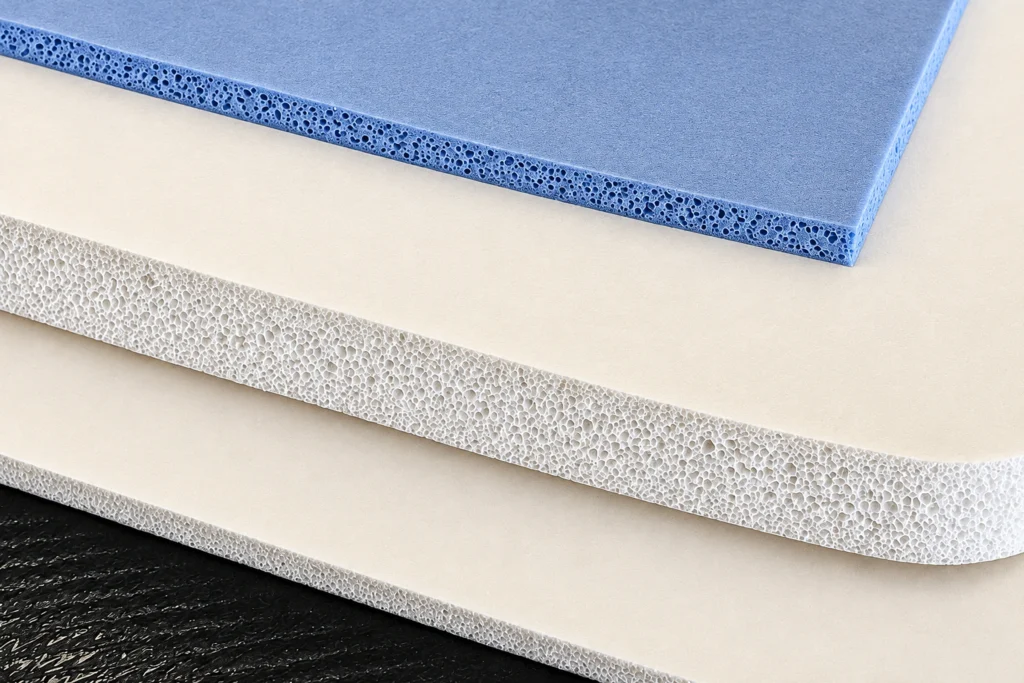
Foam Sheets
Flexible cellular materials reviewed for drawing-defined cushioning pads, gasket profiles and spacing components.
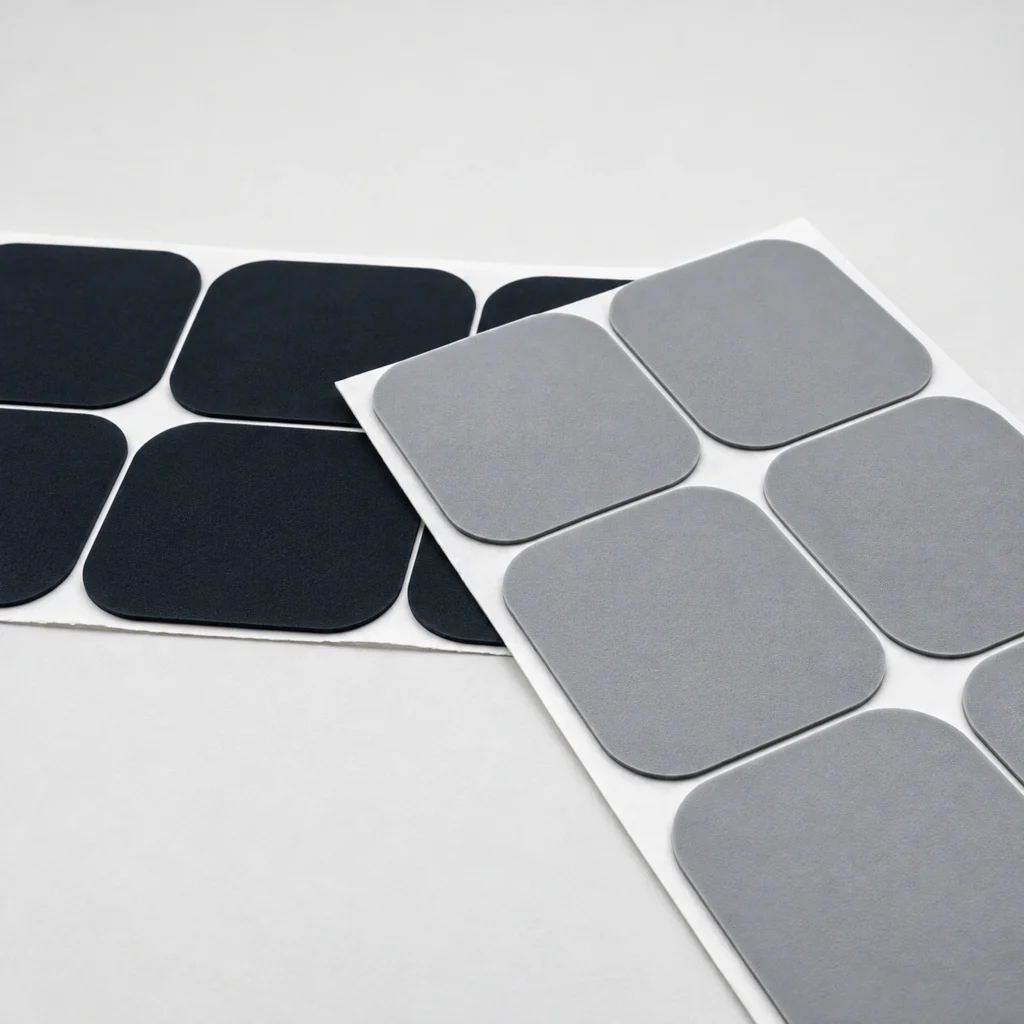
Rubber Sheets
Solid or specified cellular rubber sheet grades evaluated for gasket contact, sealing and mechanical interface requirements.

Silicone Rubber Sheets
Solid silicone elastomer sheets reviewed for flat die-cut gaskets, washers, pads and spacers.
Adhesive-backed foam or elastomer parts may be evaluated where the construction requires controlled placement or bonding. Specify both substrates, adhesive coverage, layer order, total thickness and release-liner format. Silicone surfaces and certain other difficult-to-bond substrates may require a suitable adhesive system or surface treatment. Compatibility and converting feasibility must be confirmed for the selected materials. Related components: Adhesive Functional Components · Die-Cut Foam Gaskets · Rubber Die-Cut Gaskets · Silicone Sheet Die-Cut Parts
Lamination & BondingFrom Material to Component
The material grade, compression conditions, part geometry and optional adhesive construction determine the converting route.
Material Review
Confirm material grade, cell or solid structure, thickness and required function.
Process Planning
Review profile geometry, cutting method, adhesive layers, liner and handling requirements.
Component Converting
Produce drawing-defined parts using the agreed material and converting process.
Quality Verification
Check agreed material identity, thickness, critical dimensions and construction features.
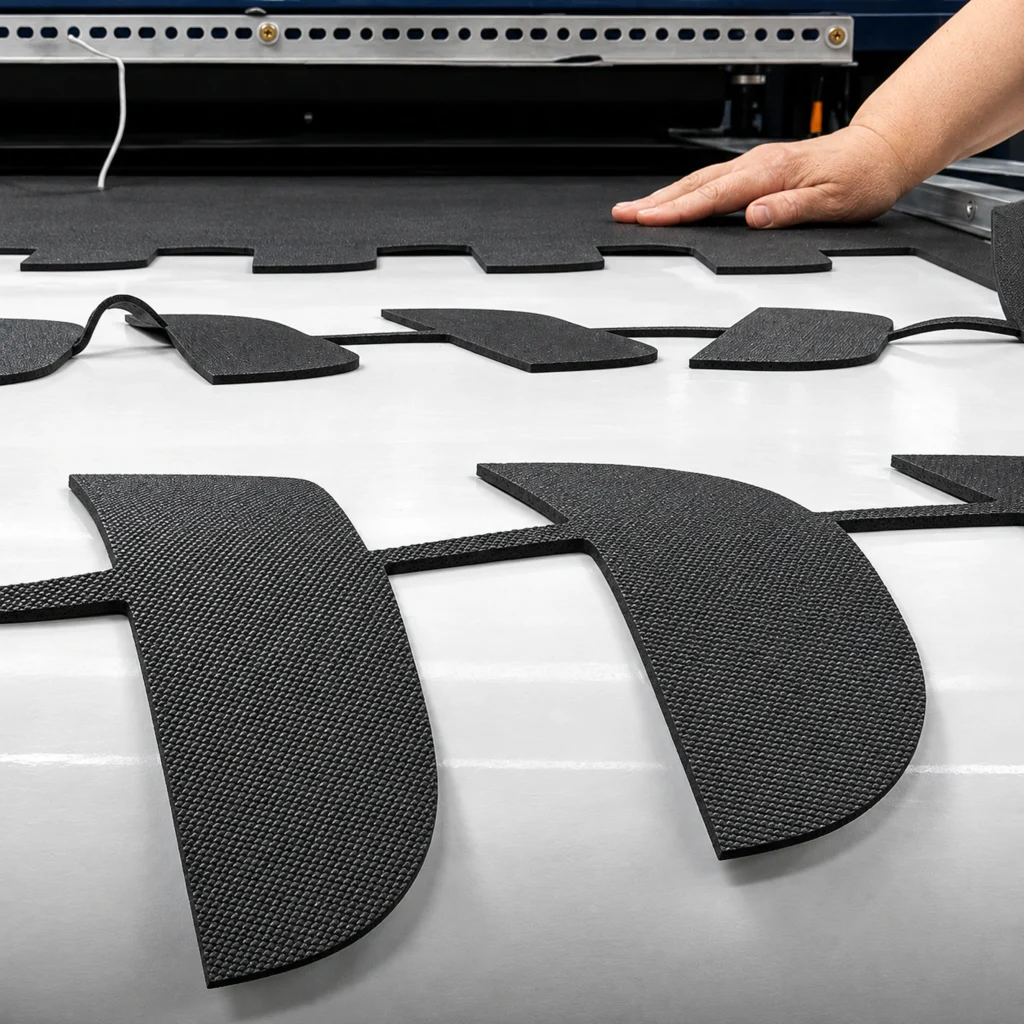
Compressible foams, solid rubbers and silicone sheets may require different cutting and handling methods. The sequence and inspection plan are confirmed for the individual project.
Engineering Considerations
Select the material around the installed interface—not thickness or hardness alone. Compression behavior, contact surfaces and exposure conditions should be reviewed together.
- Function & ContactDefine sealing, cushioning, spacing or local protection needs, including mating surfaces and the intended contact path.
- Compression & RecoverySpecify the assembled gap range and available load. Review force-deflection, compression set and recovery using appropriate grade-specific data.
- Thickness & GeometryProvide nominal sheet thickness, profile, contact width, holes, cutouts and critical fit tolerances.
- Material PropertiesConfirm material family, exact grade, cellular or solid structure, density or hardness where applicable, and relevant test data.
- Construction & AssemblySpecify adhesive faces, liner orientation, layer sequence, positioning and installation or removal requirements.
- Material VerificationConfirm supplier documentation, material identity, dimensional criteria and any project-specific functional test requirements.
Compression force, compression set and recovery are different properties. Drawing and material checks do not establish installed sealing, vibration isolation or long-term durability without application-specific validation.
Flexible material questions.
Practical answers for sheet selection, constructions and quotation planning.
How do polyethylene and polyurethane foams differ for die-cut parts?
Polyethylene (PE) and polyurethane (PU) foam sheets can both be considered for custom cushioning pads, spacers and selected gasket constructions. Their suitability depends on the exact grade, cellular structure, density, thickness and compression response. Some PE grades may be selected for spacing or contact protection, while certain PU grades offer different conformability and force-deflection behavior. Neither material family has one universal performance profile. Compare supplier data and the installed interface rather than choosing by polymer name alone.
Is open-cell or closed-cell foam better for sealing?
Neither cell structure guarantees sealing performance in every application. Closed-cell foam may be considered where low moisture absorption is important, while particular open-cell grades may function as compressed seals under suitable conditions. Actual air or moisture leakage also depends on gasket compression, contact width, cut edges, joint continuity and mating surfaces. Specify the required sealing performance and operating environment, then review the selected grade and finished assembly. A material description alone cannot establish an enclosure rating.
What is the difference between EPDM and neoprene rubber sheets?
EPDM and neoprene (polychloroprene, CR) are different elastomer families. EPDM is often evaluated for selected weathering and ozone-exposure conditions, while neoprene offers a different combination of mechanical and environmental properties. Suitability for oils, cleaning chemicals, temperatures or outdoor exposure depends on the actual compound and test conditions. Solid sheet rubber must also be distinguished from sponge or expanded rubber. Provide the required exposure, hardness, compression and dimensional conditions before selecting a grade.
Can solid silicone rubber sheets be die cut like silicone foam?
Solid silicone rubber sheets can be evaluated for flat die-cut gaskets, washers, pads and spacers when the grade and part geometry are suitable. Silicone foam and sponge are cellular materials with different density, compression and recovery behavior. They should not be treated as substitutes without reviewing the required function and construction. This material page concerns sheet-based converting; liquid silicone rubber injection molding and complex three-dimensional molding are separate manufacturing processes requiring their own feasibility review.
Which properties matter when selecting foam, rubber or silicone?
Start with the intended sealing, cushioning, spacing or contact-protection function. Then review material grade, cellular or solid structure, sheet thickness, installed gap, contact surfaces and environmental conditions. Density, hardness, force-deflection and compression set describe different characteristics and should not be used interchangeably. The most useful supplier data depends on the material and intended loading conditions. Part geometry, adhesive requirements and the accepted inspection method must also be defined before finalizing a construction.
What is the difference between compression force and compression set?
Compression force or force-deflection data describe how a material responds to a defined compressive displacement under specified test conditions. Compression set describes residual deformation after a material has been compressed for a prescribed time and environment. Recovery and force retention provide other information about the material’s response. These measurements are not interchangeable, and their test methods vary by material type. Selection should consider the minimum and maximum installed gap, available closure force and actual service conditions.
How do heat, moisture, UV and chemicals affect flexible materials?
Temperature cycling, moisture, UV exposure, oils, solvents and cleaning agents can affect foam, rubber and silicone grades differently. Depending on the material and compound, exposure may change dimensions, stiffness, compression behavior or adhesive performance. Specify the expected temperature range, contact media, exposure duration and relevant maintenance conditions. Compare the exact grade’s supplier data and define any additional testing needed. Do not assume that all products in one material family offer the same environmental resistance.
Can adhesive backing be added to foam or silicone sheets?
Adhesive-backed constructions may be evaluated when a flexible component needs controlled placement or bonding. The adhesive must be compatible with the foam or elastomer and the opposite mounting surface. Some silicone and other difficult-to-bond surfaces may require a specialized adhesive system or surface preparation. Specify adhesive coverage, operating conditions, liner arrangement and application method. Bonding suitability and the completed gasket’s sealing or cushioning function should be assessed separately. For an example of a drawing-defined construction, see adhesive-backed foam components.
Can foam, rubber and silicone sheets be laminated and die cut?
Compatible flexible sheets, adhesive layers and release liners may be evaluated for single- or multi-layer die-cut constructions. Specify the exact material grades, layer sequence, overall thickness, adhesive faces, cut depths and finished delivery format. Compressibility, stretch and small geometric features may influence cutting accuracy, liner handling and part removal. The manufacturing route is reviewed for each construction, and material compatibility must be confirmed before production. Lamination does not automatically preserve the performance of every individual layer.
What information is needed to quote custom foam or rubber die-cut parts?
Send a drawing or sample with revision, intended function, material grade or datasheet if available, nominal thickness, part dimensions, critical tolerances and quantities for each design. For a gasket or cushioning part, include the minimum and maximum installed gap, contact surfaces, available compression force and expected operating environment. Specify adhesive coverage, liner requirements, prototype needs, preferred delivery format and any material or functional test requirements. If the material is undecided, describe the assembly interface so suitable candidates can be reviewed.
Need a foam, rubber or silicone material for a custom component?
Share your drawing, material grade or datasheet if available, thickness, assembled gap, compression requirements, operating conditions and estimated quantity for review.