MATERIALS / FUNCTIONAL COMPONENTS
Materials for Custom Die-Cut Components
TC Components converts functional films, foams, rubbers, silicones, adhesives, conductive materials and thermal materials into custom components for electronic, electrical and industrial applications.
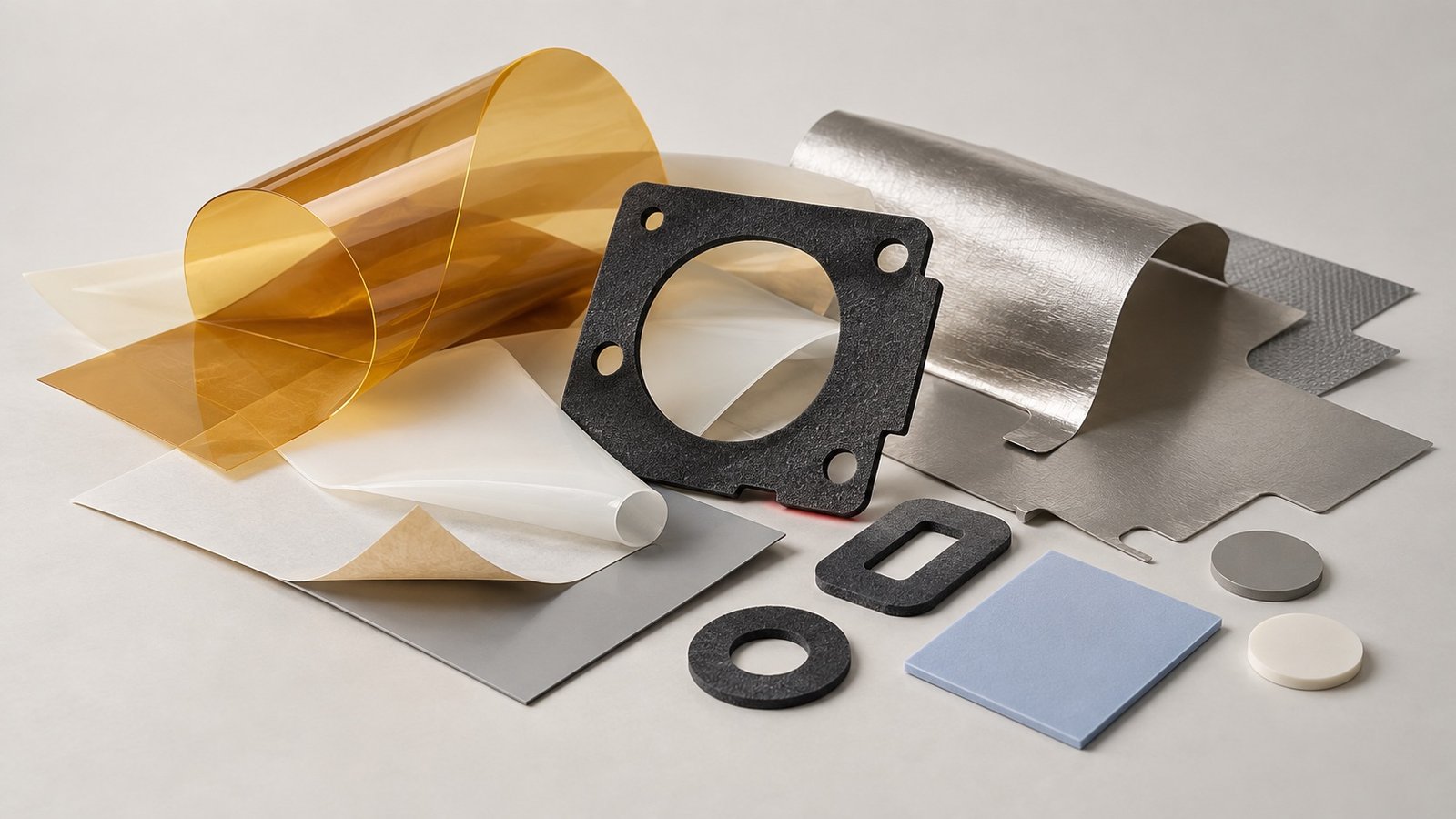
MATERIALS OVERVIEW
Materials selected around the function.
Choosing die cut materials starts with a question: what must the component do? Insulation, sealing, bonding, shielding and thermal transfer each call for a different material and converted form.
We review the material alongside its geometry, assembly interface and application conditions before defining a component construction.
MATERIAL FAMILIES
Five routes from material to function.
Explore five material families for custom die-cut components and layered constructions.
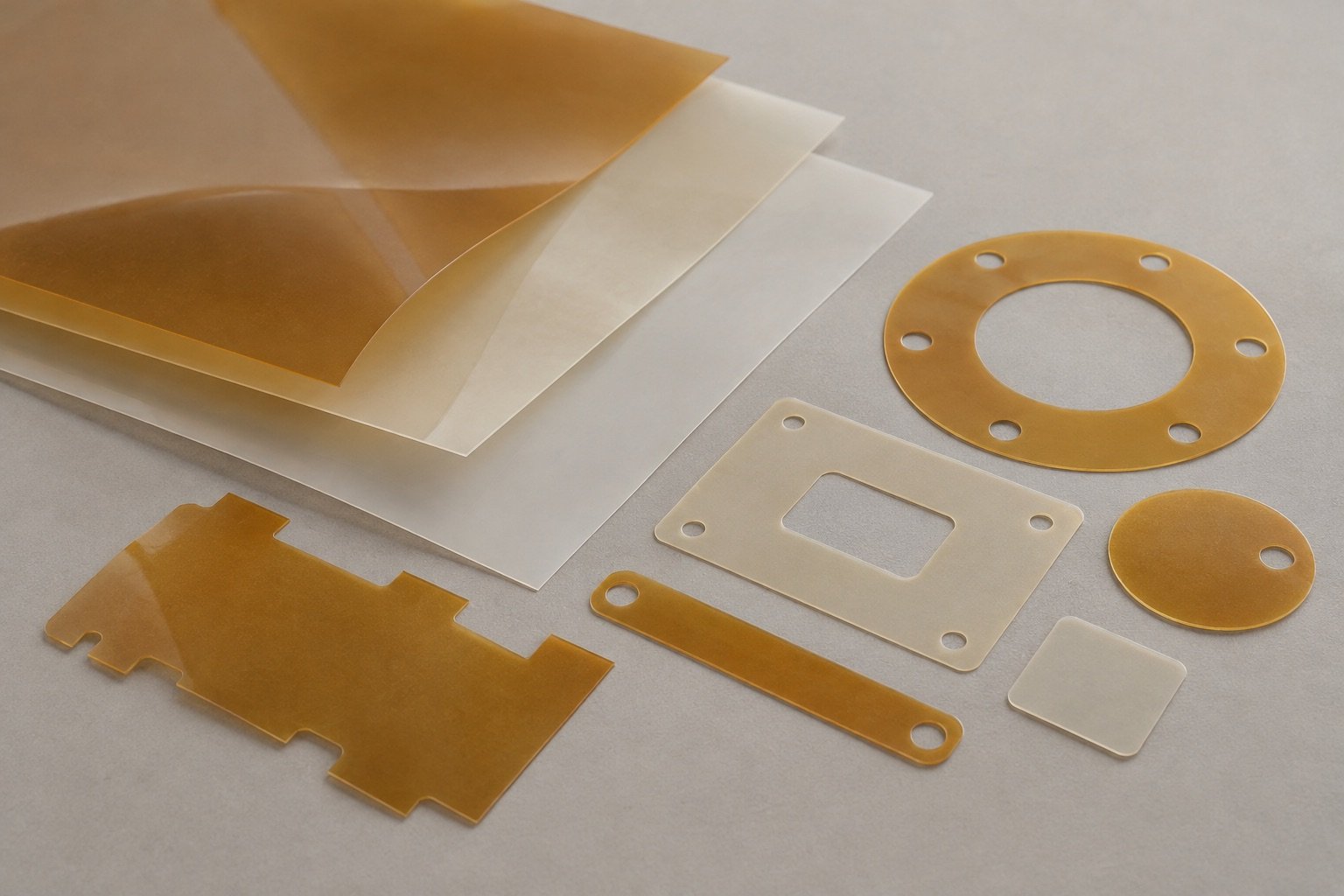
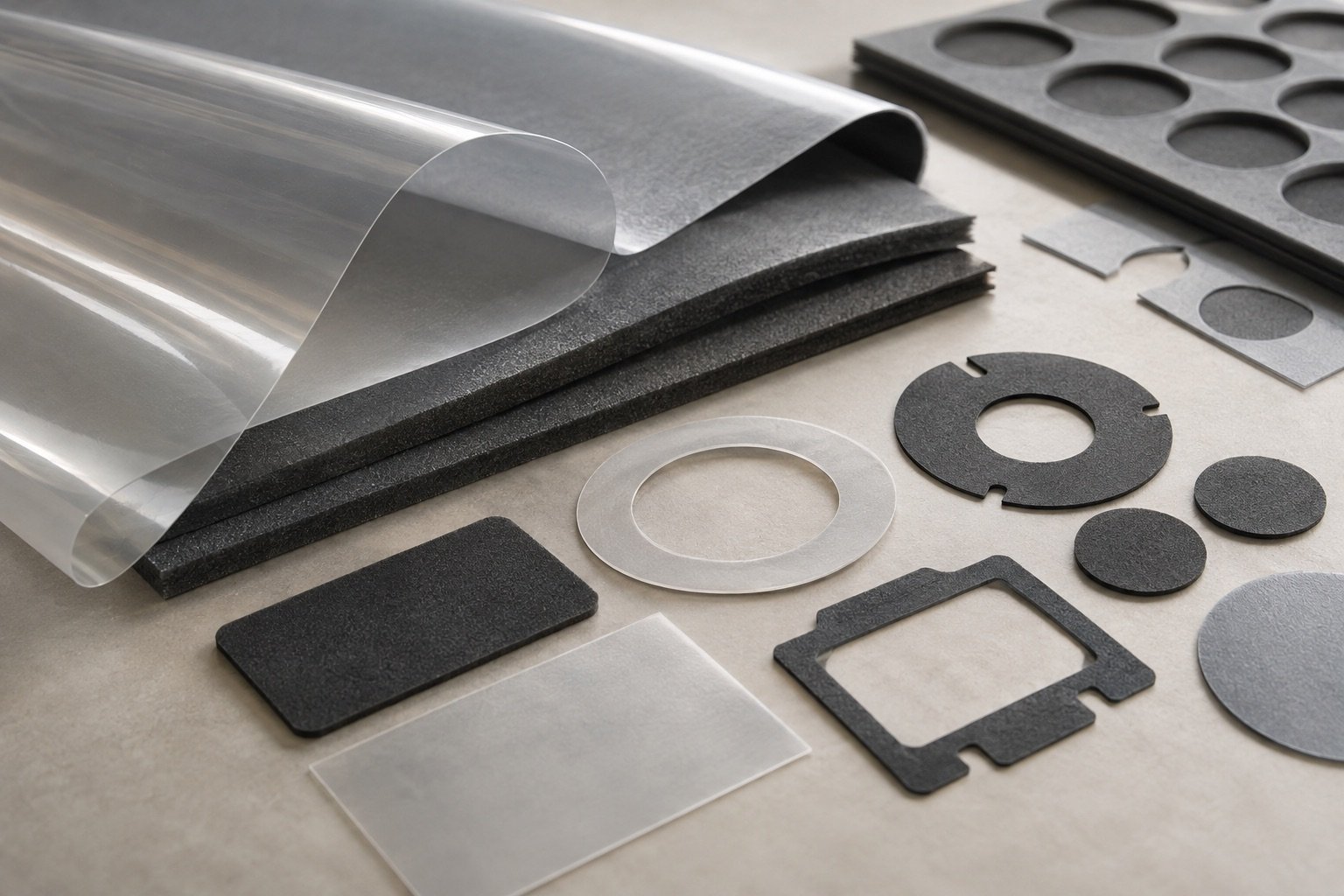
Insulation Materials
Electrical insulation films and sheets converted into barriers, pads, spacers and other custom insulation components.
Explore Insulation Materials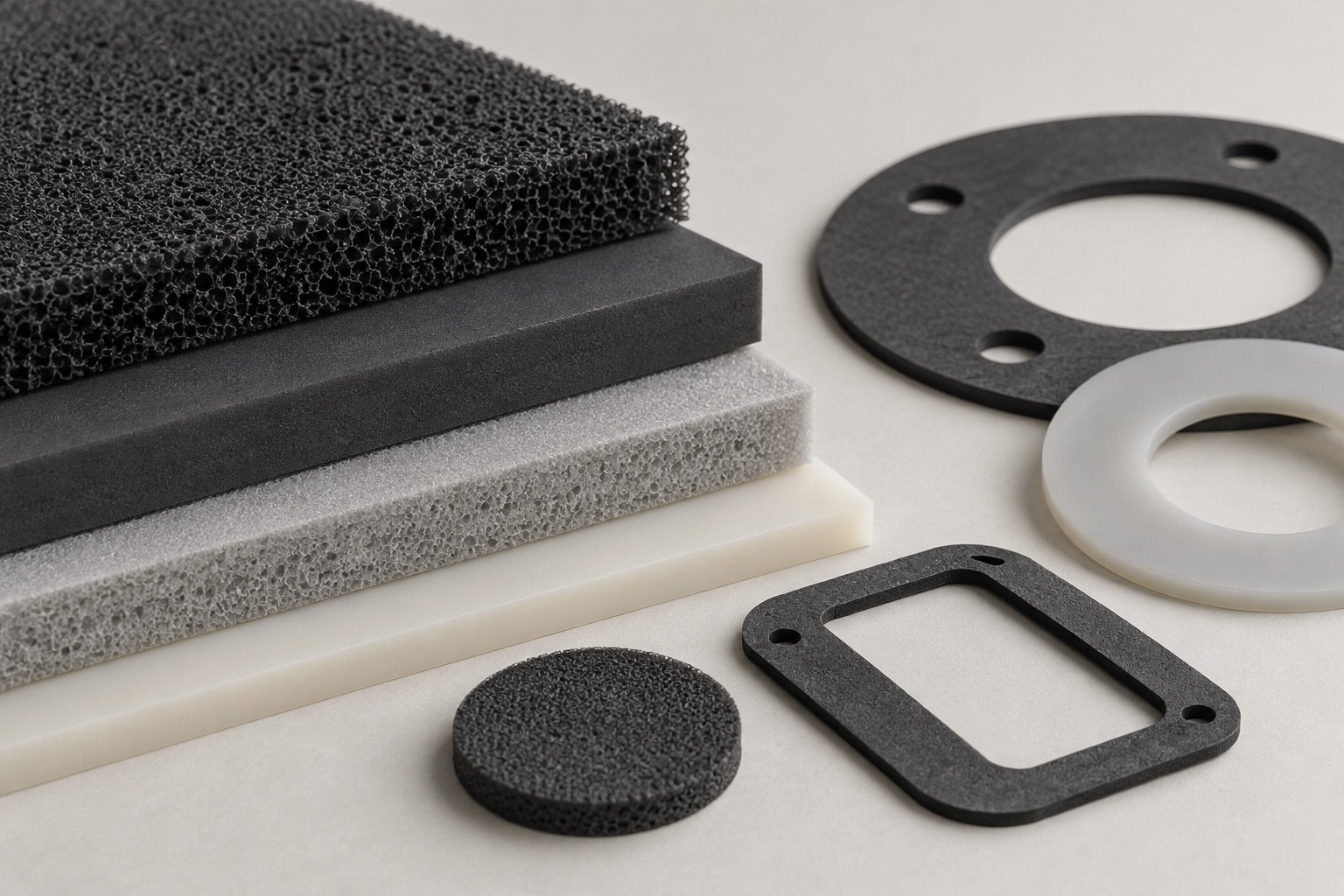
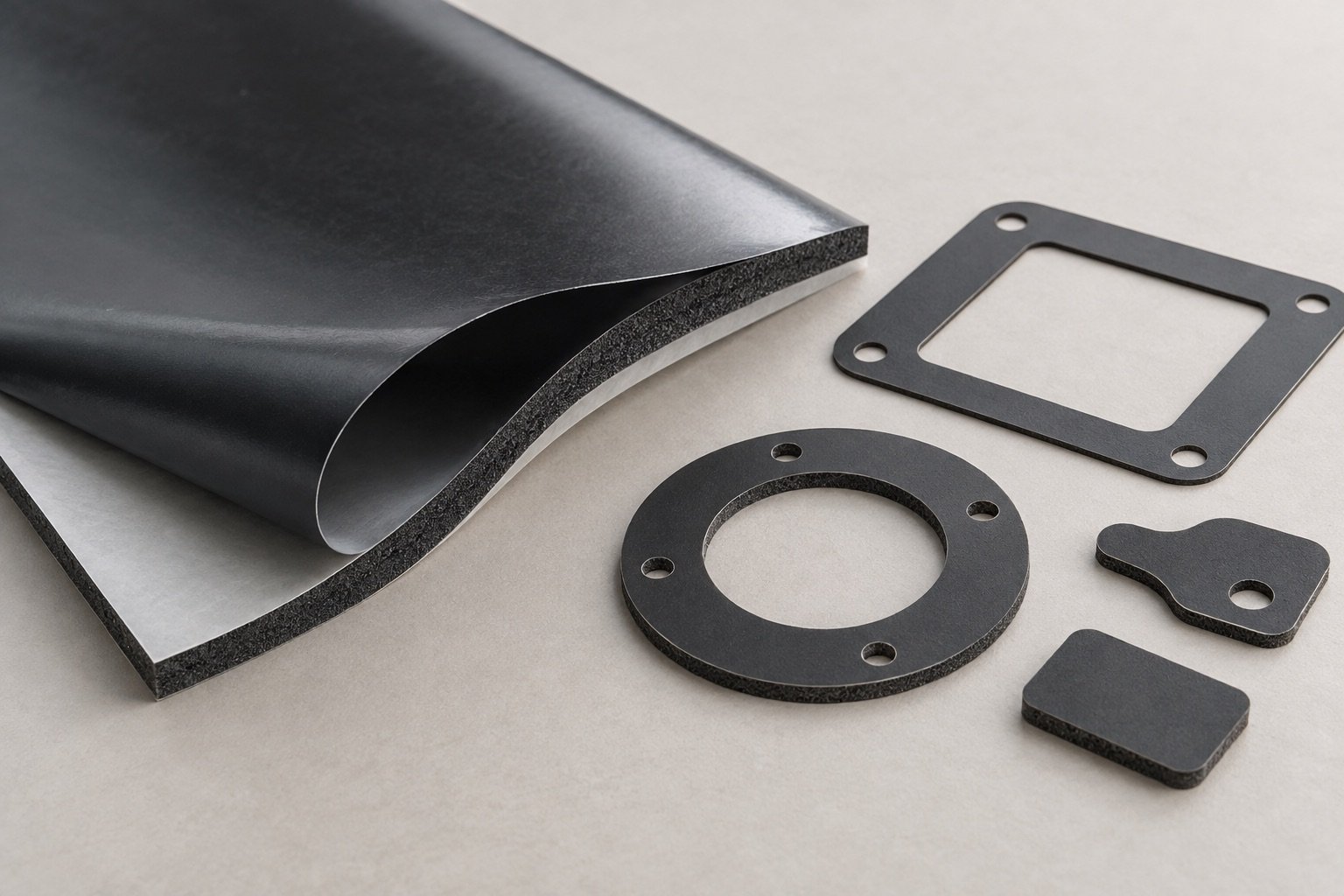
Foam, Rubber & Silicone Materials
Flexible sheet materials used for sealing, cushioning, vibration control, spacing and gap management.
Explore Foam, Rubber & Silicone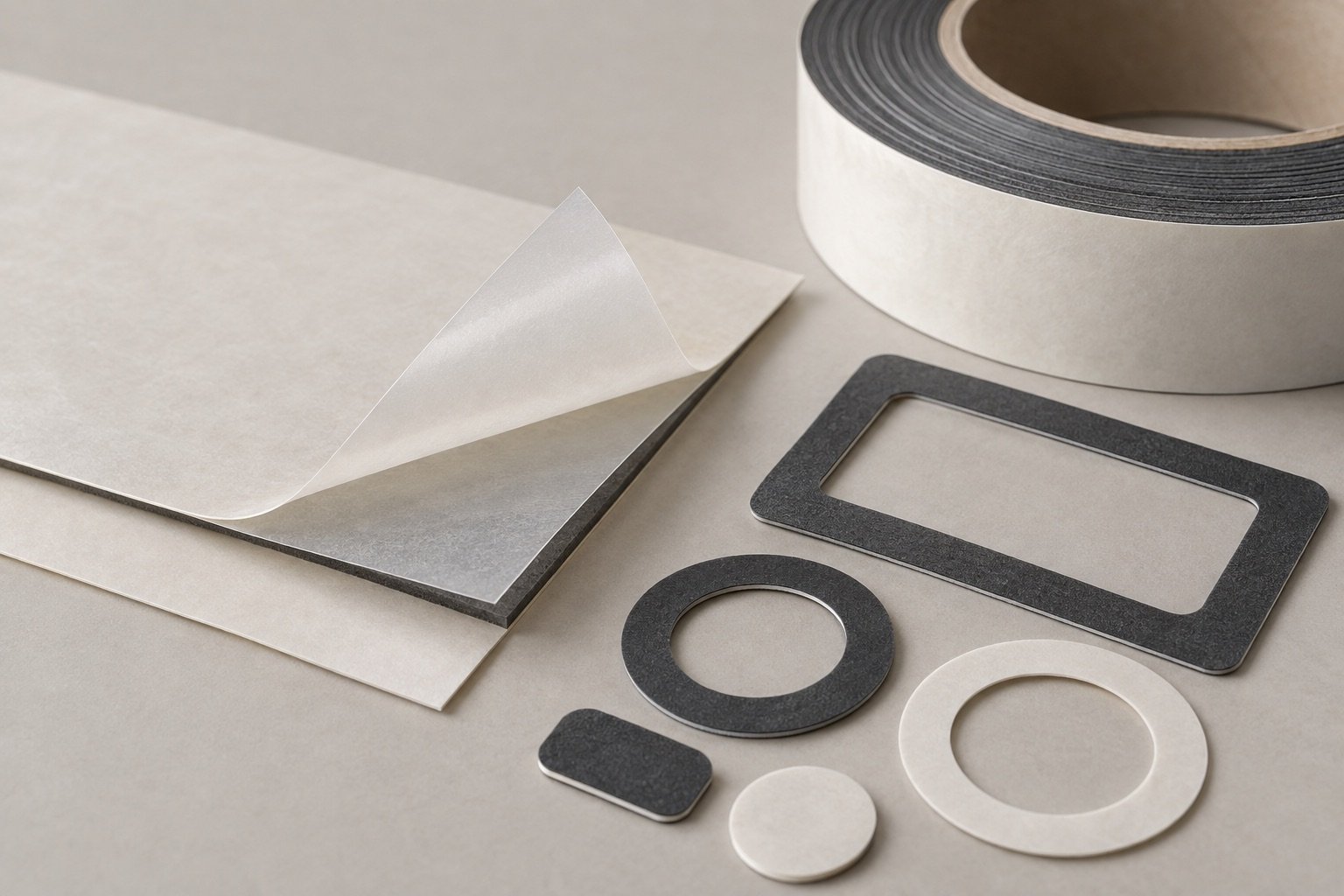
Adhesive Materials
Adhesive layers and liners considered for bonding, mounting, positioning and layered die-cut constructions.
Explore Adhesive Materials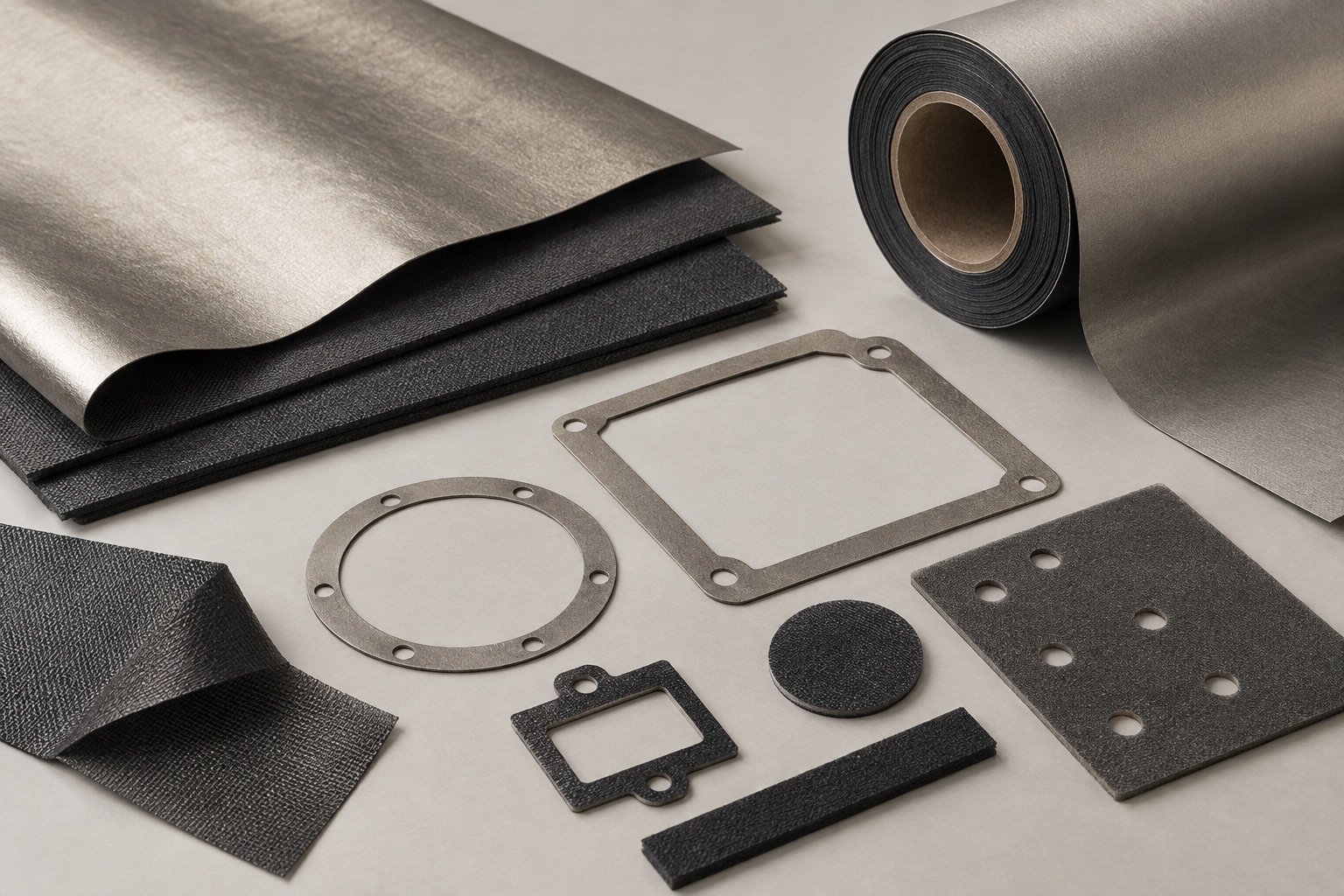
Conductive & Shielding Materials
Conductive and shielding sheet materials considered for EMI / RFI control, grounding and electronic assembly requirements.
Explore Conductive & Shielding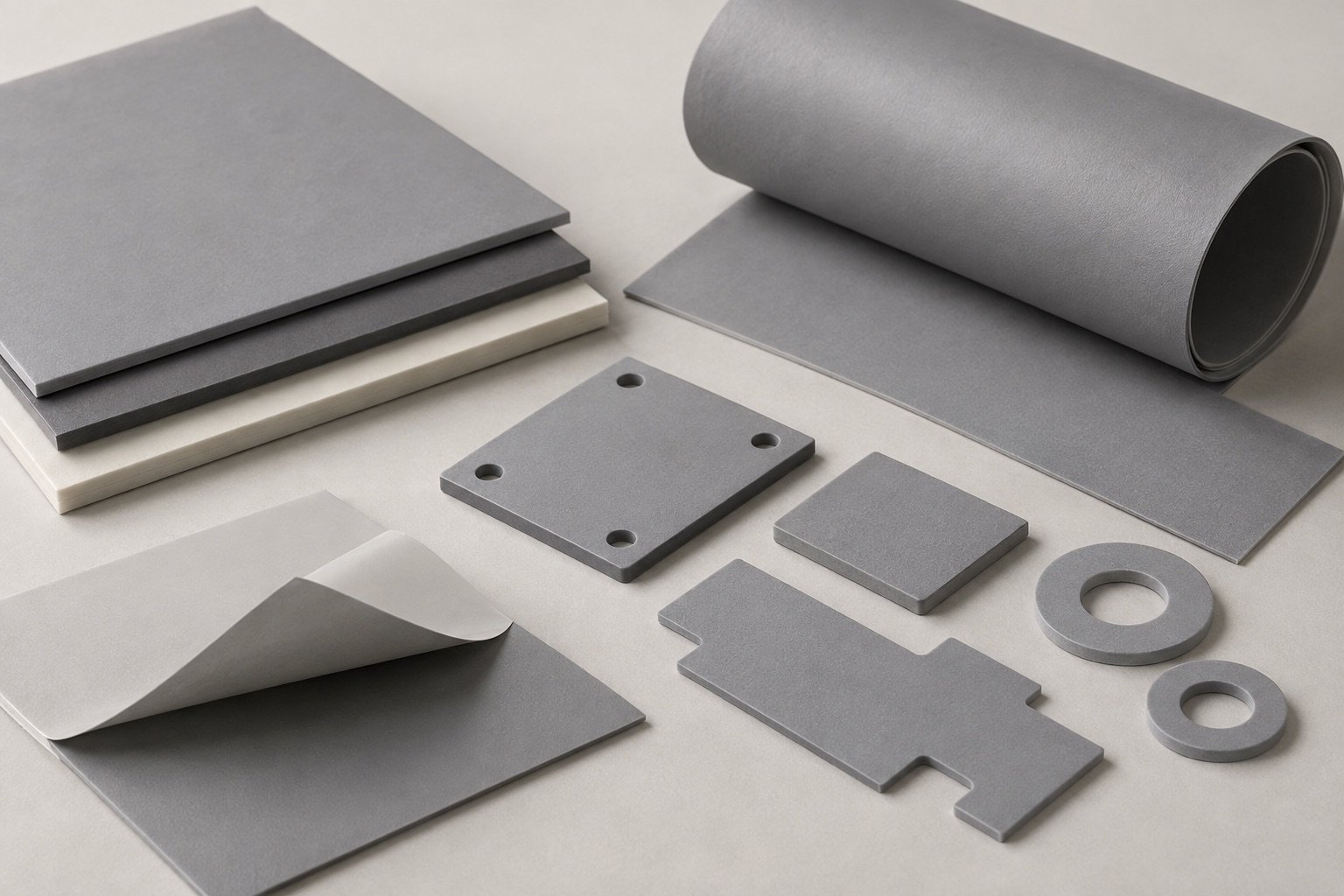
Thermal Management Materials
Thermal interface and conductive sheet materials converted into pads and custom components for heat transfer and gap filling.
Explore Thermal ManagementFROM MATERIAL TO COMPONENT
The material is the starting point. The component is the outcome.
For example, a flexible film can become an insulation barrier; a foam sheet can become a sealing gasket. The final construction depends on the drawing, required function and assembly.
- 01Material
- 02Required function
- 03Converting
- 04Finished component
ENGINEERING CONSIDERATIONS
Select around the assembly.
Materials for die cutting are reviewed against the job the part must perform and the way it will fit.
Function
What must the material do?
Thickness
What thickness fits the assembly?
Surface / Adhesive
Does the part require bonding?
Geometry
How will the material be converted?
Environment
What operating conditions matter?
Assembly
How will it meet adjacent parts?
RELATED PRODUCTS
Explore the finished component.
Materials are selected for a function. Products are the custom die-cut parts made for the assembly.
RELATED CAPABILITIES
How materials become parts.
Die cutting defines the profile. Lamination and bonding can combine layers when the construction requires them. Project-specific checks verify the agreed features.
Explore all capabilitiesFAQ
Questions about die cutting materials.
Practical answers for engineers and purchasing teams.
What materials can be die cut?
Flexible sheet materials such as insulation films, foam, rubber, silicone, adhesive constructions, shielding materials and thermal interface sheets can be considered. Suitability depends on the grade and project requirements.
How do I choose the right material for a die-cut component?
Start with the required function, operating conditions, thickness, geometry and assembly interface. Share a drawing or sample so the available material options can be reviewed against those needs.
Can adhesive backing be added to foam, film or rubber materials?
Adhesive backing and a release liner can be considered when the chosen substrate, bonding surface and assembly method support that construction.
Can different materials be laminated together before die cutting?
Compatible layers can be reviewed for a laminated construction before die cutting. Layer order, bonding surfaces, total thickness and handling need to be defined for the project.
Do you work with customer-specified materials?
Customer-specified materials can be reviewed against the intended geometry and converting process. Please share the material specification and any handling requirements with your inquiry.
Can you recommend a material based on the application?
We can discuss available material options against your functional and assembly requirements. Final grade selection and acceptance criteria should be confirmed for the project.
Can insulation, shielding or thermal materials be custom die cut?
These material families can be considered for custom die-cut components. The specific grade, construction and geometry are reviewed against the drawing and application.
What material information is needed for a quotation?
Send any material specification you have, plus the function, drawing or sample, dimensions, application conditions and estimated quantity. If the grade is open, describe the required function instead.
START A MATERIAL REVIEW
Need help selecting a material for your component?
Send us your drawing, functional requirements, material specification if available, dimensions and estimated quantity for review.
Request a Quote