
Die-Cut Foam Gaskets
Custom die-cut foam gaskets, frames and pads for equipment enclosures and industrial assemblies. Gasket geometry, foam selection and compression are reviewed against the joint path, installed gap and assembly requirements.
- Drawing-defined joint path
- Gap & compression review
- Backing & placement
For a quote: drawing · assembled gap range · foam grade or function · backing needs · estimated quantity.

Interface Sealing
JOINT PATH · CONTACT WIDTH
Cushioning
IMPACT · SURFACE PROTECTION
Spacing
INSTALLED GAP · COMPRESSION
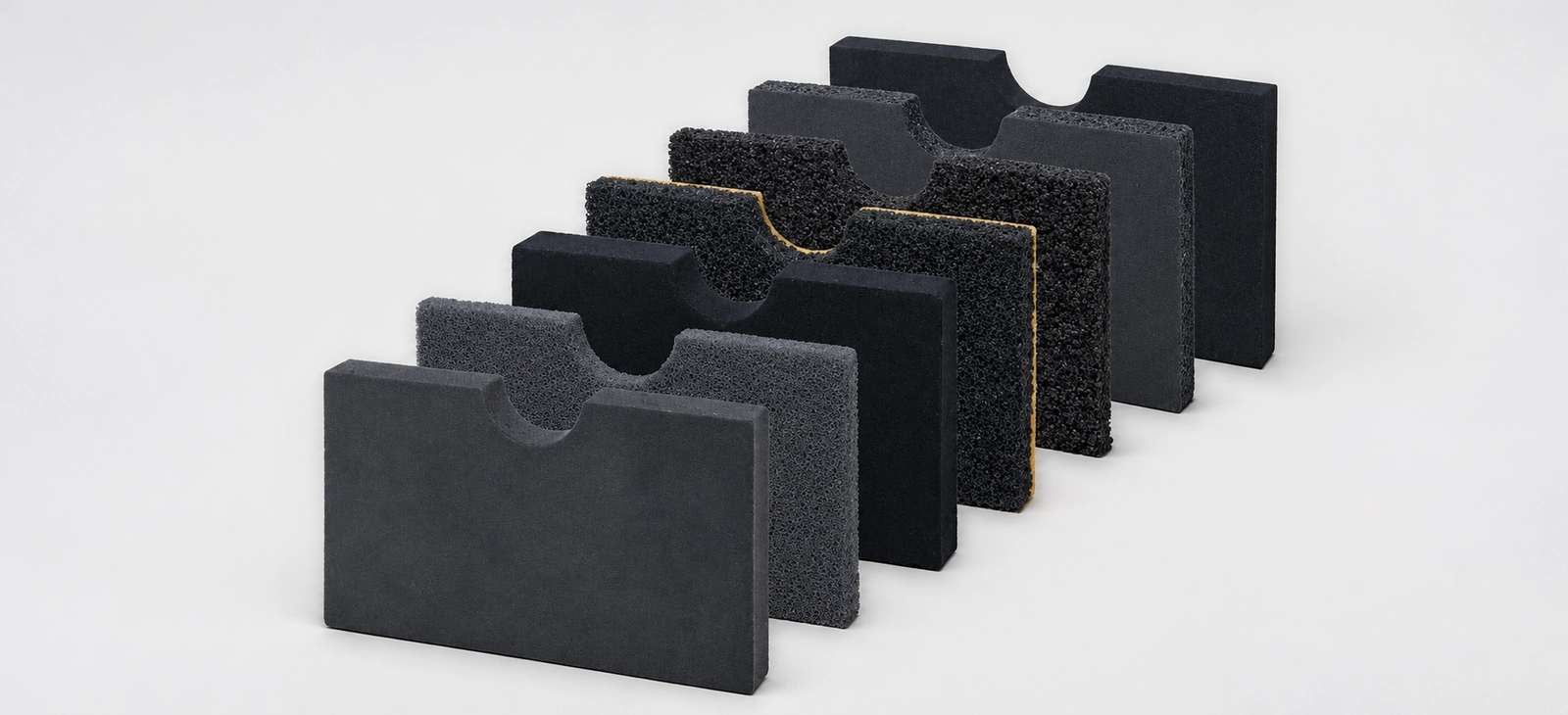
Die-Cut Foam Gaskets for Defined Contact Paths
Custom foam gaskets may be supplied as frames, rings, strips, pads or drawing-defined profiles with mounting holes and internal cutouts. The sealing path, contact width and critical features should be reviewed against the mating surfaces, minimum and maximum installed gap, and available closure force before material and tooling decisions are confirmed.
Materials & Constructions

Polyethylene Foam
PE foam sheets may be considered for cushioning, spacing or specified gasket interfaces. Review cell structure, density, thickness and environmental exposure for the selected grade.
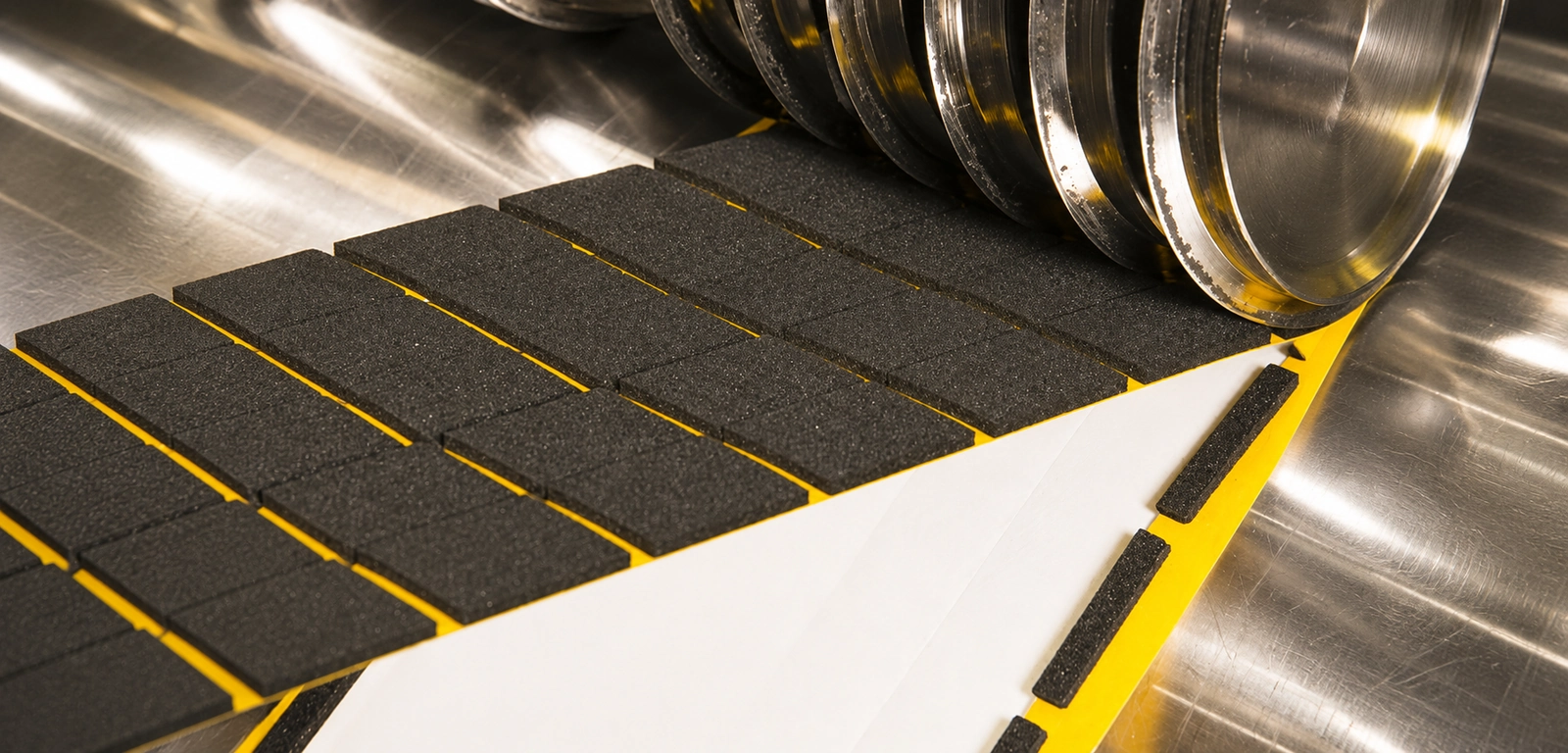
Polyurethane Foam
PU foam grades vary in compression-force response, recovery and cell structure. Material selection should follow the intended contact, gap and service conditions.

Specified Foam Sheet
Customer-specified foam materials can be reviewed for grade, thickness, density, compression behavior and die-cutting feasibility against the drawing. Review foam material selection before confirming the construction.
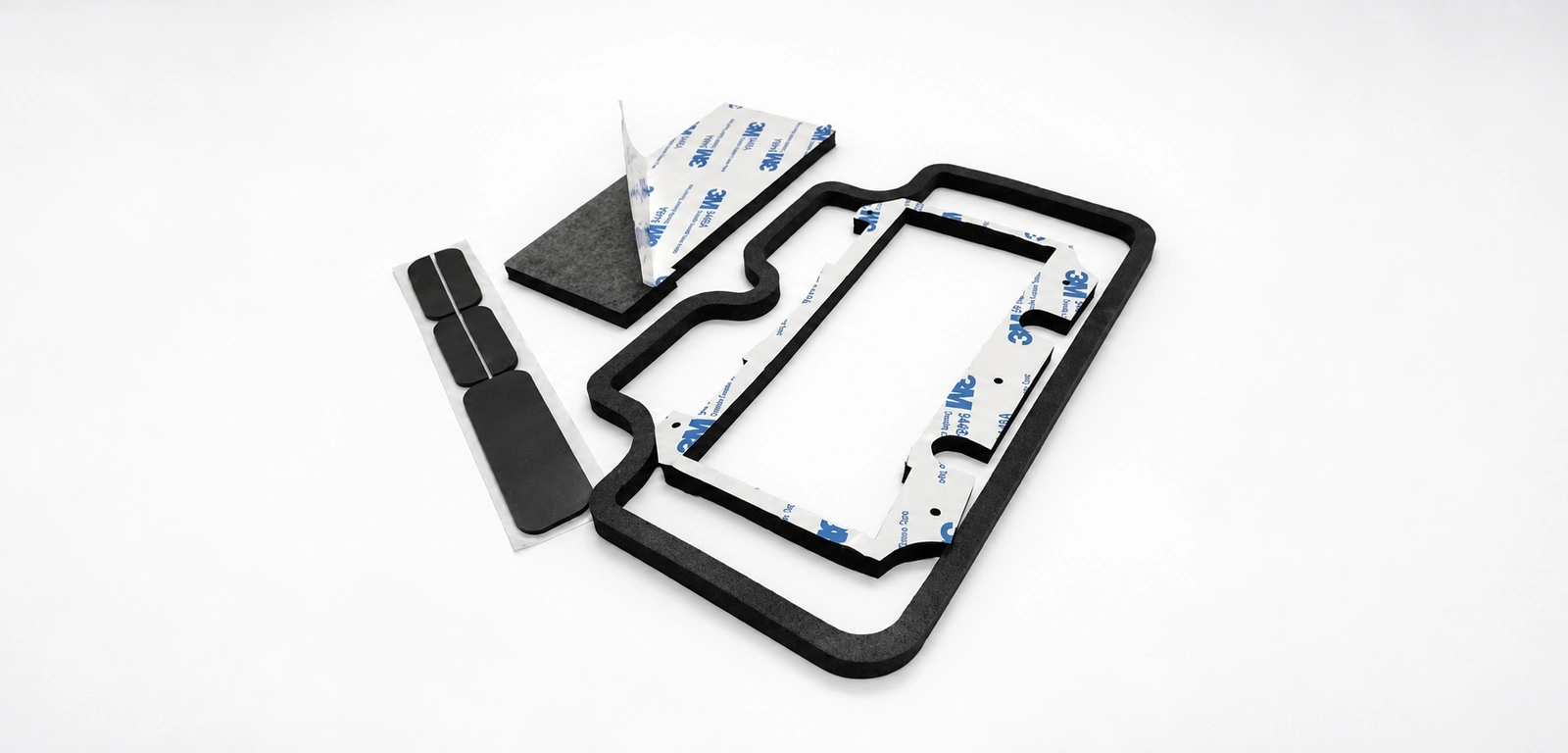
Adhesive-Backed Foam
Where placement requires an adhesive face, the foam function, bonding surface, adhesive coverage and release-liner sequence should be reviewed together. See adhesive-backed foam components for that construction.
Engineering
Considerations
Thickness & Compression
Define the installed gap range, foam thickness and available closure force; review grade-specific compression and recovery behavior.
Sealing Geometry
Check joint continuity, contact width, openings, corners and mating-surface variation against the drawing.
Placement & Backing
Confirm whether positioning is mechanical or adhesive, including bonding face, liner and assembly sequence.
Where These Components Are Used

How We Manufacture Them
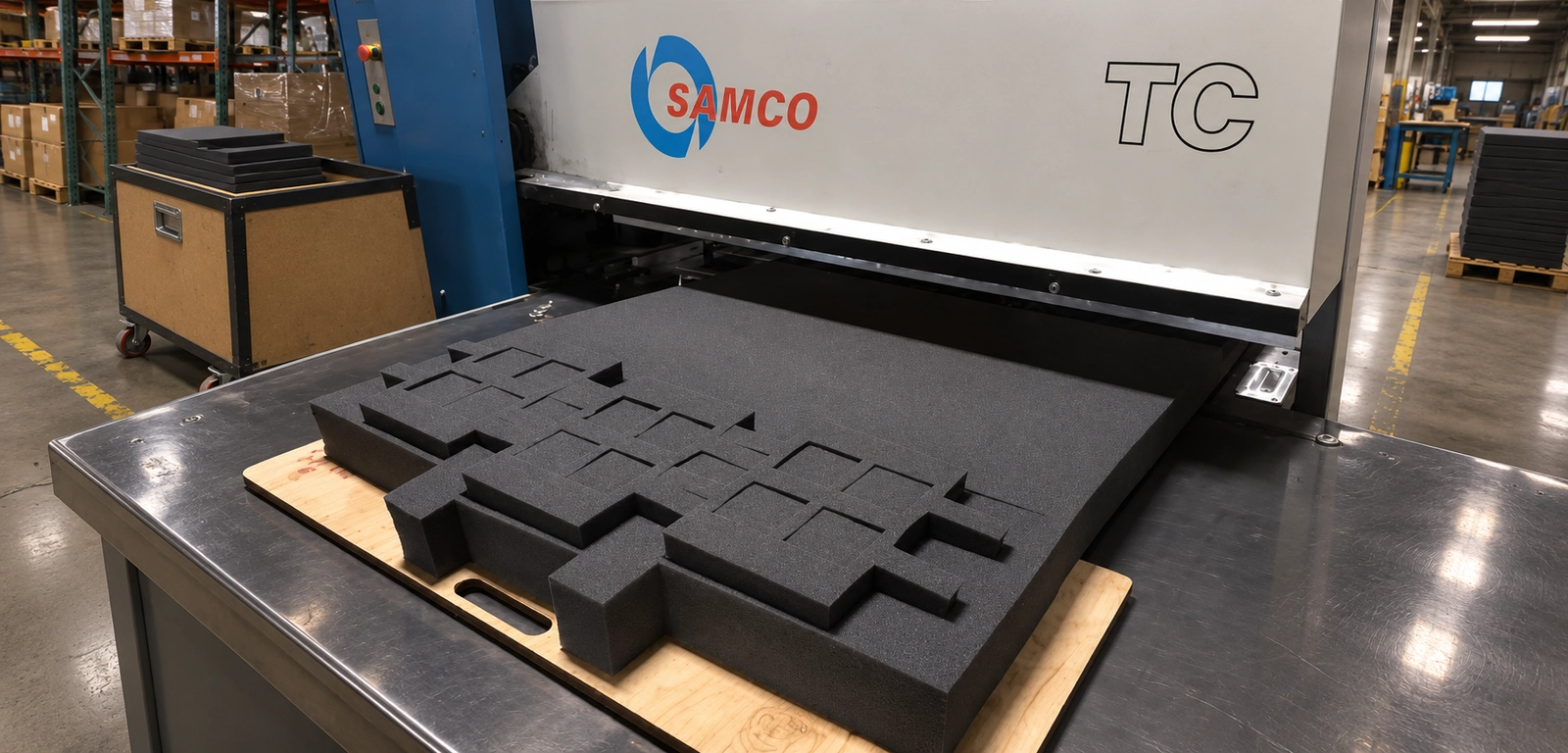
Precision Die Cutting
Review gasket outlines, narrow sealing lands, internal openings, corner radii and critical dimensions against the selected foam grade and thickness.
Lamination & Bonding
Evaluate adhesive coverage, bonding surfaces, liner handling and placement requirements without compromising the intended foam contact area.
Quality & Tolerance Control
Check material identification, sheet thickness, critical dimensions, openings and cut-edge condition against agreed drawing and inspection requirements.
Die-Cut Foam Gaskets FAQs
Questions about specifying a foam contact path, backing and the drawing needed for review.
What is the difference between a die-cut foam gasket and a foam cushioning pad?
A die-cut foam gasket follows a defined joint or contact path to help seal an enclosure or assembly interface. A cushioning pad primarily manages local contact pressure, spacing, impact or vibration. The same foam material may serve either function, but geometry, installed compression and performance requirements must be evaluated for the intended application.
How do I choose between PE, PU and other foam materials for custom gaskets?
Polyethylene (PE), polyurethane (PU) and other specified foam sheets offer different combinations of cellular structure, compressibility, recovery and environmental resistance. The appropriate material depends on whether the gasket is intended for sealing, cushioning or gap management. Compare grade-specific thickness, compression behavior, temperature exposure and service conditions before selecting a foam construction.
Is open-cell or closed-cell foam better for sealing against dust and moisture?
Neither cell structure is universally better for every sealing application. Closed-cell foams may offer lower water absorption when uncompressed, while certain engineered open-cell foams can form effective seals under suitable compression. Performance depends on the specific material grade, contact surfaces, gasket thickness and installed compression. Dust- or moisture-sealing requirements should be validated under representative assembly conditions.
How should foam gasket thickness and compression be specified for an enclosure?
Start with the minimum and maximum assembled gap, mating-surface condition, fastener arrangement and available closure force. Gasket thickness and material compressibility must maintain contact along the intended sealing path without excessive loading. Review grade-specific compression-force data and gap tolerances rather than applying one fixed compression percentage to every foam gasket.
Can you die cut custom foam gasket frames, holes, slots and narrow features?
Custom gasket frames, rings, strips, mounting holes, slots and other openings can be reviewed from drawings or samples. Feasibility and achievable tolerances depend on foam grade, thickness, softness, feature spacing and edge geometry. Mark narrow sealing widths, critical hole locations and cut-edge requirements on the drawing before confirming tooling and inspection criteria.
Can custom die-cut foam gaskets include adhesive backing and release liners?
Adhesive backing and release liners can be evaluated to support gasket positioning and handling during assembly. Adhesive selection depends on the foam grade, mounting substrate, surface finish and operating environment. Specify adhesive placement, liner arrangement and assembly sequence before confirming the construction. Adhesive positioning alone does not guarantee the required compression seal.
Can die-cut foam gaskets provide dust or water protection for equipment enclosures?
A suitable die-cut foam gasket can form part of an enclosure sealing design when the material, sealing-path continuity and installed compression meet the application requirements. Gaps, joint discontinuities or panel distortion may affect protection. Any required IP rating or water-ingress performance must be validated on the complete enclosure, not assumed from the foam gasket alone.
How do compression set and repeated opening affect foam gasket reliability?
Compression set describes permanent deformation remaining after a specified compression and recovery test. Stress relaxation or reduced load retention can also affect long-term sealing contact. Repeated enclosure opening, temperature and environmental exposure may influence gasket recovery and positioning. Material-grade data, joint design and expected maintenance conditions should be reviewed before estimating service suitability.
Can custom foam gaskets be prototyped and inspected before production?
Prototype and low-volume requirements can be evaluated before regular production. Samples can help assess profile fit, installation handling, adhesive positioning and compression in the intended assembly. Agreed checks may include material identity, thickness, critical dimensions, openings and visible cut quality. Tooling and lead times depend on the project. Functional sealing validation must be defined separately.
What information is needed to quote custom die-cut foam gaskets?
Send a drawing or sample, revision, gasket profile, critical dimensions, minimum and maximum assembled gap, material and thickness preferences, and estimated quantities for each design. Include sealing or cushioning requirements, operating conditions, fastening details, adhesive or liner needs and any ingress-protection targets. If the foam grade is unknown, describe the assembly so suitable options can be reviewed.
Share the foam gasket drawing
Send the gasket outline, installed gap range, material or compression requirements, adhesive needs and estimated quantity for a project-specific review.