THERMAL MANAGEMENT MATERIALS
Thermal Management Materials
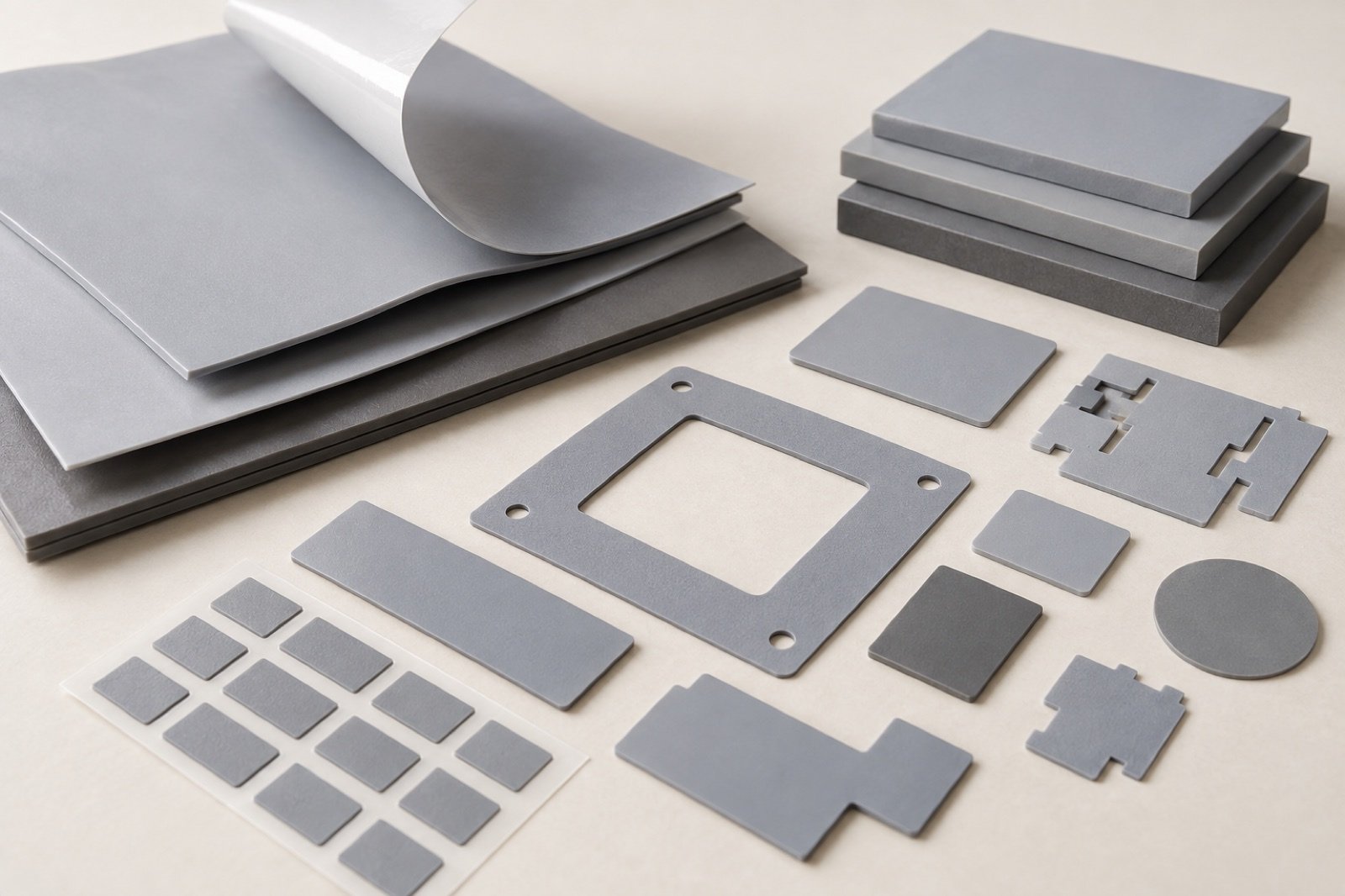
TC Components converts thermal interface and thermally conductive materials into custom die-cut components for heat transfer, gap filling and thermal interface applications.
MATERIAL OVERVIEW
Thermal Materials for Custom Interface Components
A thermal material is selected for the specific interface, not by category name alone. Gap, thickness, compressibility, surface contact and assembly pressure shape the review.
Geometry, adhesive needs and operating conditions then inform how a flexible sheet or layered construction could be converted into a custom component. Material suitability remains project specific.
MATERIAL FAMILIES
Different materials for different thermal interfaces.
These families are starting points for evaluation. Grade, availability and suitability must be confirmed against the drawing and material specification.
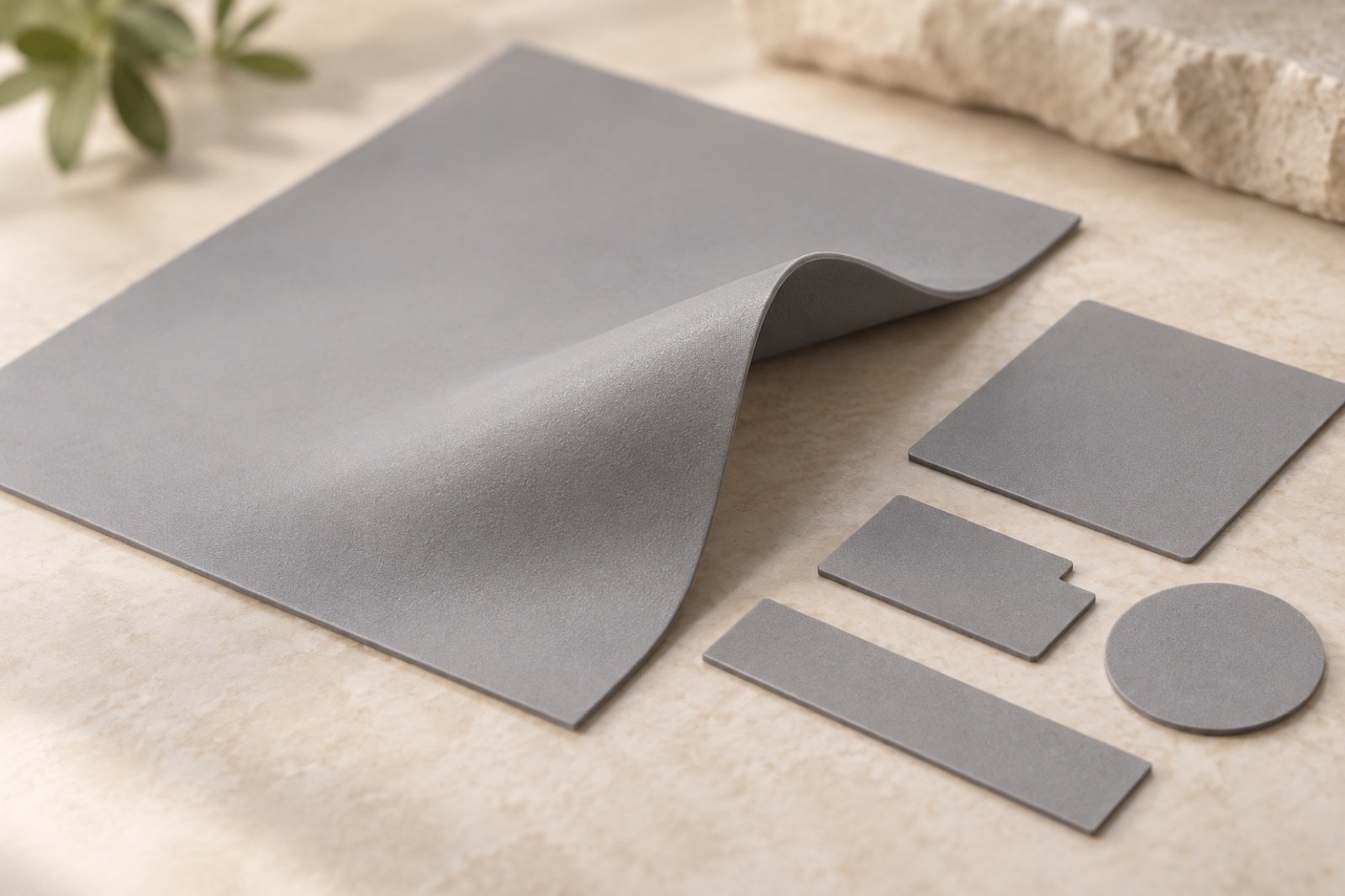
Thermal Interface Materials
Thermal interface materials may be considered between mating surfaces where improved thermal contact or gap management is required within an assembly.
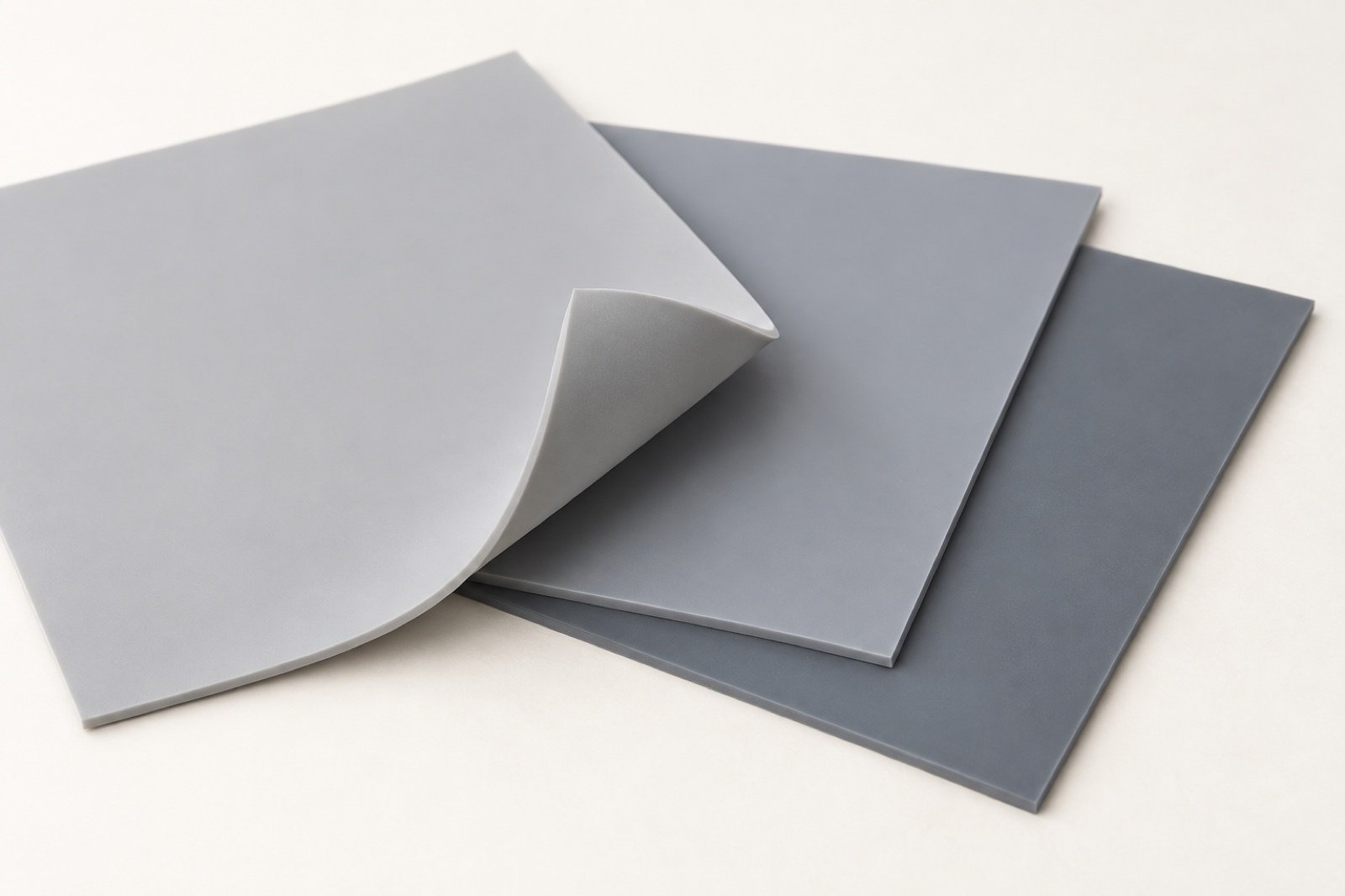
Thermally Conductive Silicone Materials
Silicone-based thermal sheet materials may be evaluated for a compliant interface. A silicone thermal interface material must be specified and assessed for the intended converting process.
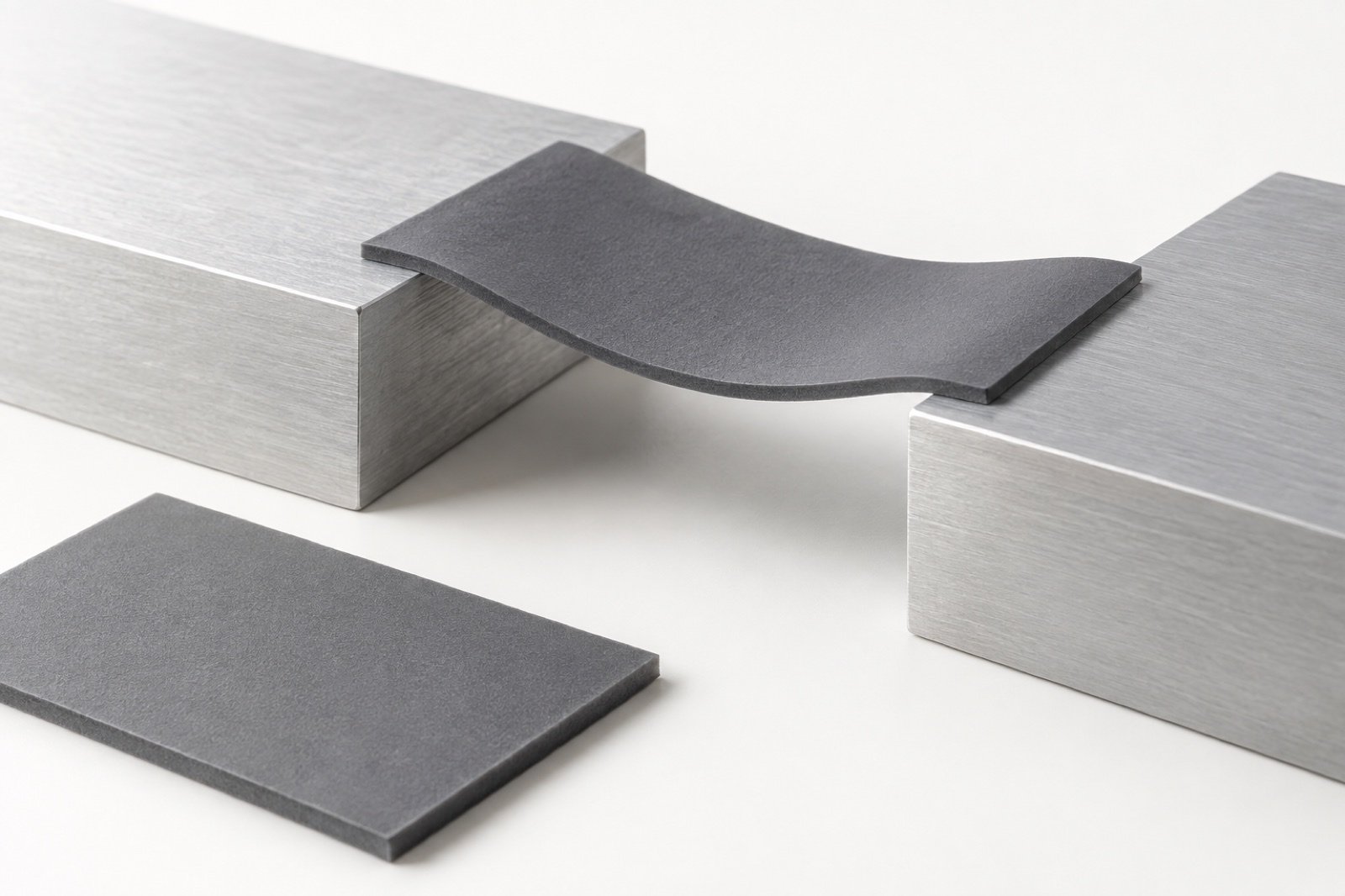
Thermal Gap Filler Materials
A flexible thermal gap filler material may be considered where uneven surfaces or a dimensional gap call for a compliant sheet-form interface. Suitability of a thermally conductive gap filler depends on the selected sheet and assembly conditions.
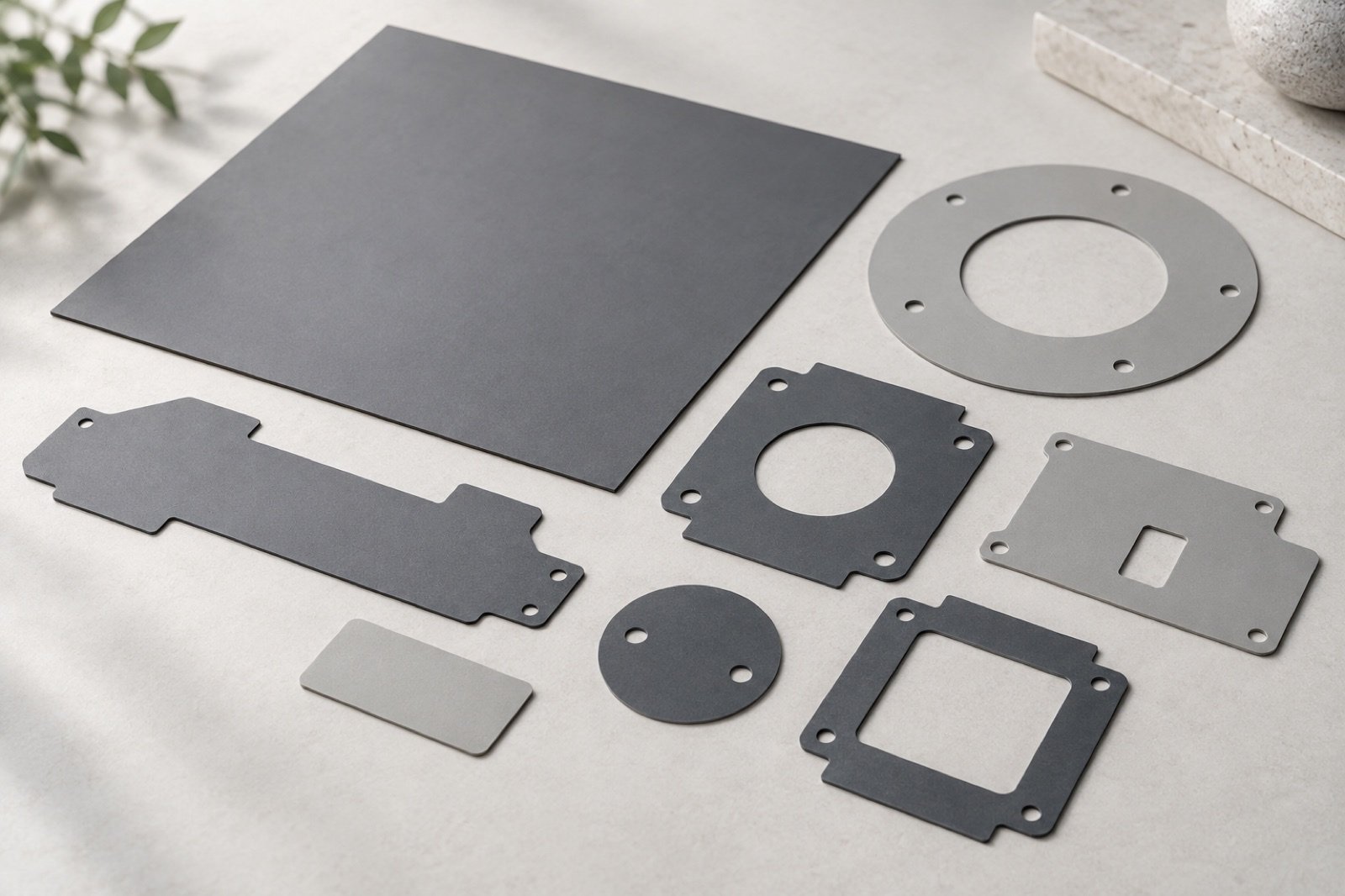
Thermal Sheet Materials
Thermally conductive sheet materials and interface sheets may be reviewed for custom cut geometries based on the drawing, contact surfaces and assembly requirements.
Other Thermal Materials
Other thermal interface materials may be evaluated where material specifications and converting feasibility are available. Specification and converting feasibility are reviewed for each project.
MATERIAL SELECTION
Selecting a Thermal Interface Material
Begin with the real interface conditions. Selection considers the complete interface and assembly conditions.
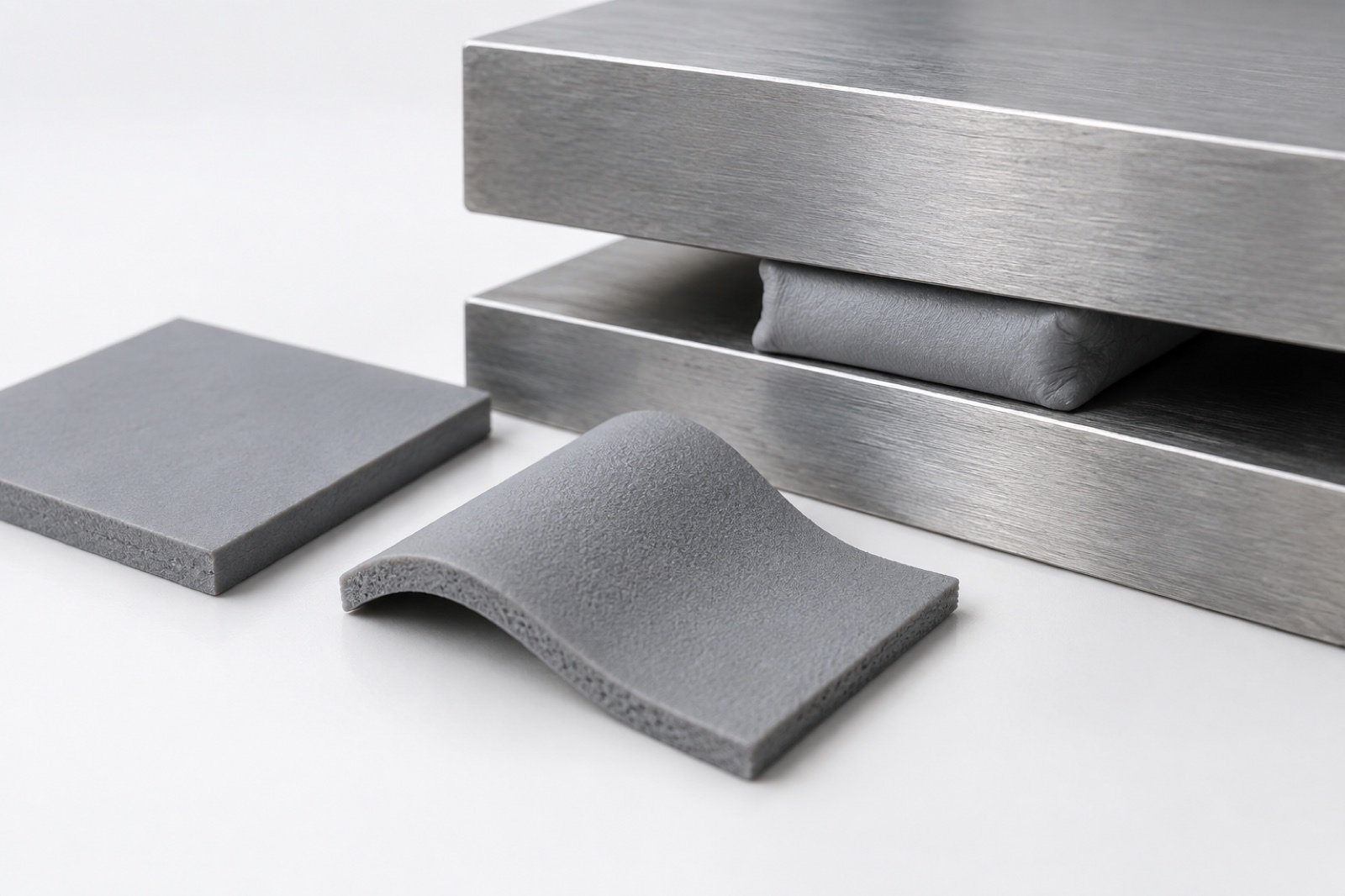
Thermal Function
What heat-transfer or interface role is required?
Gap
What distance must the material bridge?
Thickness
What sheet thickness fits the assembly?
Compression
How much compliance is needed?
Surface Contact
Are mating surfaces flat or irregular?
Adhesive Requirement
Does installation require a backing layer?
Geometry
Which shape, openings or keep-out areas matter?
Assembly Conditions
What operating and mechanical conditions apply?
MATERIAL CONSTRUCTION
Material Forms & Constructions
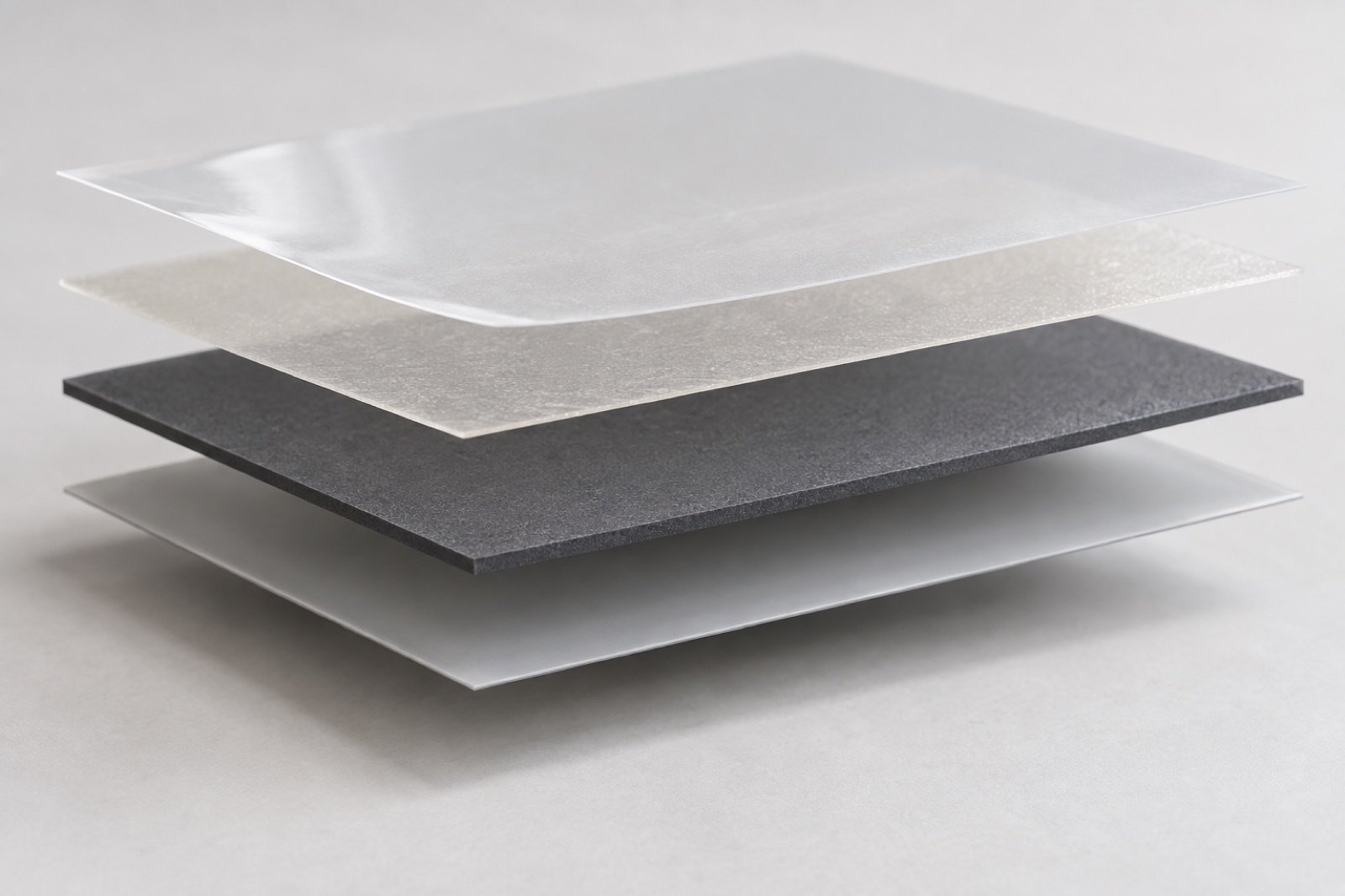
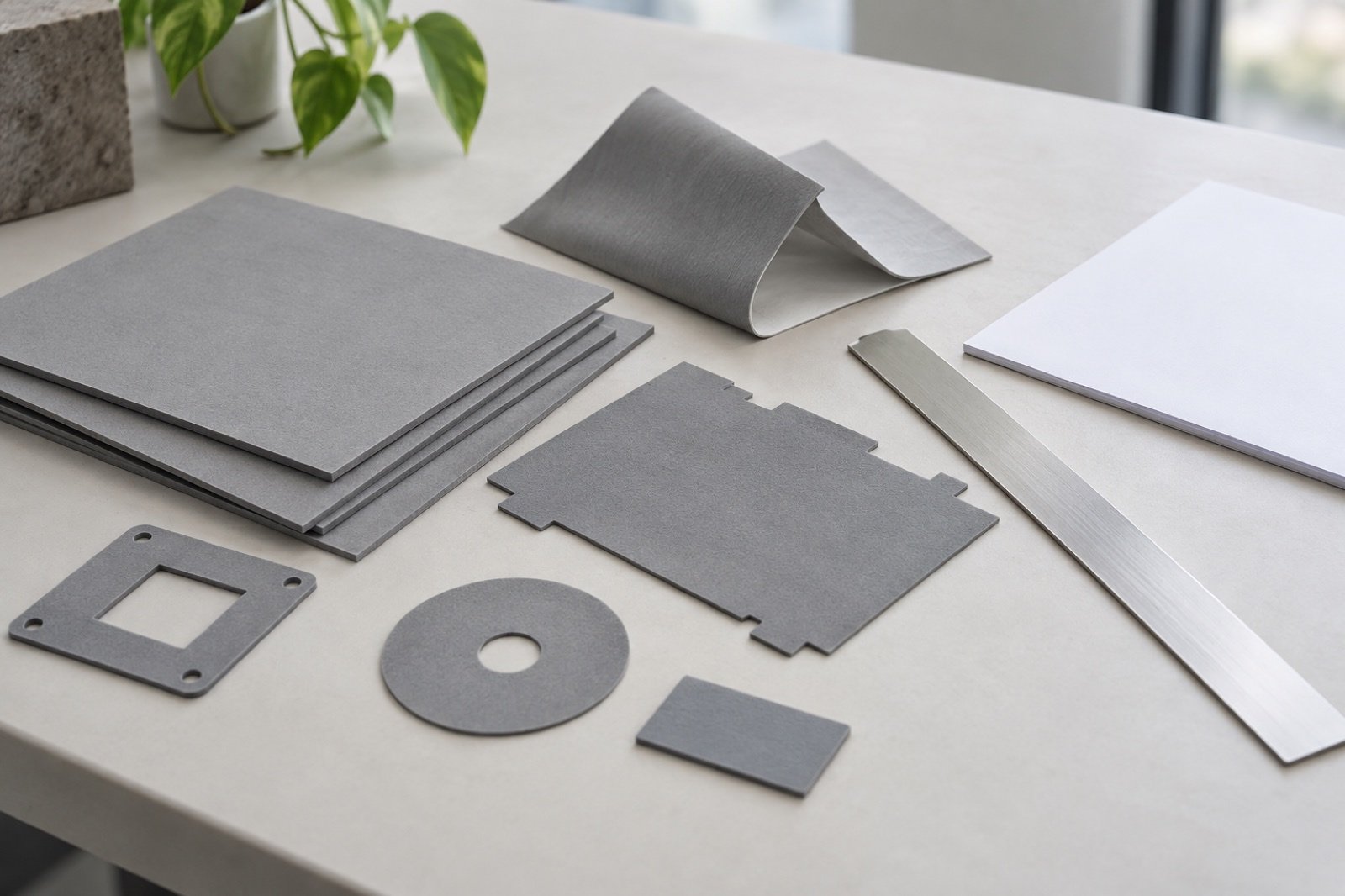
Flexible sheets can be cut directly or evaluated with optional adhesive and support layers. Layer order is defined for each project.
MATERIAL TO COMPONENT
Die Cutting & Lamination
Thermal interface sheets can be converted into custom shapes and combined with other layers where the assembly requires it.
Thermal Material
Review the interface and material specification.
Lamination & Bonding
Evaluate optional backing or layers.
03Precision Die Cutting
Cut the agreed profile and openings.
04Thermal Component
Review fit in the final assembly.
ENGINEERING BRIEF
Engineering Considerations
Share what is known about the thermal interface and geometry. Open material choices can be reviewed against the project requirements.
RELATED PRODUCT
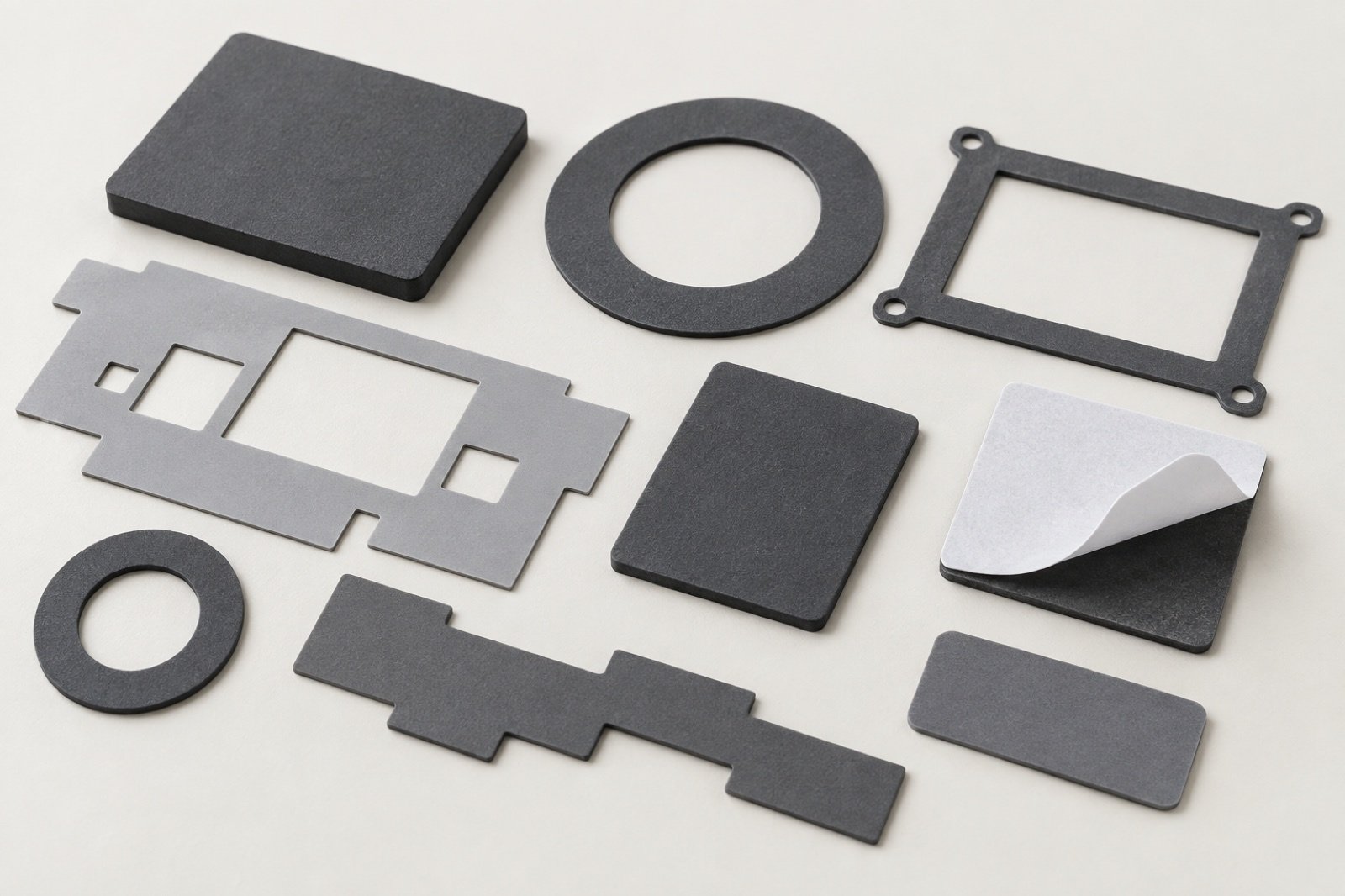
From interface sheet to finished component.
This page covers thermal material forms and selection. The product page covers finished die-cut thermal gap pads, interface pads and other drawing-defined components.
RELATED APPLICATIONS
Thermal interfaces depend on the assembly.
Interface geometry, contact pressure and installation differ across electronic and industrial equipment.
MATERIAL / QUALITY REVIEW
Verify the Specified Construction
The agreed material specification and drawing guide project-specific checks, which may include material, thickness and layer confirmation, dimensional inspection and visual review.
Explore Quality & Tolerance ControlFAQ
Thermal material questions.
Practical answers about material forms, selection and converting requirements.
What thermal management materials can be die cut?
Flexible thermal interface sheets and other sheet-form thermally conductive materials may be considered. The specified grade, handling requirements and cutting feasibility need project review.
What are thermal interface materials used for?
They sit between mating surfaces where thermal contact or gap management is required. Material choice depends on the assembly, contact area, pressure and operating conditions.
Can thermally conductive silicone materials be custom die cut?
Sheet-form thermally conductive silicone materials may be evaluated for custom shapes where the material specification and geometry support die cutting. Availability and suitability require confirmation.
What is a thermal gap filler material?
It is a compliant material considered to bridge a space or surface variation within a thermal interface. This page concerns flexible material forms for converting, not liquid compounds.
How do I choose a thermal interface material?
Start with the thermal role, gap, thickness, compression, surface contact, adhesive needs, geometry and operating environment. Review candidate materials against the assembly specification.
Can thermal materials include adhesive backing?
An adhesive-backed construction may be evaluated where installation requires it. Compatibility of the thermal material, adhesive, liner and assembly conditions must be confirmed.
Can thermal interface materials be laminated with other functional layers?
Layered constructions may be considered when the selected sheet material and project requirements support bonding. The layer order and converting feasibility are reviewed for the specific design.
What information is needed for a thermal material quotation?
Provide a drawing or sample, thermal interface requirement, material specification if available, gap or thickness information, contact surfaces, dimensions and estimated quantity.
START A MATERIAL REVIEW
Need a Thermal Material for a Custom Component?
Send us your drawing, thermal interface requirement, material specification if available, gap or thickness information, dimensions and estimated quantity for review.
Request a Quote