DIE-CUT COMPONENTS
Rubber Die-Cut Gaskets
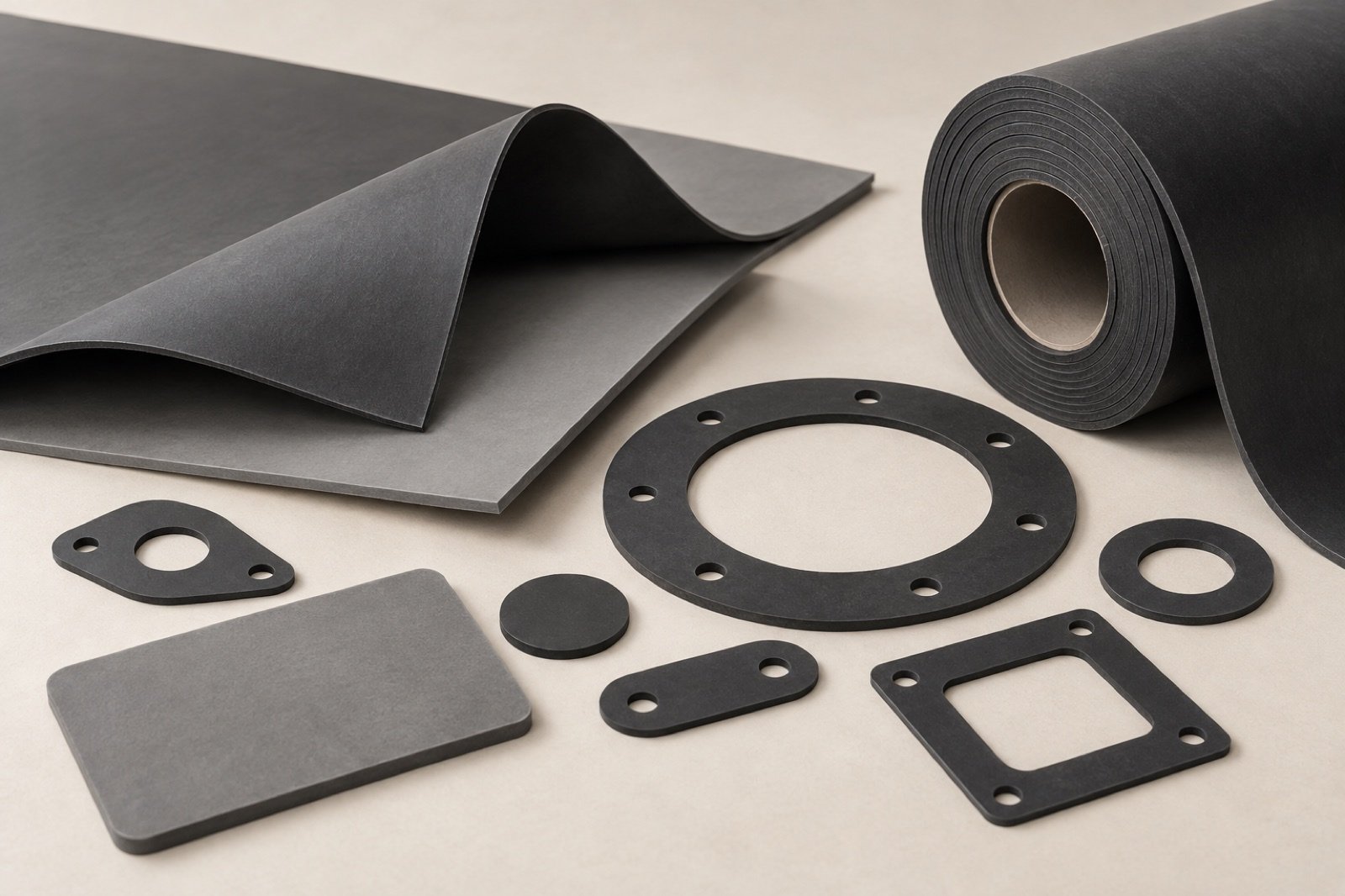
Sheet-rubber gasket profiles developed around sealing contact, fit and assembly requirements.
PRODUCT OVERVIEW
A rubber profile for a defined joint
Rubber die-cut gaskets start with a flat sheet and a two-dimensional profile. That makes the drawing central: an opening, fastener clearance or narrow contact land can change how a gasket fits the joint. For buyers comparing rubber with foam or silicone, the useful question is the behavior required at the interface, not only the material name.
COMPONENT FORMS
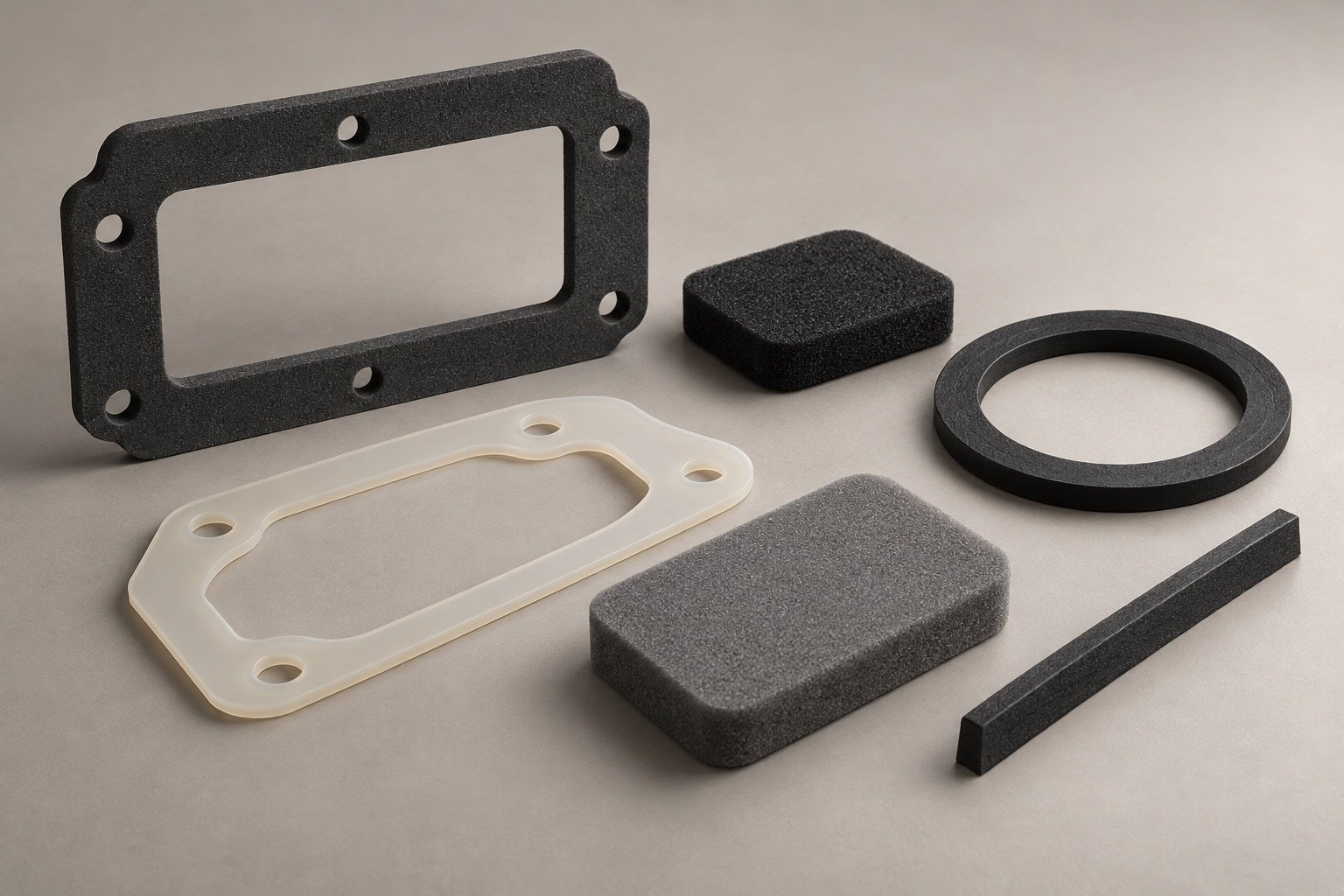
Typical Forms for Rubber Die-Cut Gaskets
A flat gasket can include openings, tabs and fastener clearances when they are part of the drawing.
Rubber gaskets
Cut profiles around specified joints.
Rubber pads
Local pieces for contact or cushioning.
Sealing frames
Open-center profiles around panels or covers.
Isolation pads
Pieces separating contacting surfaces.
Rubber spacers
Defined shapes for local separation.
Adhesive-backed parts
Sheet-rubber shapes with backing where placement requires it.
MATERIAL OPTIONS
Specify the sheet, then the geometry
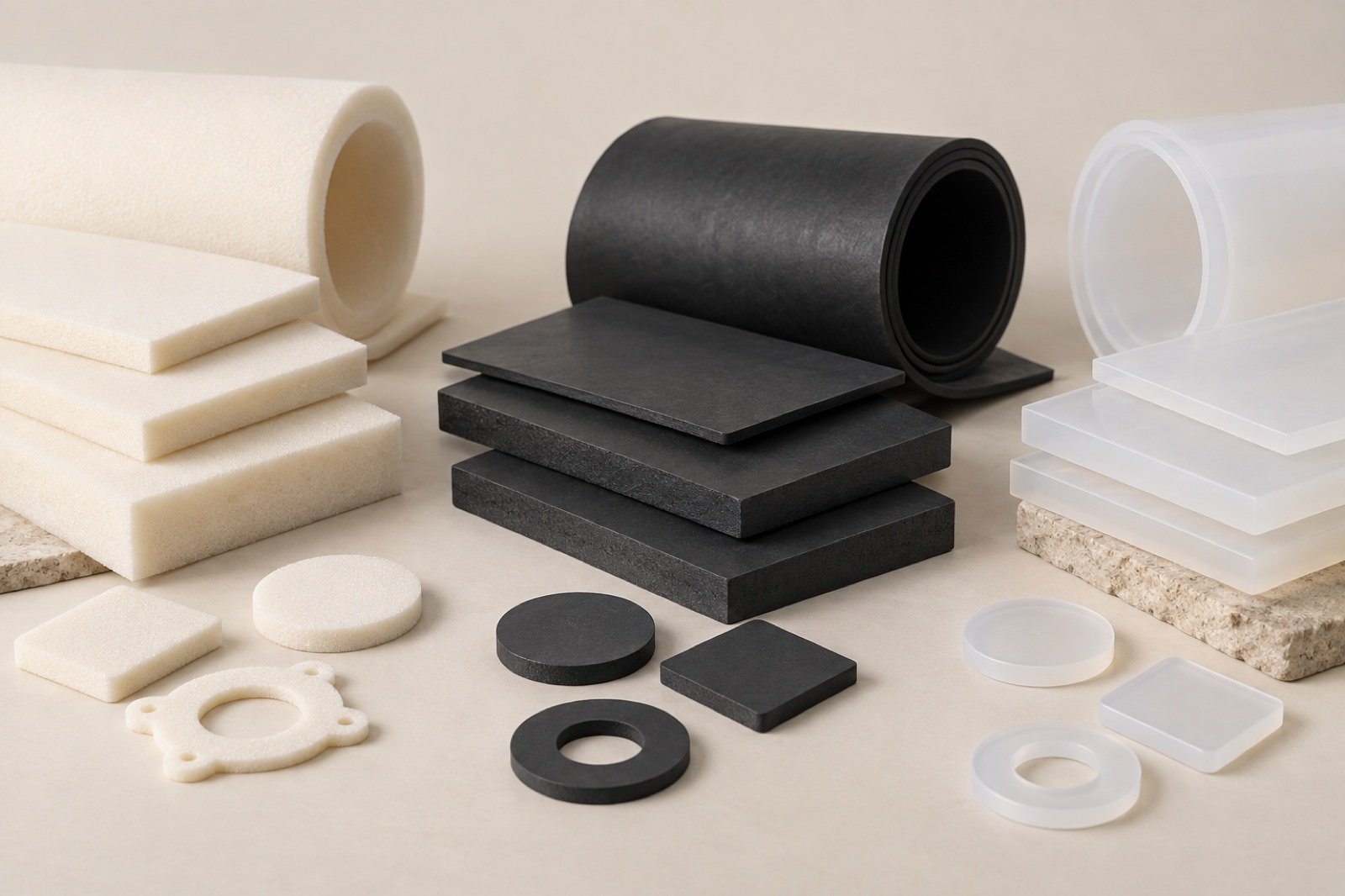
EPDM and neoprene rubber sheets may be considered, alongside customer-specified rubber sheet materials. Selection should account for the contact surfaces, compression, environmental exposure and whether an adhesive construction is needed. Any particular grade or performance property is confirmed at project level.
- EPDM rubber sheet
- Neoprene rubber sheet
- Customer-specified rubber sheet
ENGINEERING CONSIDERATIONS
Design factors for Rubber Die-Cut Gaskets
Rubber selection and joint design need to be considered together.
Joint & compression
State the available gap and how the part contacts the surfaces.
Cut features
Show holes, corners, inner cutouts and critical locating features.
Exposure & placement
Describe the operating environment and any adhesive attachment.
MANUFACTURING CAPABILITIES
Manufacturing path for Rubber Die-Cut Gaskets
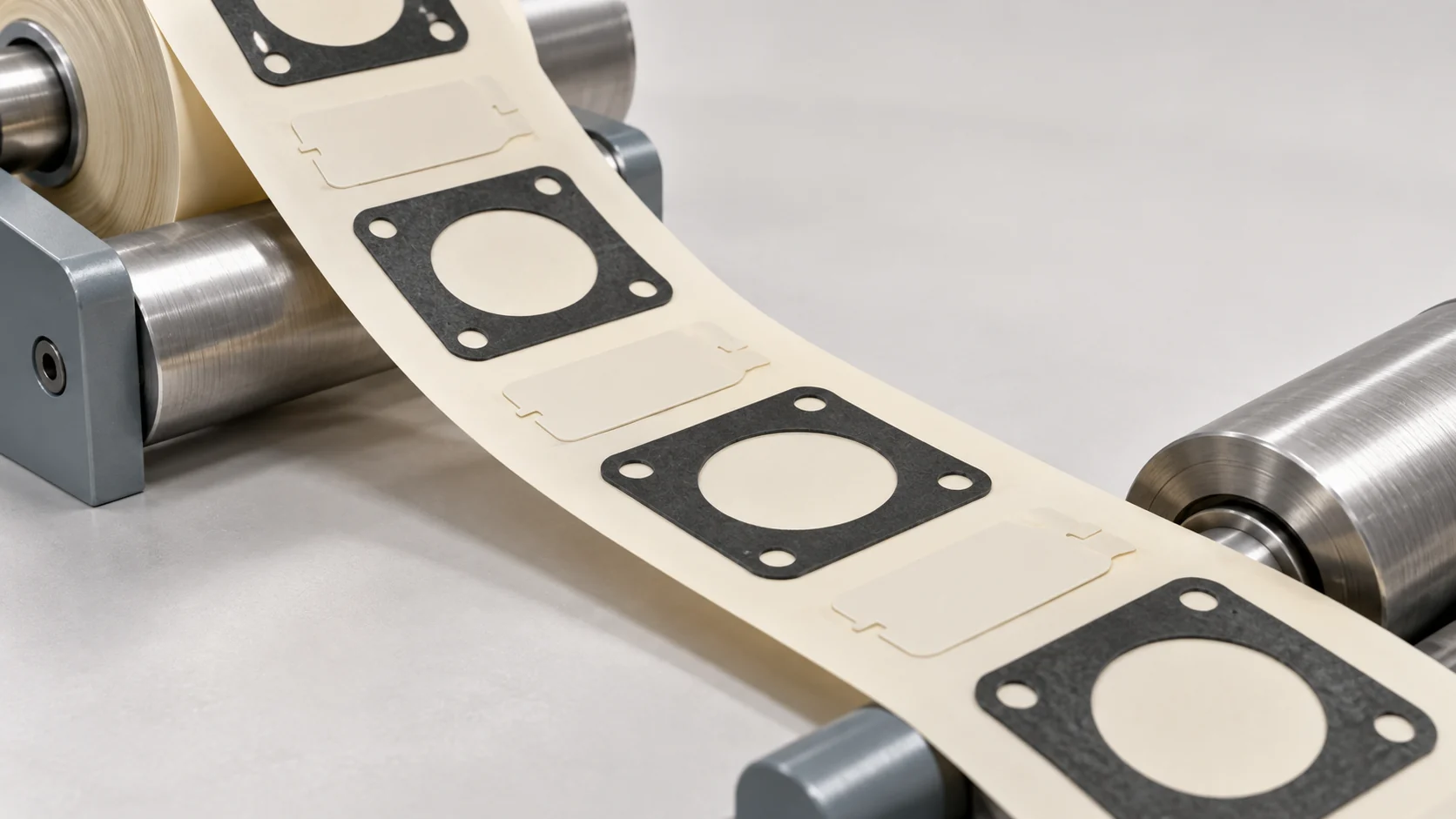
A sheet-based construction can be die cut and, if specified, combined with adhesive.
Precision Die Cutting
Profile, openings and critical cut features are reviewed against the material and drawing.
Lamination & Bonding
Adhesive or other specified layers are evaluated as part of the construction.
Quality & Tolerance Control
Material, dimensions and visible construction are checked to agreed project criteria.
APPLICATIONS
Equipment contexts for Rubber Die-Cut Gaskets
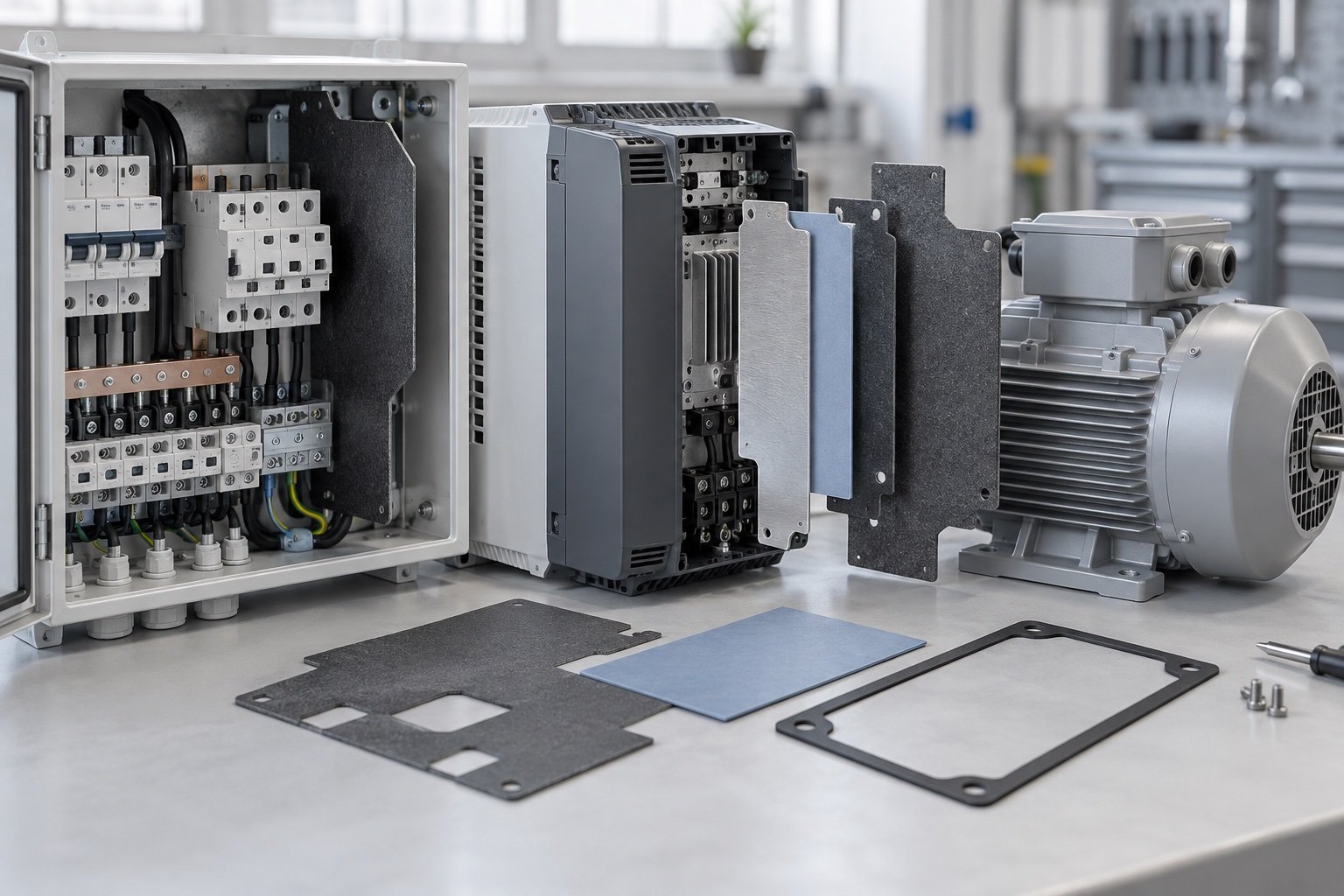
Custom profiles can serve enclosures, covers and equipment joints across selected industrial equipment.
QUALITY / VERIFICATION
Confirm material and joint features
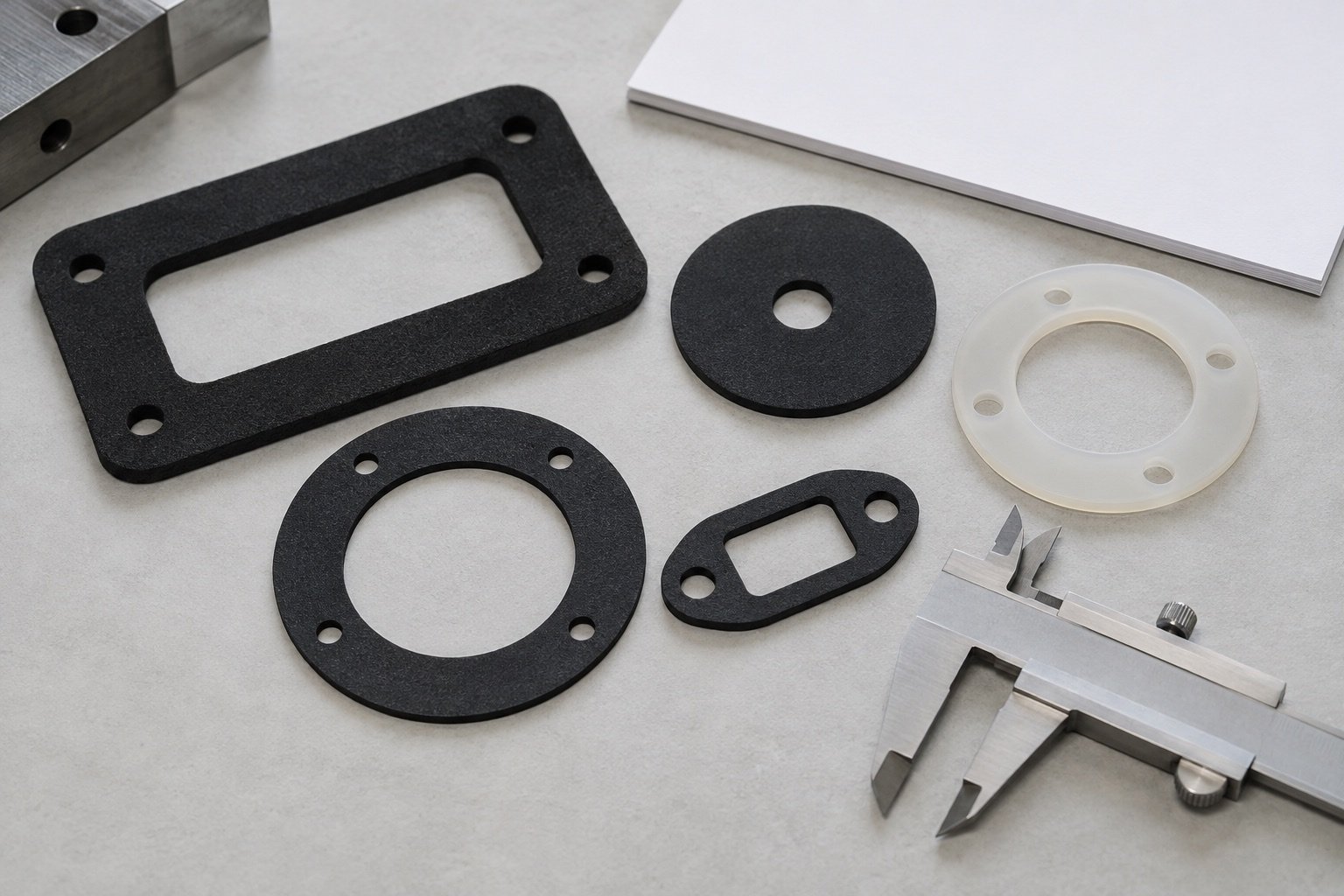
Verification starts with the specified rubber sheet and the approved drawing. The outline, openings and critical dimensions can be reviewed alongside visual condition. Sealing performance must be defined by the application rather than inferred from the presence of a gasket.
- Sheet-material confirmation
- Drawing and feature review
- Dimensional and visual inspection
FAQ
Rubber Die-Cut Gaskets FAQs
Answers about construction, drawings and project requirements.
Which rubber materials are discussed for die-cut gaskets?
EPDM and neoprene rubber sheet, or a customer-specified sheet, can be reviewed. The application determines whether a particular grade is appropriate.
Can openings and fastener holes be included?
Yes, the proposed profile can include holes and internal cutouts shown on the drawing. Critical positions should be identified in the RFQ.
Can an adhesive layer help locate the gasket?
An adhesive-backed construction can be assessed if the substrate and installation sequence are known.
How is rubber different from a foam gasket?
The selection depends on the joint, desired contact behavior and environment. Share the interface requirements rather than choosing solely by material family.
Can you review a sample instead of a drawing?
A sample can help define the shape; dimensions, material and use conditions still need confirmation before a quotation.
What data should accompany an RFQ?
Include the drawing or sample, rubber sheet preference, thickness, joint gap, exposure conditions, backing needs and expected quantity.
START A PROJECT
Have a Rubber Die-Cut Gaskets Project?
Send us your drawing, material specification if available, dimensions, quantity and application requirements for review.
Request a Quote