PRODUCTS
Electrical Insulation Components
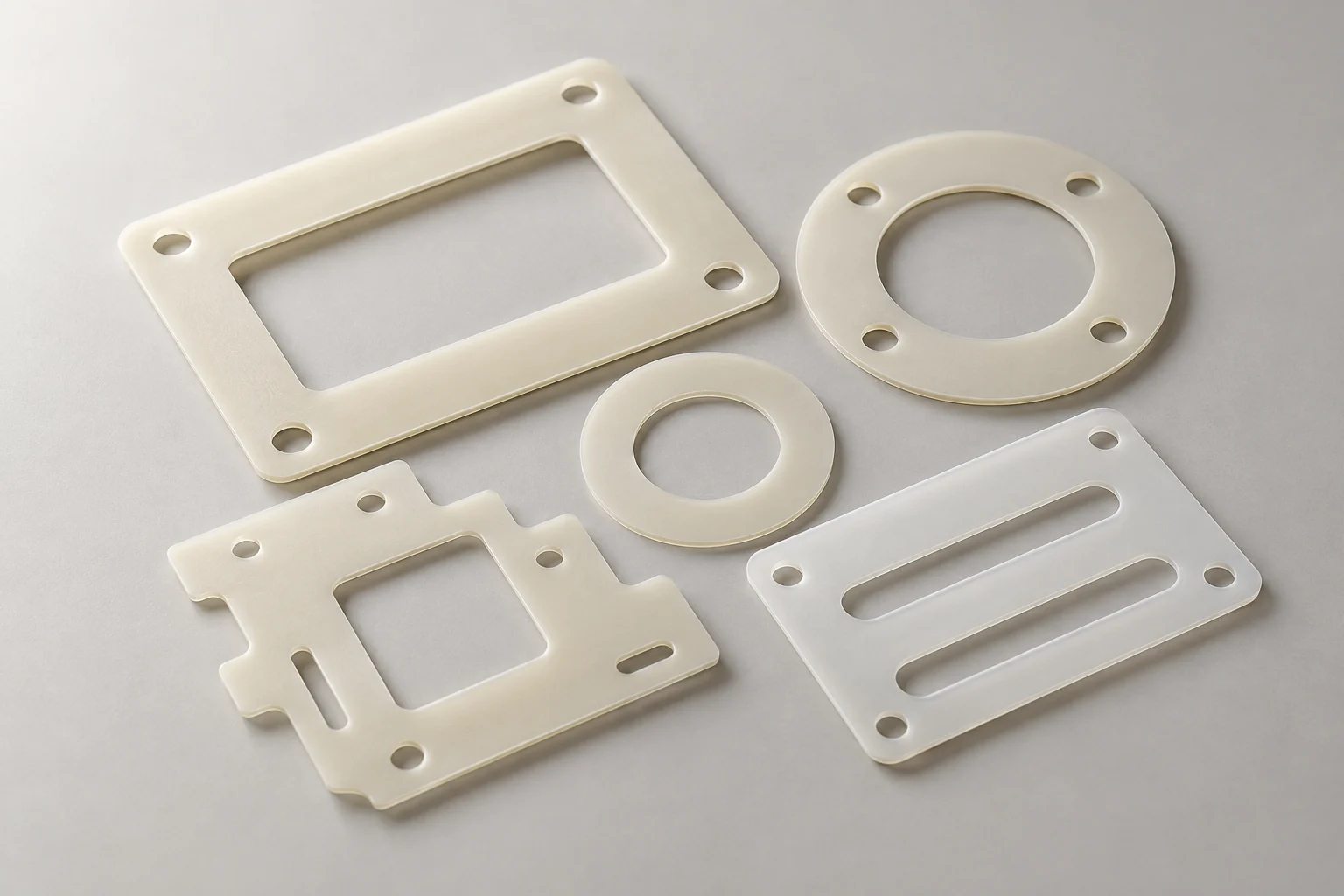
TC Components manufactures custom die-cut electrical insulation parts for electronic, electrical and industrial assemblies, based on drawing, material, thickness and application requirements.
PRODUCT OVERVIEW
Die-Cut Insulation Built Around the Application
Die cut electrical insulation can separate conductive parts, protect adjacent surfaces and manage interfaces inside an assembly. The component is shaped to the drawing and selected material—not a standard shape adapted after the fact.
COMPONENT FORMS
Typical Component Forms
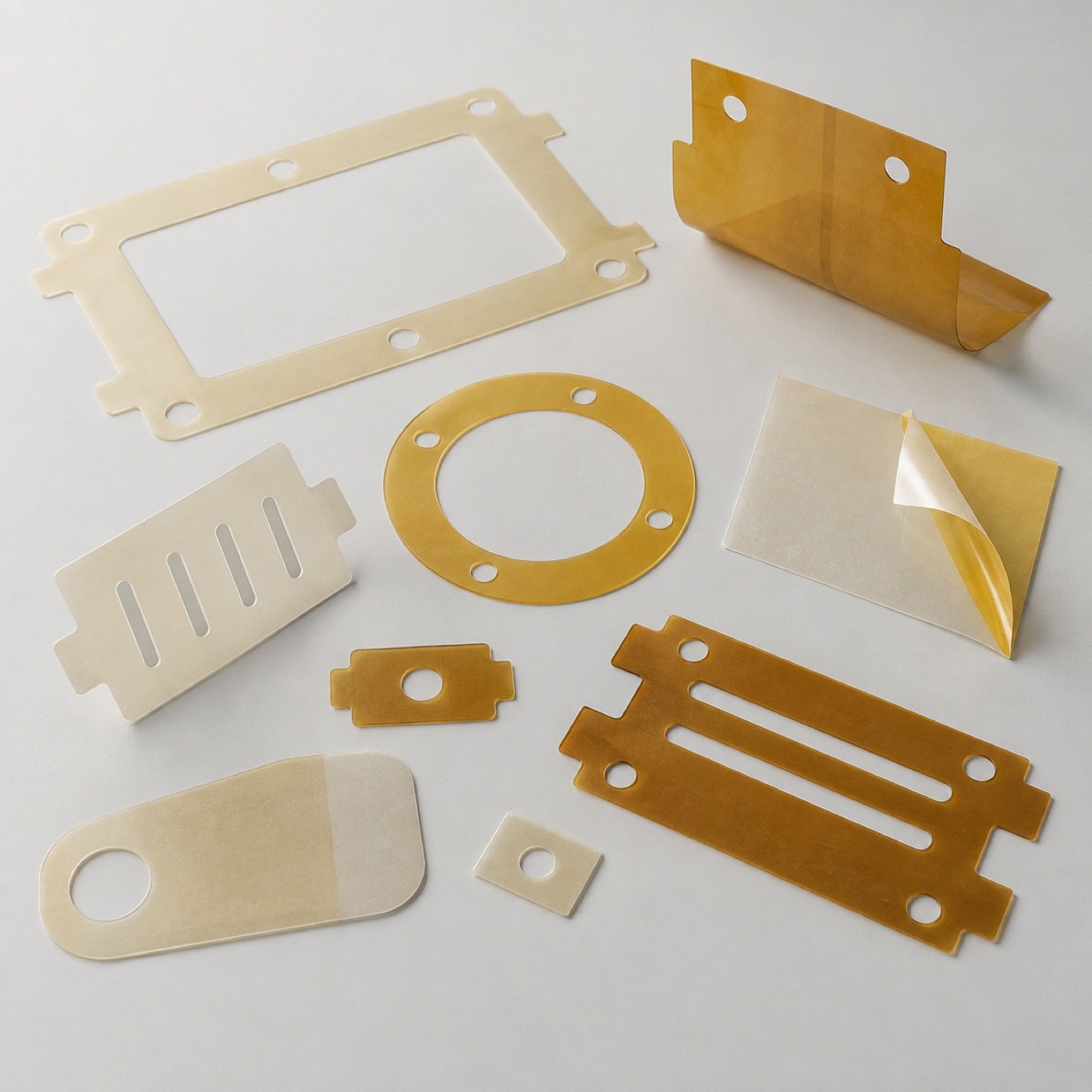
Shape and layer structure follow the electrical, mechanical and assembly requirements.
Die-Cut Insulation Films
Thin profiles for separation and surface protection.
Insulation Barriers
Shaped barriers between neighboring features.
Insulation Pads
Individual pieces for defined contact areas.
Frames & Spacers
Open profiles around openings and interfaces.
Adhesive-Backed Parts
Insulation profiles with an adhesive layer where specified.
Multi-Layer Structures
Combined film and functional layers for a defined assembly.
MATERIALS
Insulation Materials
Material selection starts with the required electrical function, operating conditions and assembly method. Depending on the project, options may include PET/polyester films, polyimide films, polycarbonate sheets and other insulation films or sheets.
Explore Insulation Materials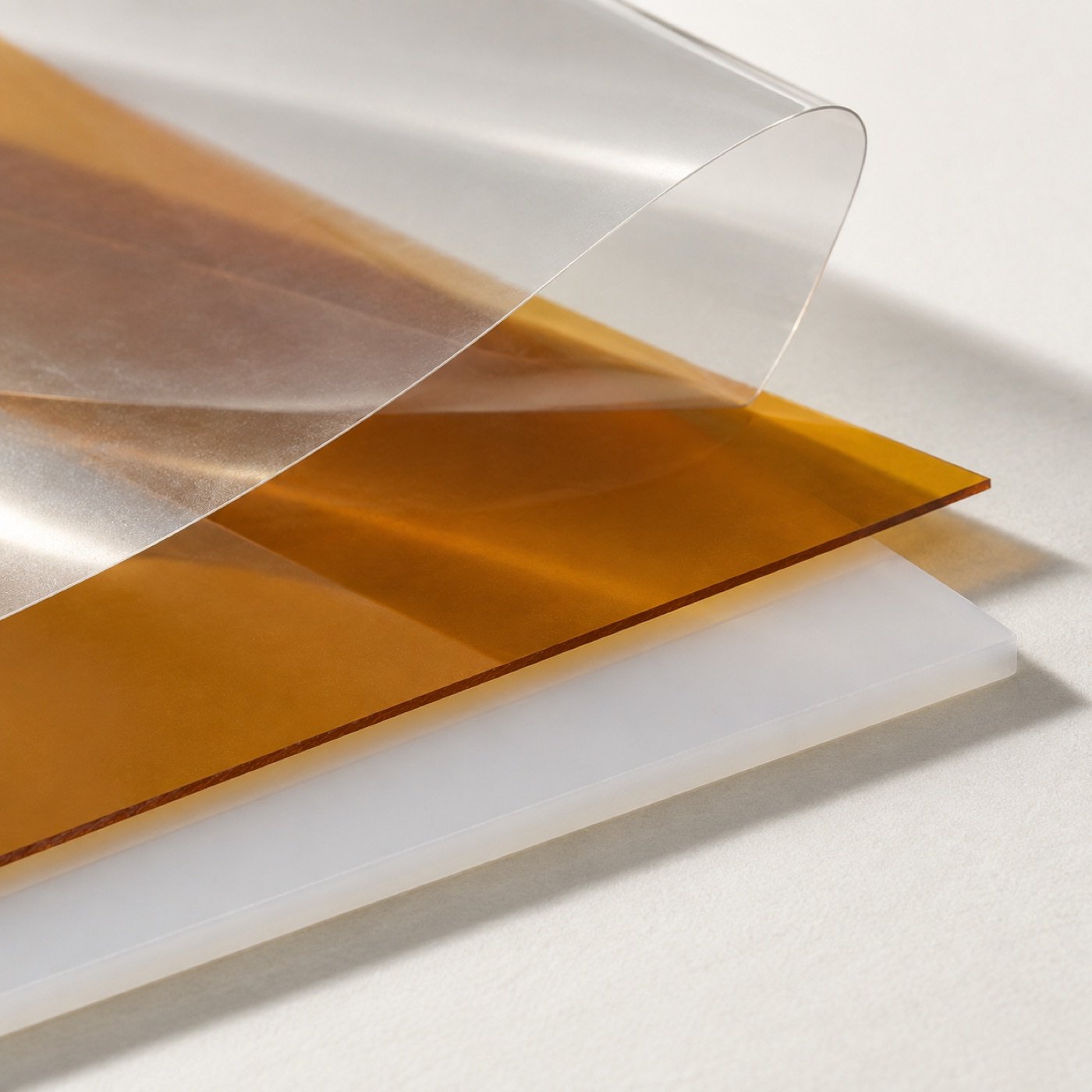
ENGINEERING FIRST
Engineering Considerations
Define the part by how it must fit, function and remain in place.
Geometry
Thickness, dimensions, shape, holes and cutouts.
Material & Conditions
Insulation function and expected operating conditions.
Assembly Interface
Placement, adhesive requirement and adjacent parts.
APPLICATIONS
Where These Components Are Used
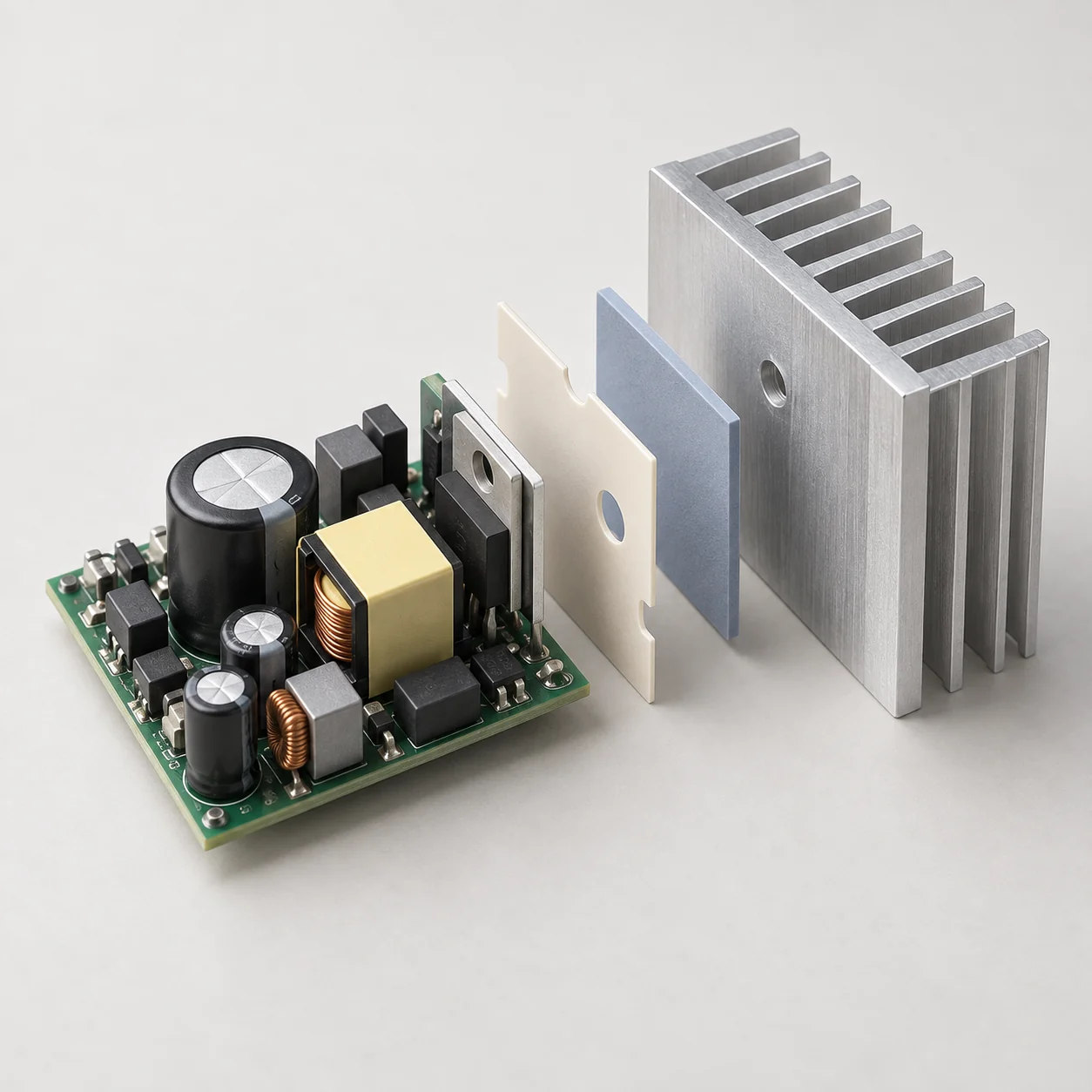
Die-cut insulation parts can help manage separation and fit within electrical and electronic equipment.
RELATED CAPABILITIES
How We Manufacture Them
The process route is set by the material, profile and layer construction.
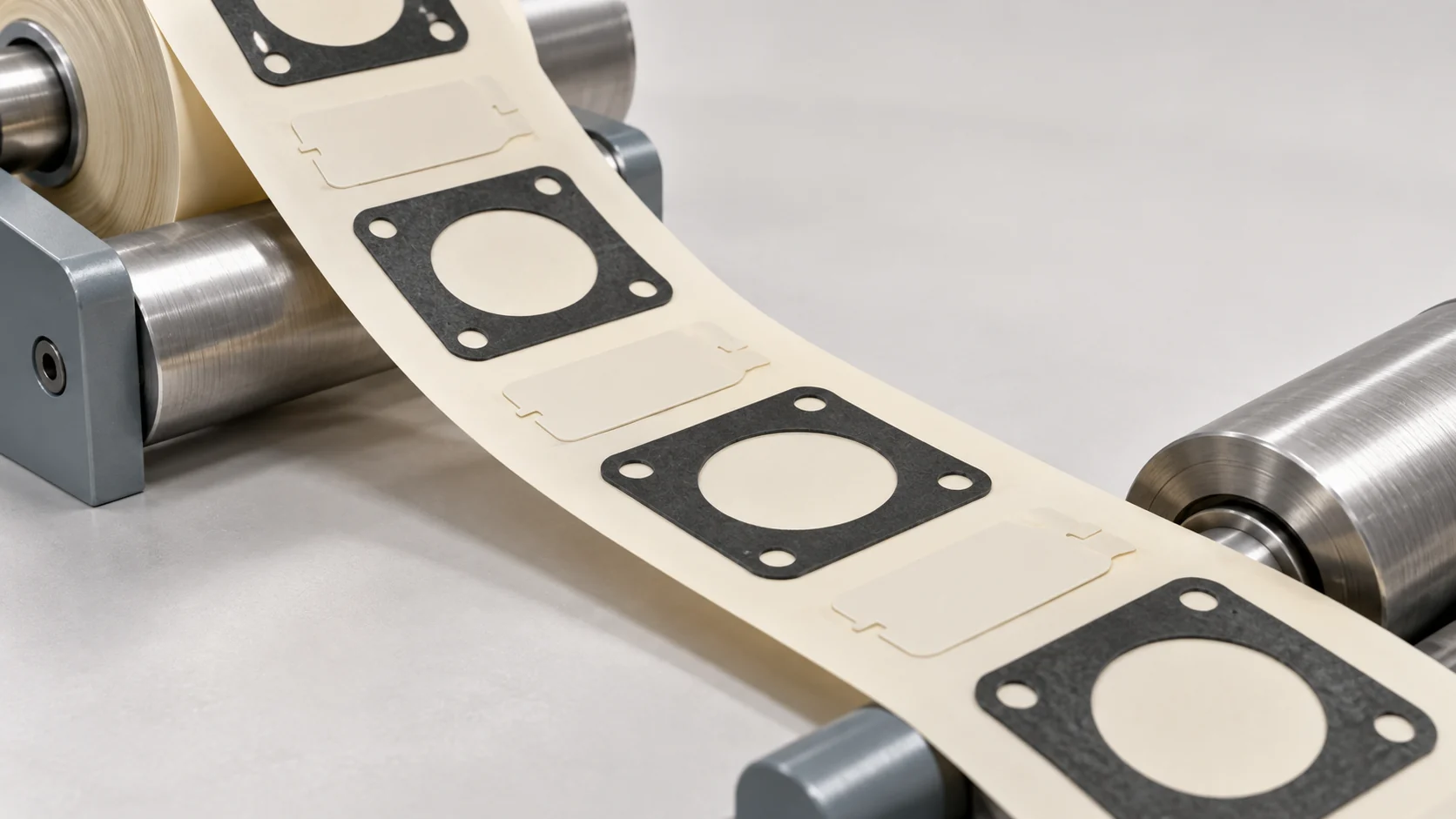
Precision Die Cutting
Profiles, openings and fit; prototyping and low-volume production can support development.
Lamination & Bonding
Adhesive-backed and multi-layer die-cut assemblies where the structure calls for them.
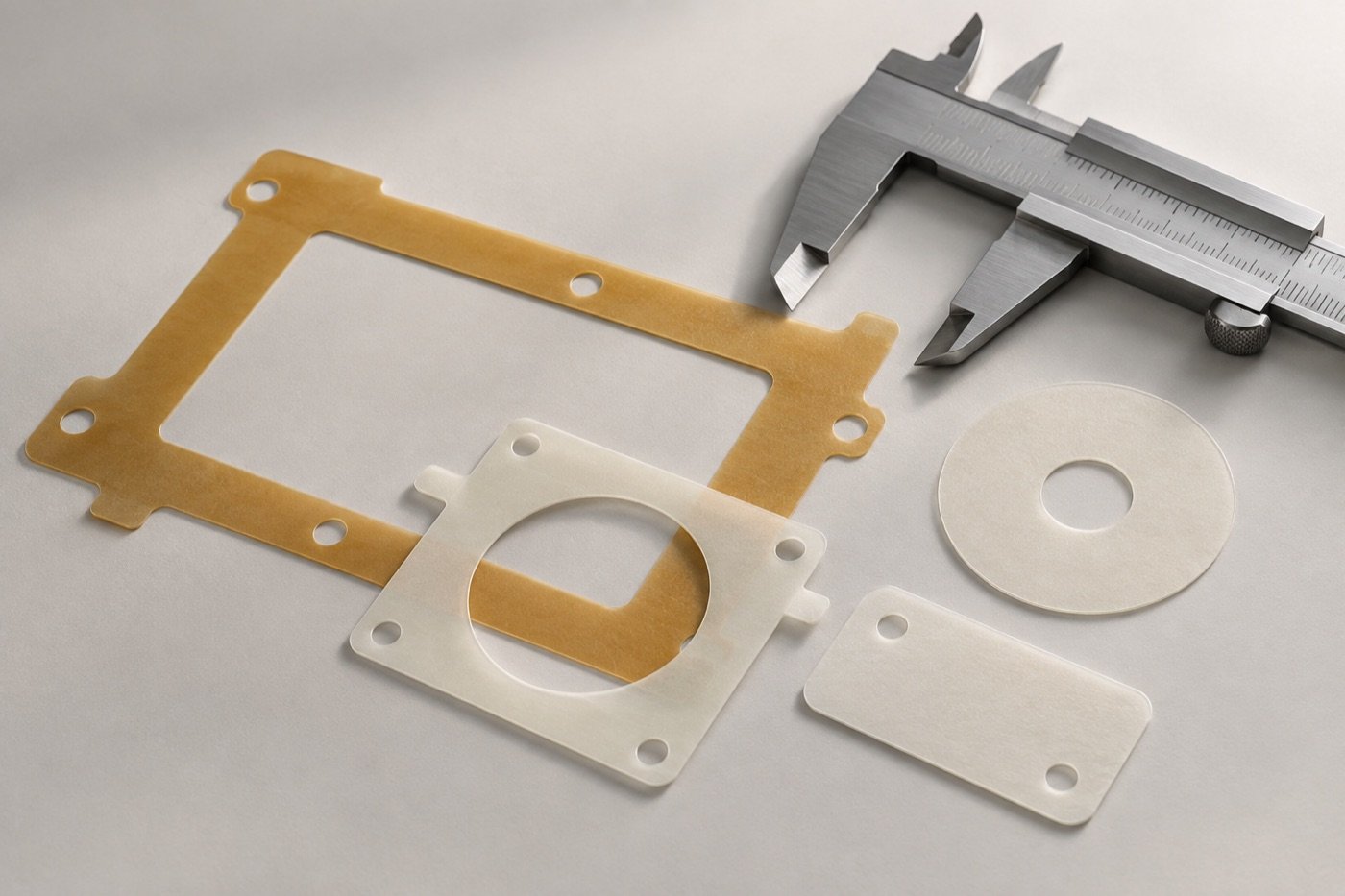
Quality & Tolerance Control
Project-specific dimensional and visual checks against agreed requirements.
QUALITY / VERIFICATION
Verification Follows the Drawing
Review and inspection needs are defined for the component and its application. The relevant checks may include:
- Drawing review
- Material confirmation
- Dimensional inspection
- Visual inspection
- Project-specific verification
FAQ
Electrical Insulation FAQs
Practical answers for drawing review, materials and quotation planning.
What electrical insulation materials can be die cut?
Options may include PET/polyester films, polyimide films, polycarbonate sheets and other insulation sheets. Selection depends on the electrical function, environment and assembly design.
Can you add adhesive backing to insulation components?
Yes, when the design calls for it. Adhesive and liner choices are reviewed against the substrate, placement and assembly requirements.
Can you produce multi-layer insulation structures?
Die cutting, lamination and bonding can combine insulation films with adhesive or other specified layers. The layer structure is agreed for each project.
What information should I provide for a quotation?
Share a drawing or sample, dimensions, material and thickness requirements, application details and estimated quantity. Indicate adhesive needs or critical features if known.
Can you support prototypes or low-volume production?
Prototypes or smaller runs may be discussed to assess fit and construction before a production plan is agreed.
How are electrical insulation components inspected?
The drawing and project requirements determine the checks. These may include material confirmation, dimensional review and visual inspection.
RELATED COMPONENTS
Related Components
START A PROJECT
Have an Electrical Insulation Component Project?
Send us your drawing, material requirements, dimensions and estimated quantity for review.
Request a Quote