
Custom Die-Cut Components for Functional Applications
Explore custom die-cut components for electrical insulation, sealing, cushioning, bonding, EMI shielding and thermal interfaces. Start with the required function, then narrow the options using your drawing, material and assembly conditions.

Explore the component families.
Select a component family by the function required in your assembly.

01 / 05
Electrical Insulation Components
Die-cut insulation barriers, washers and pads for specified electrical separation and assembly fit.
View Insulation Components
02 / 05
Sealing & Cushioning Components
Die-cut foam, rubber and silicone gaskets for defined gaps, contact surfaces and compression.
View Sealing Components
03 / 05
Adhesive Functional Components
Custom adhesive frames, pads and strips for specified bonding surfaces and placement.
View Adhesive Components
04 / 05
EMI Shielding & Magnetic Isolation Components
Conductive gaskets and foil profiles for EMI contact; magnetic shielding requires separate material review.
View EMI Shielding Components
05 / 05
Thermal Management Components
Die-cut thermal interface pads shaped around contact surfaces, gaps and assembly pressure.
View Thermal ComponentsExplore specific die-cut parts.
Already know the material or part form? Explore specific die-cut gaskets, films, adhesive constructions and shielding parts, then confirm the details in your drawing.
Choose by the function first.
Not sure which material to specify? Start with the required function, then compare component forms against operating conditions and assembly fit.
Explore Applications- Need insulation?Electrical Insulation
- Need sealing or cushioning?Sealing & Cushioning
- Need bonding?Adhesive Components
- Need EMI control?EMI Shielding
- Need thermal transfer?Thermal Management
Defined by function, material and geometry.
Use three starting points to prepare a clear custom component brief.
Function
What must the part do?
Material
Which material grade or thickness is needed?
Geometry
Which dimensions and assembly fit are critical?
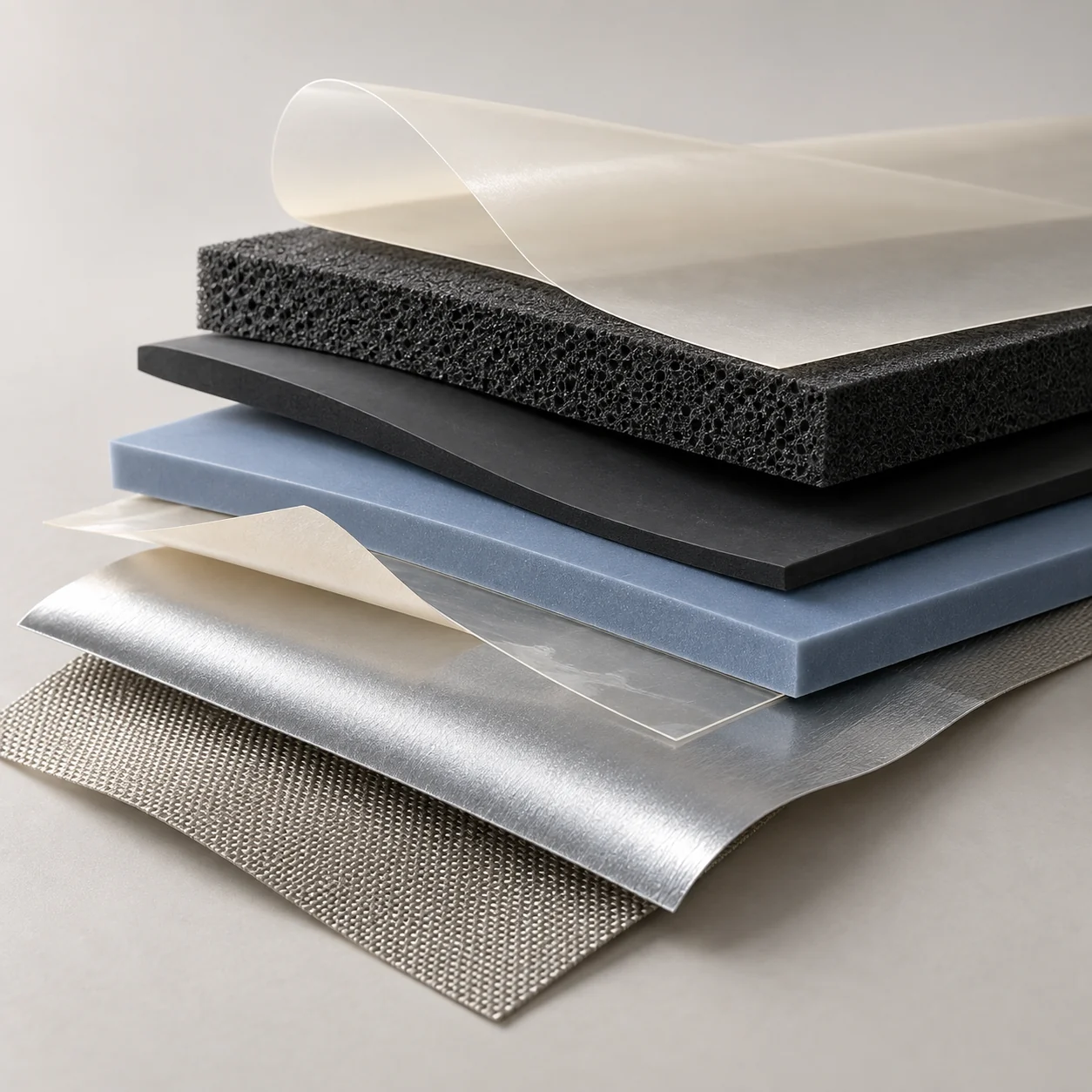
Materials We Convert
Compare insulation films, foams and elastomers, adhesive constructions, shielding materials and thermal interface sheets by required function, thickness and operating conditions.
- Insulation Materials
- Foam, Rubber & Silicone Materials
- Adhesive Materials
- Conductive & Shielding Materials
- Thermal Management Materials
Related Manufacturing Capabilities
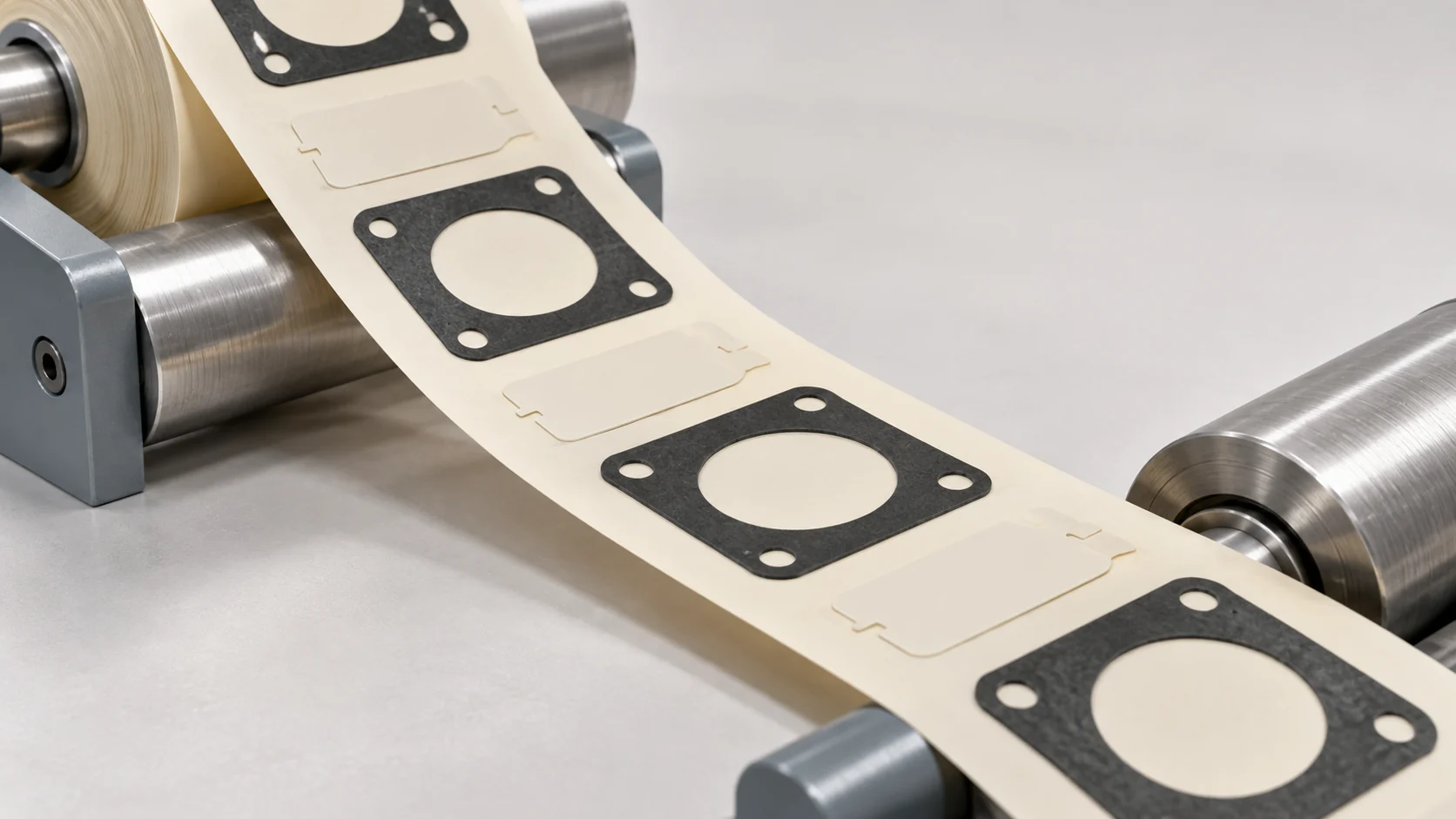
Precision Die Cutting
Drawing-defined profiles, holes and cutouts, with critical features reviewed against material and tolerance requirements.
Lamination & Bonding
Adhesive-backed and multi-layer parts reviewed for layer order, bonding surfaces and liner handling.
Quality & Tolerance Control
Project-specific inspection planning for critical dimensions, cut edges, thickness and layer alignment.
Product Questions, Answered
Practical starting points for a custom die-cut parts project.
How do I choose the right custom die-cut component for my application?
Start with the function your part must perform: electrical insulation, sealing, cushioning, bonding, EMI shielding or thermal management. Then consider operating conditions, material properties, dimensions and assembly requirements. These details help identify the appropriate component family and material construction.
How do foam, rubber and silicone die-cut gaskets differ?
Foam is commonly evaluated for cushioning, compression and gap filling. Rubber and silicone constructions may be suitable for sealing or demanding operating conditions, depending on the material grade. Compare hardness, compression set, temperature exposure, fluid resistance and thickness before selecting a gasket material.
What should I consider when choosing die-cut electrical insulation parts?
Die-cut insulation films, sheets and pads can provide electrical separation within equipment assemblies. Material selection depends on dielectric properties, required thickness, operating temperature, voltage conditions and part geometry. Any applicable electrical safety or compliance requirements must be evaluated for the final assembly.
What is the difference between adhesive-backed components and die-cut double-sided tape?
Adhesive-backed components combine a functional substrate, such as foam or film, with an adhesive layer for mounting or assembly. Die-cut double-sided tape is primarily an adhesive construction used to bond two surfaces and may include a carrier or transfer adhesive. Selection depends on the substrates, bonding requirements and operating conditions.
When should I use conductive foam or metal foil die-cut parts for EMI shielding?
Conductive foam may be suitable where compressible electrical contact is needed around enclosure gaps. Copper or aluminum foil constructions may be considered for thin conductive or shielding interfaces. Material suitability depends on electrical continuity, contact resistance, grounding and the required shielding performance. Magnetic isolation is a separate design consideration.
How do I select thermal gap pads or other die-cut thermal interface parts?
Start with the heat source, mating surfaces, gap dimensions and expected contact pressure. Thermal conductivity, compressibility, electrical insulation requirements and operating temperature also matter. Material data and assembly-level validation are needed before confirming a suitable thermal interface construction.
Can you manufacture custom die-cut shapes with holes, cutouts and critical tolerances?
Custom profiles, openings and dimensional requirements can be reviewed from drawings or reference samples. Feasibility depends on material behavior, thickness, feature spacing and the required tolerances. Critical dimensions should be identified before tooling or production planning, with sample validation considered where necessary.
Can multiple materials be laminated and supplied with release liners?
Compatible films, foams, adhesives and other functional layers can be evaluated for multi-layer die-cut constructions. Depending on the design and manufacturing route, parts may be supplied on release liners in sheet or roll formats. Share the layer stack-up, liner requirements and assembly method for review.
Can I order prototypes or low-volume custom die-cut parts?
Prototype and low-volume requests can be evaluated to check material suitability, dimensions and assembly fit before regular production. Minimum order quantity, tooling costs and lead times depend on material availability, part complexity and order volume. Share your trial quantity and production forecast for a project-specific assessment.
What specifications should I send for a custom die-cut component quotation?
Send the latest drawing or reference sample, revision, intended function, dimensions and critical tolerances. Include material grade or thickness if known, operating conditions, adhesive or liner requirements, prototype and production quantities, and any inspection or packaging needs. If the specification is incomplete, describe the assembly so we can identify what needs clarification.
Have a Custom Die-Cut Component Project?
Send us your drawing, material requirements, application details and estimated quantity for review.