
Adhesive Materials
Compare PSA, transfer, carrier-backed double-coated and acrylic foam tapes for die-cut parts. Review both substrates, layer structure and application conditions.
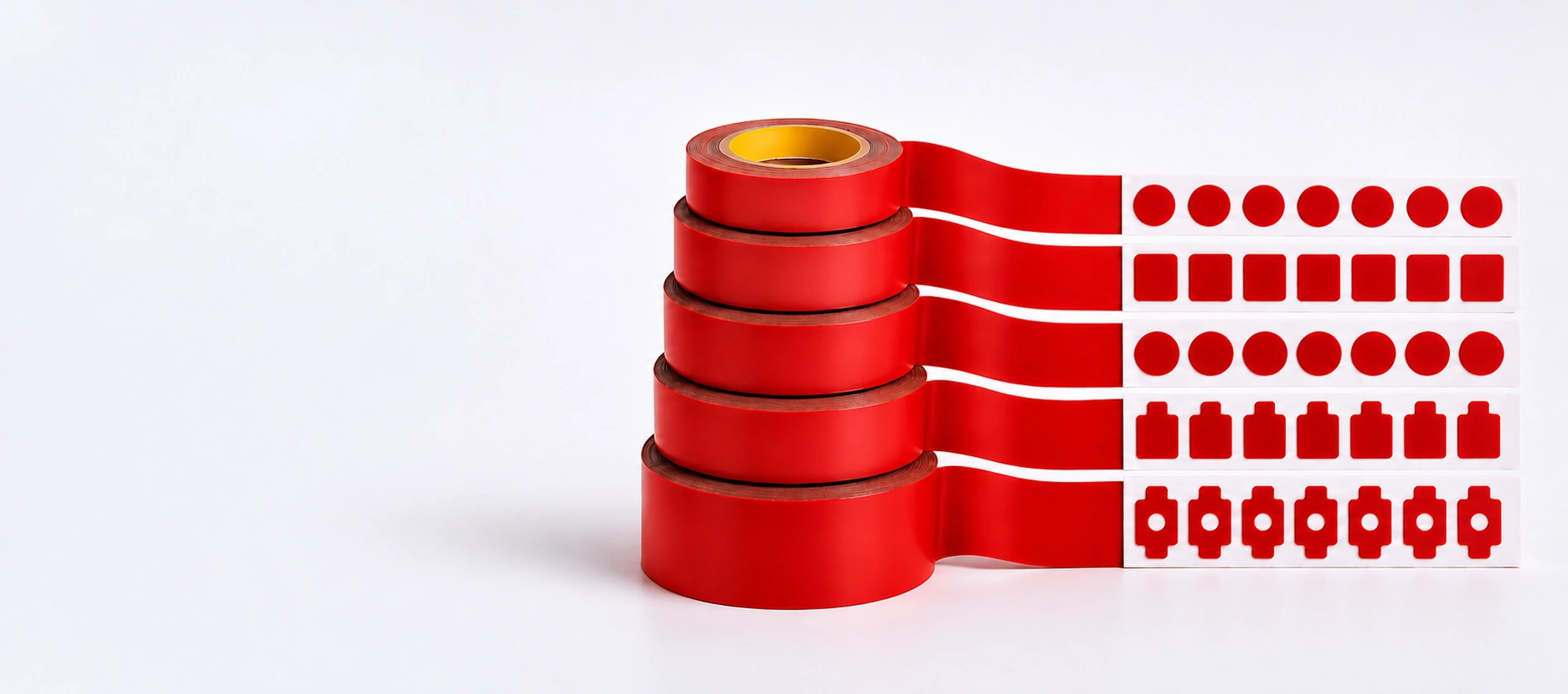
Material Selection
Priorities
Application Needs
The required bond depends on the actual substrates, applied loads and installation process. Specify the assembly conditions before choosing an adhesive grade or die-cut construction.
- Identify both bonding materials, coatings, surface texture and cleanliness.
- Define the required bond function, load direction and removal needs.
- Specify total thickness, adhesive footprint, liner and handling format.
- Confirm temperature, exposure, application pressure and evaluation criteria.
Typical Uses
Adhesive materials may be evaluated for selected mounting, positioning and layered constructions. The correct tape depends on the substrates and assembly method, not simply on the industry.
Material Forms
The tape construction determines how the adhesive is handled, cut and applied. Carrier, adhesive faces and release liners should be specified for the intended component.

PSA Tape & Liner
Pressure-sensitive adhesive supplied in a defined tape or liner-supported form for converting and assembly.

Transfer Adhesive
Carrierless adhesive supplied with a release liner and reviewed for thin bonding and handling requirements.
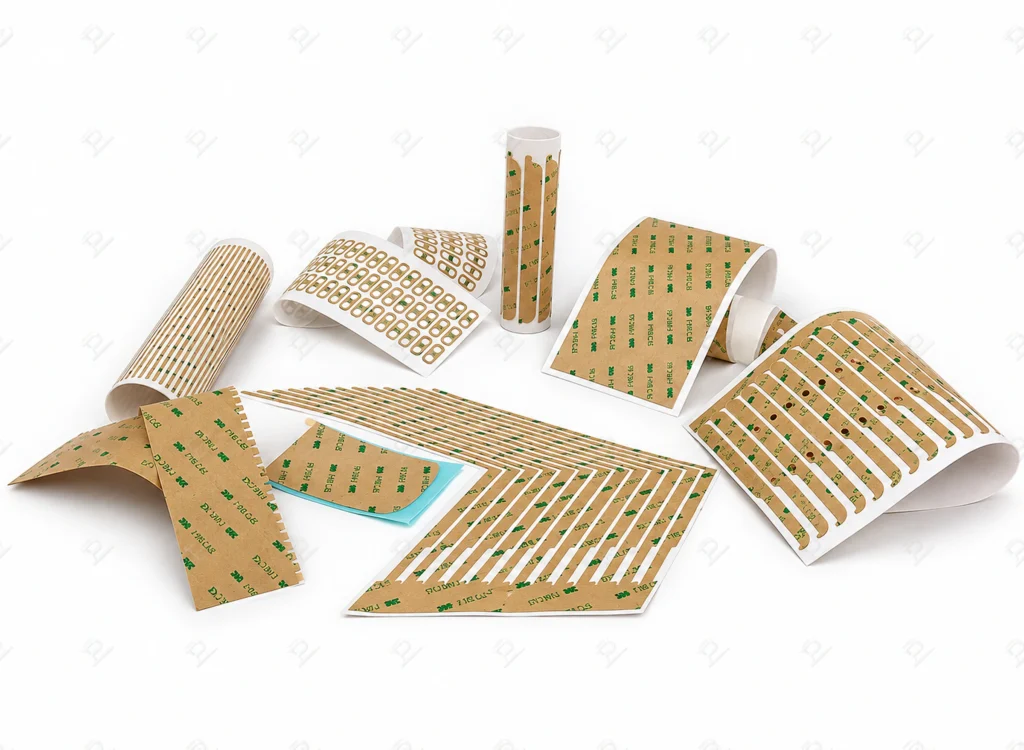
Double-Sided Tape
Carrier-supported adhesive construction with defined bonding faces, total thickness and liner format.
Acrylic foam tapes and adhesive-backed functional sheets may be evaluated where the application requires a thicker bond line, mounting function or combined material construction. Specify the base material, adhesive face, layer order, total thickness, liner and assembly sequence. The selected grade must be compatible with both bonding surfaces and the intended operating conditions. Related materials and components: Flexible materials · Insulation materials · Double-Sided Adhesive Die-Cut Parts · Adhesive-Backed Foam Components
Lamination & BondingFrom Material to Component
Substrate requirements, adhesive construction and liner format determine the converting plan for a custom bonding component.
Material Review
Confirm the adhesive grade, bonding substrates, carrier, liner and required function.
Process Planning
Review lamination, full cutting or kiss cutting, liner retention and delivery format.
Component Converting
Produce drawing-defined adhesive profiles using the agreed material stack and cutting route.
Quality Verification
Check agreed material, geometry, cut depth, liner integrity and layer alignment.
The production sequence depends on the adhesive construction. Kiss-cut depth, adhesive edge quality, waste removal and liner retention require project-specific review. Dimensional inspection does not establish final bond performance.
Engineering Considerations
A successful adhesive construction depends on both bonding substrates, load direction, surface preparation and installation conditions. Tape thickness and nominal peel strength alone are not enough to establish suitability.
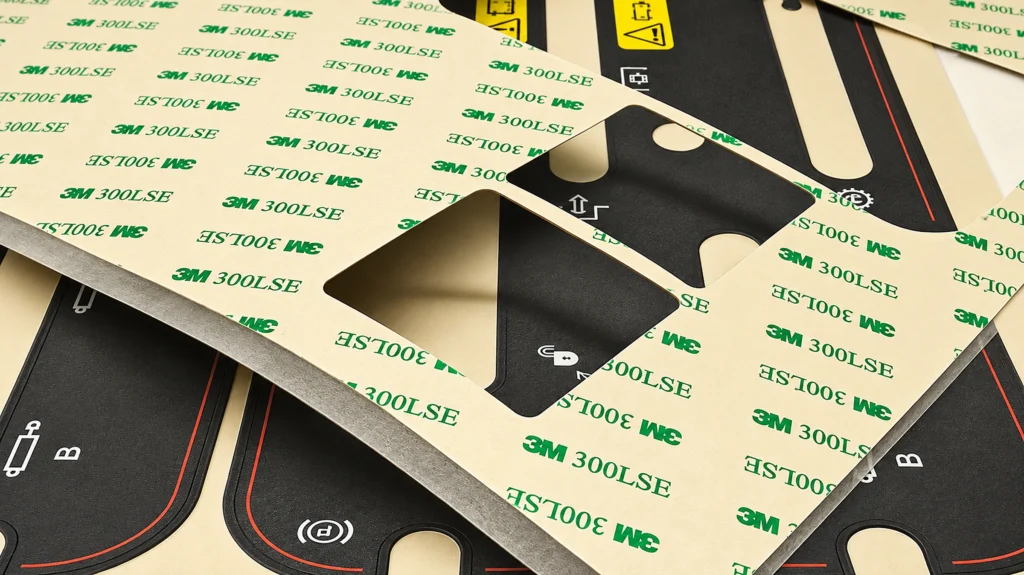
- Substrates & SurfaceIdentify both materials, coatings, surface energy, texture, cleanliness and any treatment requirements.
- Adhesive ConstructionConfirm carrierless, carrier-supported, foam-core or adhesive-backed functional-sheet structure.
- Thickness & GeometrySpecify total bond-line thickness, adhesive footprint, openings, narrow features and critical dimensions.
- Liner & HandlingDefine liner material, release behavior, kiss-cut depth, part spacing and application sequence.
- Environment & BehaviorReview peel, shear, initial tack, load direction, temperature, moisture and required removal or service life.
- Construction VerificationConfirm the grade, carrier, adhesive faces, liner, layer order, dimensions and agreed inspection criteria.
Published peel or shear values are measured under defined test conditions and may not predict performance on the final substrates. Representative-surface testing and application-specific validation should be agreed where bond performance is critical.
Adhesive material questions.
Practical answers for construction, converting and quotation planning.
What pressure-sensitive adhesive materials can be die cut?
Pressure-sensitive adhesive (PSA) materials can include adhesive transfer tapes, carrier-backed double-coated tapes, acrylic foam tapes and compatible adhesive-backed functional sheets. PSA describes the bonding technology, while the other terms identify different tape or layer constructions. Die-cutting feasibility depends on the exact grade, adhesive thickness, carrier, release liner, tack and required geometry. High-tack materials, narrow features and liner-supported parts may require additional process review. Material availability and the suitable converting route are confirmed for each project.
How do transfer tape, double-coated tape and acrylic foam tape differ?
Adhesive transfer tape has no permanent internal carrier and is normally supplied with a release liner. Carrier-backed double-coated tape has adhesive on both sides of a film, tissue or other carrier, which may help with handling and dimensional stability. Acrylic foam tape uses a specific acrylic foam-based bonding structure and should not be confused with conventional foam laminated with adhesive. Selection depends on both substrates, required thickness, load, conformity, handling and operating conditions. None of these constructions is automatically best for every application. For a focused comparison, see our guide to transfer adhesive, double-sided tape and adhesive-backed foam.
How should adhesive tape be selected for PE, PP, metal and coated surfaces?
Identify both substrates and their actual surface condition before choosing an adhesive. Low-surface-energy plastics such as PE and PP may require an adhesive grade designed for those surfaces or an appropriately validated treatment. Metals, painted parts and coated surfaces may also vary in cleanliness, texture and coating compatibility. Adhesion data measured on standard steel panels should not be assumed to represent the finished assembly. Where bond performance matters, evaluate the selected tape on representative production substrates under the intended application conditions.
What is the difference between tack, peel adhesion and shear adhesion?
Initial tack describes how readily a pressure-sensitive adhesive forms contact under defined conditions. Peel adhesion measures resistance to peeling under a specified test method, including angle, rate and substrate. Shear adhesion concerns resistance to loading parallel to the bonded interface under defined conditions. These properties describe different behavior and cannot be directly converted into one another. The required balance depends on joint design, load direction, surface condition, temperature and expected service conditions. Grade-specific test data and application validation should guide selection.
How do tape thickness and carrier type affect bonding and die cutting?
Total tape thickness, adhesive layers and carrier stiffness affect bond-line geometry, conformability, handling and converting stability. A carrier may help support the tape during cutting and application, while a carrierless transfer adhesive may require different liner and cutting controls. Greater thickness does not automatically produce higher bond strength. The appropriate construction depends on surface texture, available space, load conditions and assembly method. Specify adhesive thickness, carrier type, liner, cut geometry and critical tolerances before process review.
How do temperature, moisture and chemicals affect adhesive performance?
Adhesive performance depends on the formulation, both bonded substrates and the actual exposure conditions. Temperature changes, humidity, solvents, oils, cleaning agents and other contact media may influence adhesion, creep or long-term durability. Application temperature and service temperature are also different requirements. Review the exact grade’s supplier data and identify any relevant aging, chemical compatibility or retention tests. A published temperature range or peel value should not be treated as a universal performance guarantee for the completed assembly.
What release liner and kiss-cut details should be specified?
Release liners protect adhesive surfaces and help control part handling during die cutting and installation. Specify the liner material, thickness, release characteristics, part spacing, orientation and required delivery format. Kiss cutting may allow the adhesive profile to be cut while retaining a suitable liner beneath the part. Whether one or two liners are needed depends on the actual tape construction and application sequence. A removable release liner does not mean that the adhesive bond itself is designed to be removable after installation.
Can adhesive tapes be laminated to foam or insulation films?
Compatible adhesive layers may be evaluated for bonding to foam, insulation films or other specified sheet materials before or after cutting, depending on the construction. Define the base material, adhesive grade, bonding face, layer sequence, total thickness, release liner and cut depth. Low-surface-energy or silicone surfaces may require specialized adhesive solutions. Additional layers can alter electrical, thermal or mechanical behavior, so the final construction must be reviewed against the intended function. Lamination feasibility is project-specific.
Can customer-specified adhesive grades and prototypes be evaluated?
A customer-specified adhesive can be reviewed using the manufacturer, exact grade or part number, technical datasheet, supplied format and component drawing. Material availability, authenticity documentation where required and converting feasibility must be confirmed for the project. Prototype samples may help evaluate cut geometry, adhesive edges, liner integrity, handling and assembly fit. Peel, shear, aging or other bond-performance testing must be agreed separately using representative substrates and defined acceptance criteria. Samples alone do not establish long-term reliability.
What information is needed to quote custom die-cut adhesive parts?
Provide a drawing or sample with revision, both bonding substrates, coatings or surface finishes, required bond function, material grade and thickness if known, and estimated quantity for each design. Include the adhesive footprint, openings, carrier or transfer construction, liner requirements and assembly sequence. Specify expected temperature, moisture or chemical exposure, load direction, removable or permanent bonding needs, and any relevant peel, shear or durability criteria. If the adhesive is undecided, describe the actual assembly and intended performance for an initial feasibility review.
Need an adhesive material for a custom component?
Share your drawing, both bonding substrates, adhesive grade or thickness if known, carrier and liner requirements, operating conditions and estimated quantity for review.