
Silicone Rubber Molding
Molded silicone parts start with a defined geometry, material specification and tooling plan. The production route is assessed for each project.
- 3D part geometry
- Material and tooling
- Sample and inspection plan
For review, share a dimensioned drawing or sample, material requirements, critical features, operating conditions and estimated quantity.
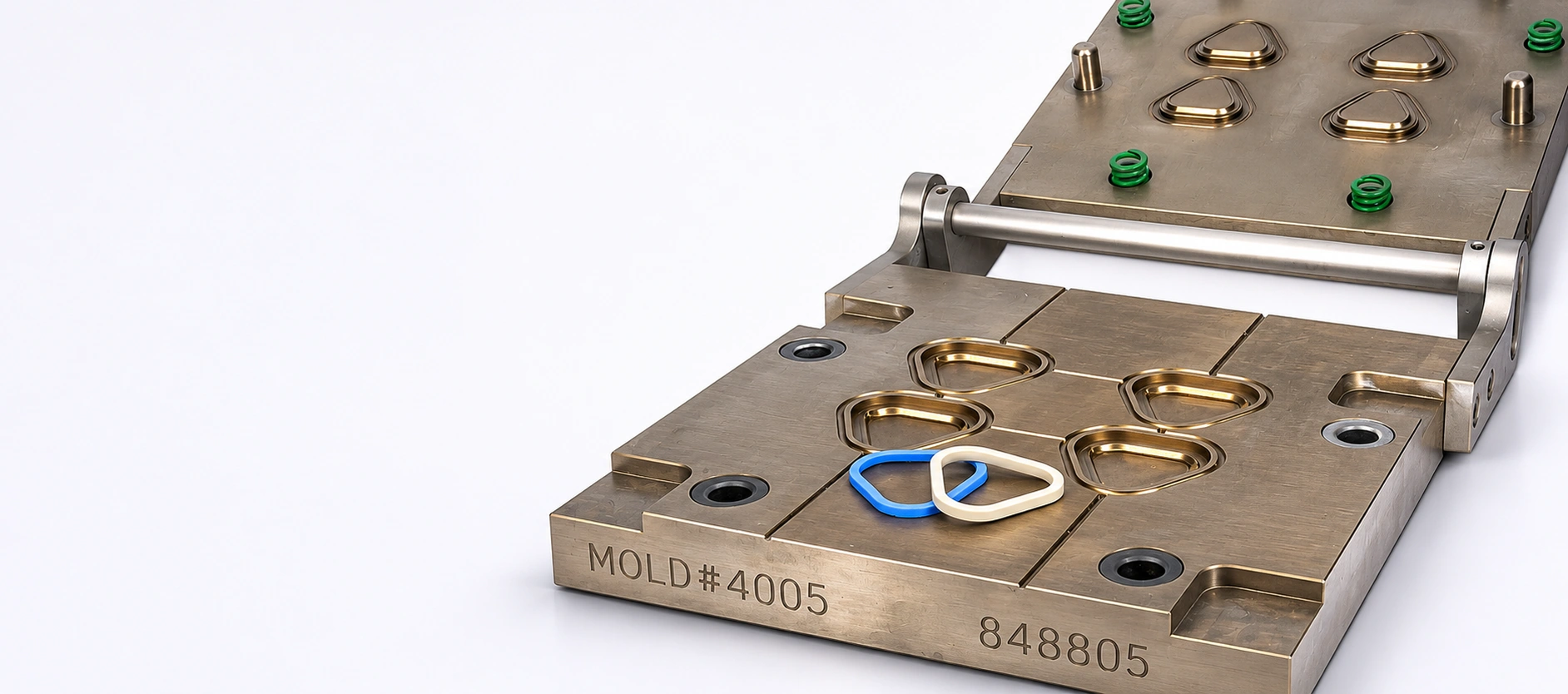
Molding Review Built Around the Part
ENGINEERED FOR A LARGER PURPOSE
Silicone rubber molding is considered when a part needs three-dimensional features that flat sheet cutting cannot provide. The material, tooling concept, production route and inspection plan must be evaluated together. Manufacturing capability and supply remain subject to project-specific confirmation.
Typical Component Forms
These are examples of shapes a molding brief may describe; each needs its own feasibility review.

Molded Gaskets
Three-dimensional contact profiles for a defined joint.
Cushioning Pads
Local forms shaped around contact and compression needs.
Grommets
Parts around a specified opening or cable interface.
Seals
Contact geometry reviewed against the installed assembly.
Protective Covers
Shapes fitted to a defined component.
Integrated Features
Ribs, lips and locating details considered with tooling.
From drawing to a feasible molding route.
The drawing, mating parts and expected quantity determine what tooling and sample plan should be reviewed.
Conceptual process diagram only; no tool, material grade or production route is approved by this illustration.
Define the production brief
- GeometryDimension wall sections, holes, lips, ribs and critical surfaces.
- MaterialState grade, hardness, color and service conditions if known.
- QuantityProvide sample needs, target volume and inspection requirements.
Silicone Rubber Material Selection
Silicone rubber grades differ in hardness, cure system, color and environmental behavior. A candidate grade needs supplier documentation and a process review for the actual part; a material family alone does not establish temperature, sealing or compliance performance.
Explore Silicone Materials →Engineering Considerations
Tooling, material and part geometry should be evaluated as one design.
Part Geometry
Wall thickness, draft, undercuts, parting line and release.
Material & Conditions
Grade, hardness, exposure and supporting documents.
Assembly & Volume
Mating surfaces, tolerance, sampling and expected demand.
What governs molding feasibility?
A drawing and intended use are required before a manufacturing route can be confirmed.
This preliminary page does not confirm in-house molding equipment, a supplier commitment, material rating or finished-part performance.
Where These Components Are Used
Molded silicone may be considered for equipment interfaces that need a specified three-dimensional contact, cushioning or protective form.
How a Molding Project Is Reviewed
The production route and supplier capability must be confirmed before a molded-part project is accepted.
Drawing & Tooling Review
Assess the parting line, release, undercuts and tooling concept from the drawing.
Material & Sample Review
Confirm candidate grade, supplier route and a project-specific sample plan.
Quality & Tolerance Control ↗
Agree on critical dimensions, visual checks and acceptance criteria.
Validate the Approved Part Specification
The drawing and material specification should define dimensional, visual and functional acceptance. A finished shape alone does not prove sealing, temperature resistance or regulatory compliance.
- Drawing and interface review
- Material and supplier confirmation
- Sample and tooling assessment
- Dimensional and visual checks
- Application-specific validation
Silicone Rubber Molding FAQs
Practical answers for drawing review, materials and quotation planning.
When is molding considered instead of die cutting silicone sheet?
Molding can form three-dimensional features such as lips, ribs and shaped walls. Die cutting creates flat sheet profiles. The drawing and installed interface determine the suitable route.
What information is needed for a molding feasibility review?
Provide a dimensioned drawing or sample, mating surfaces, material requirements, critical tolerances, operating conditions and expected quantity.
Does this page confirm in-house silicone molding?
No. Equipment, manufacturing route and supplier capability require verification for the specific part before a production commitment.
Can ribs, lips or undercuts be molded?
These features may be considered, but feasibility depends on tooling, part release, material and exact dimensions.
How is the silicone rubber grade selected?
The selected grade should match the application’s compression, exposure, hardness and documentation needs. Supplier data and project-specific testing are required.
What determines the tooling approach?
Part size, geometry, wall sections, undercuts, material system, tolerance and expected volume all influence tooling review.
Can a sample be reviewed before production?
A sample plan can be discussed after the geometry, material and quantity are known. Timing and tooling needs depend on the project.
What tolerances can molded silicone parts achieve?
No universal tolerance applies. The part drawing, process, material and measurement method must be reviewed together.
How are molded parts inspected?
Inspection criteria can cover material identity, critical dimensions and visible condition. Installed function needs separate acceptance criteria.
What should I send for a quotation?
Send the drawing or sample, material and hardness requirements, assembly conditions, critical features, expected quantity and any specified standards.
Discuss a Silicone Molding Project
Send your drawing, material requirements, critical dimensions and planned volume for a feasibility review.