INSULATION MATERIALS
Electrical Insulation Materials
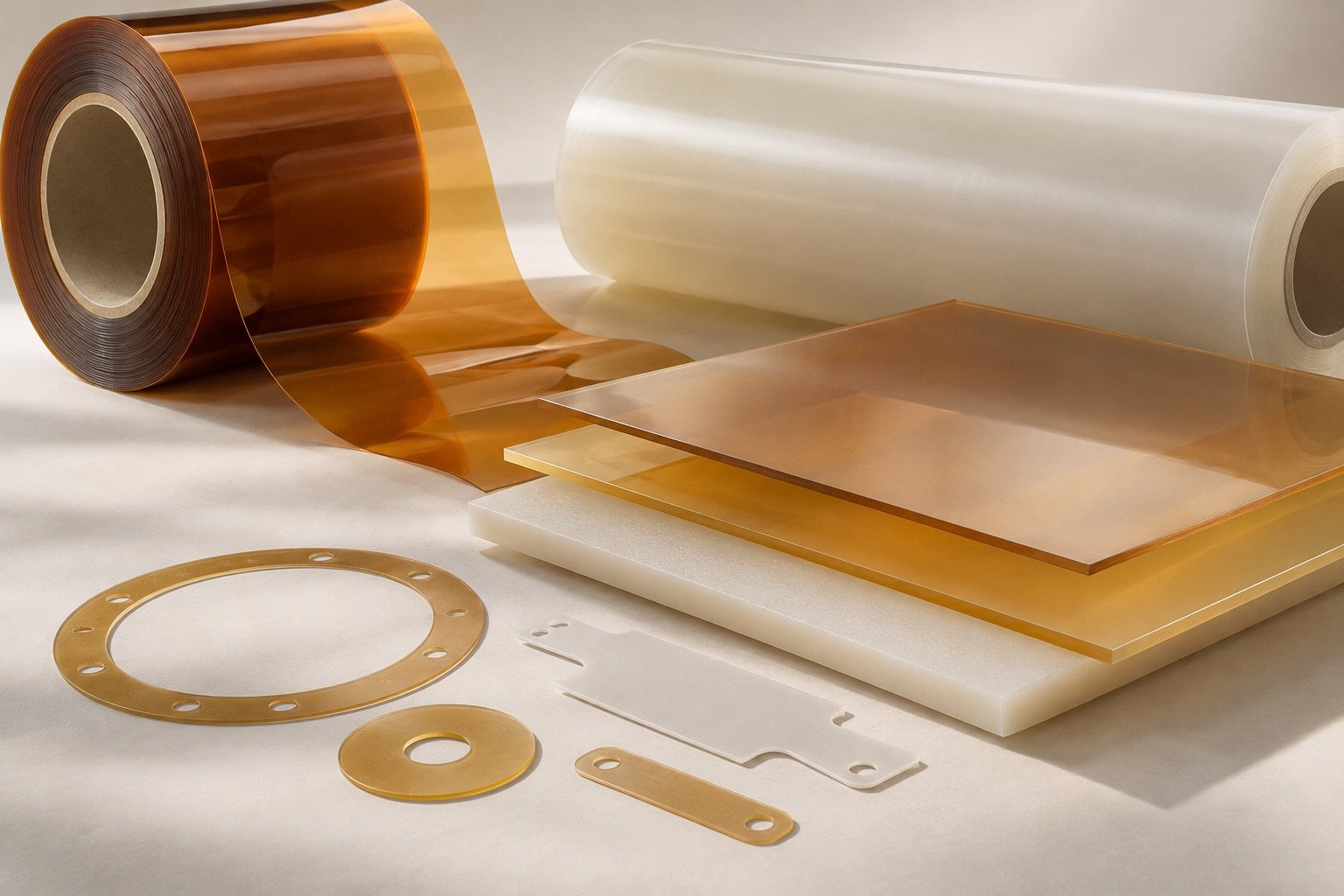
TC Components converts electrical insulation films and sheets into custom barriers, pads, spacers and other functional components for electronic, electrical and industrial assemblies.
MATERIAL OVERVIEW
Electrical Insulation Materials for Custom Components
Electrical insulating materials are selected for the function a part must perform, then reviewed against thickness, geometry, mechanical needs, assembly method and operating environment.
Film and sheet selection is project-specific. The material, layer structure and cut profile must work together in the finished assembly.
MATERIAL FAMILIES
Insulation films and sheets to evaluate.
Material families are starting points for discussion, not a fixed recommendation or stock list. The grade and construction are confirmed against each project specification.
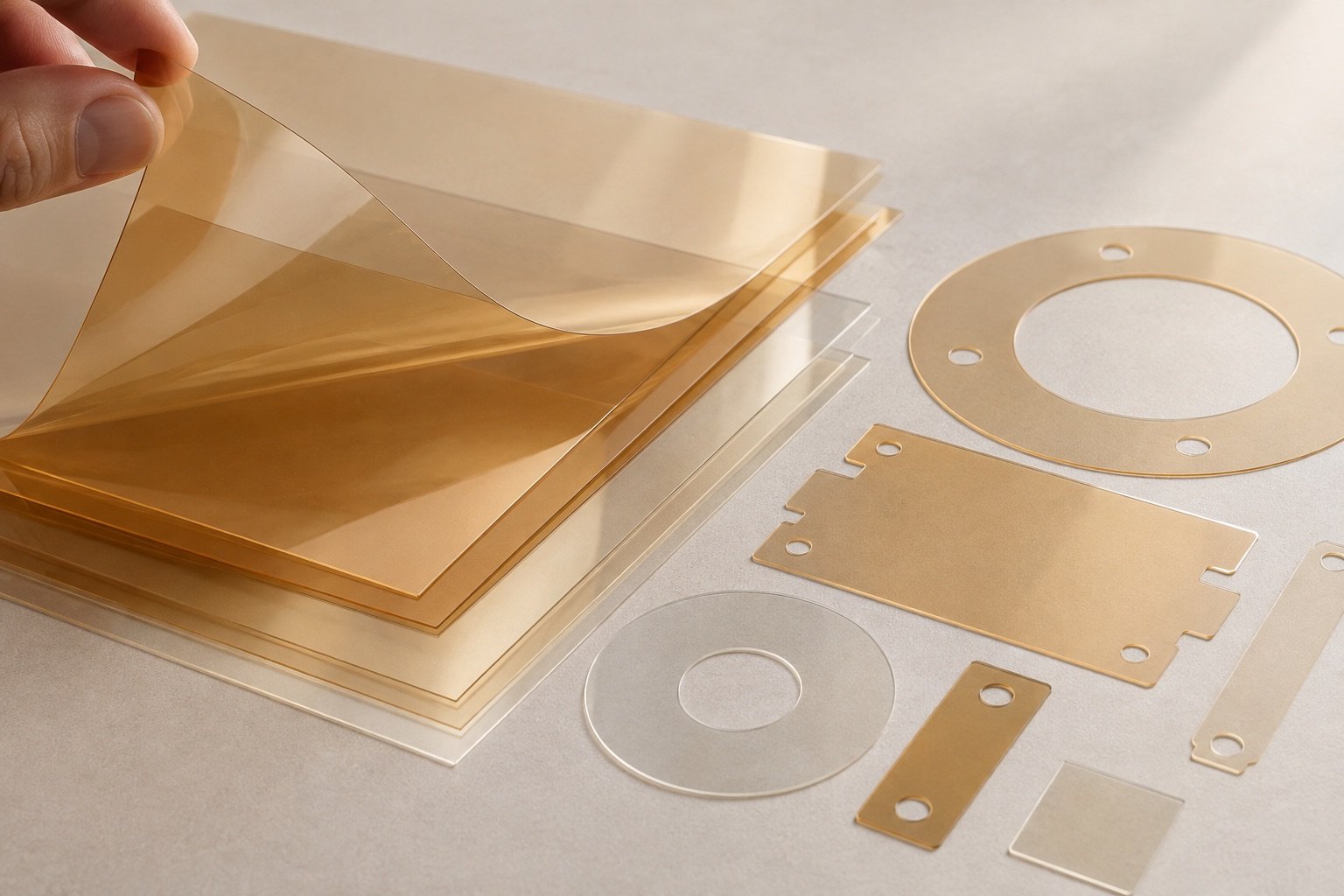
Polyester / PET Films
Thin, flexible electrical insulation films considered for barriers, spacers and other die-cut insulation components.
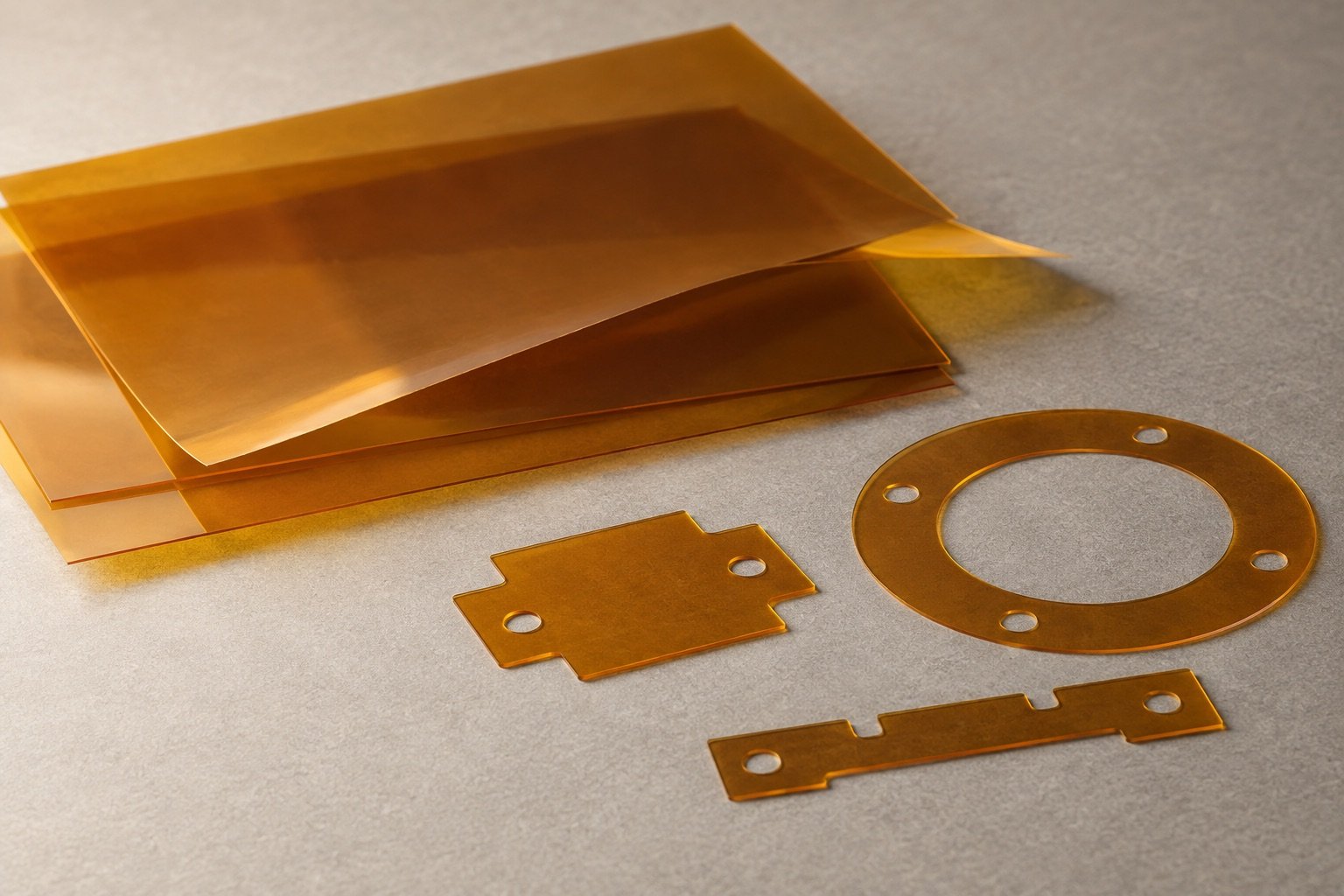
Polyimide Films
Thin insulating film materials considered where a compact construction and project-specific electrical or environmental properties are required.
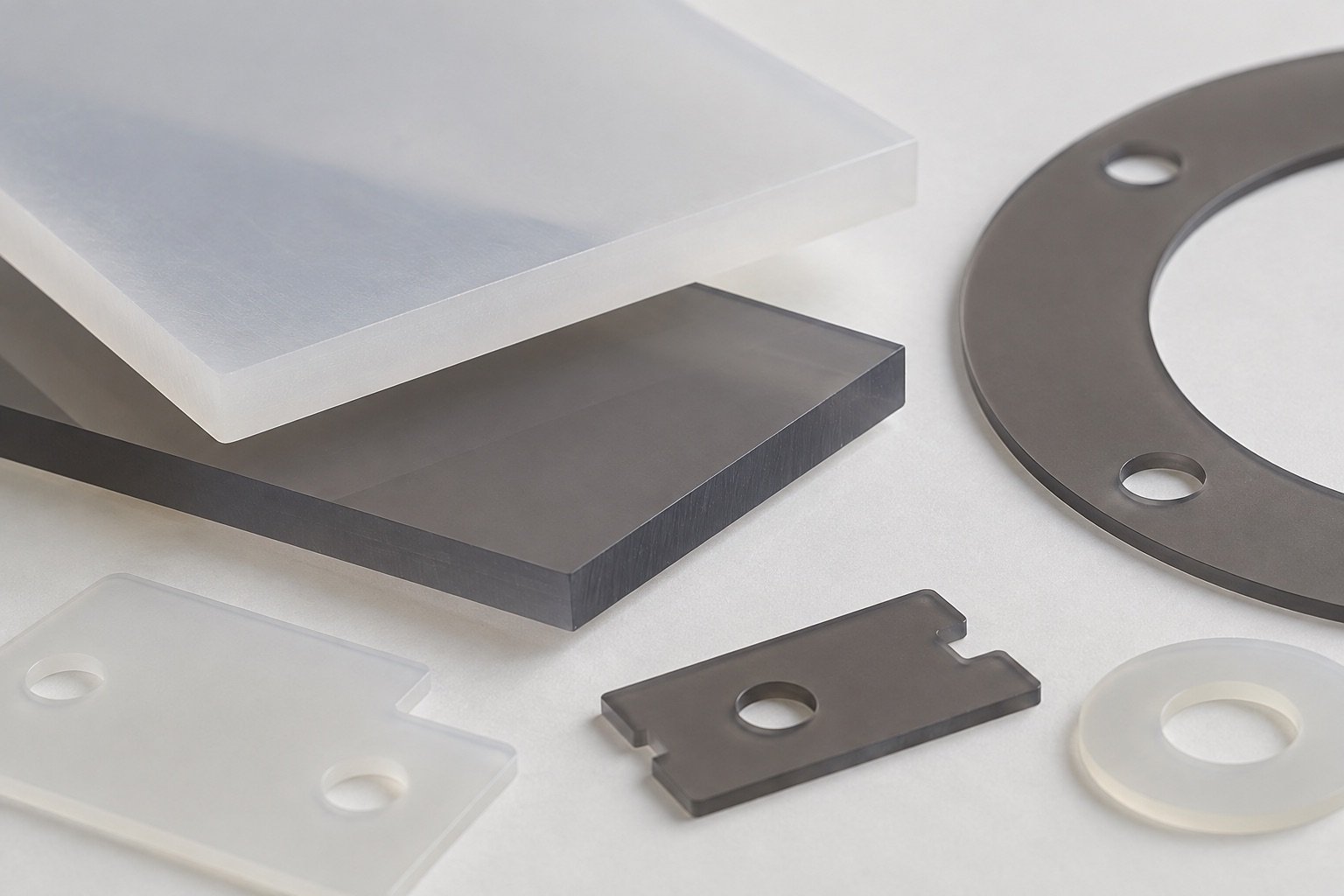
Polycarbonate Sheets / Films
Insulating sheet or film options for formed barriers and spacers where the assembly calls for more support than a very thin film.
Other Electrical Insulation Films & Sheets
Customer-specified or other engineering insulation materials may be evaluated against the drawing, specification and intended application.
Discuss a material specificationMATERIAL SELECTION
Selecting an Electrical Insulation Material
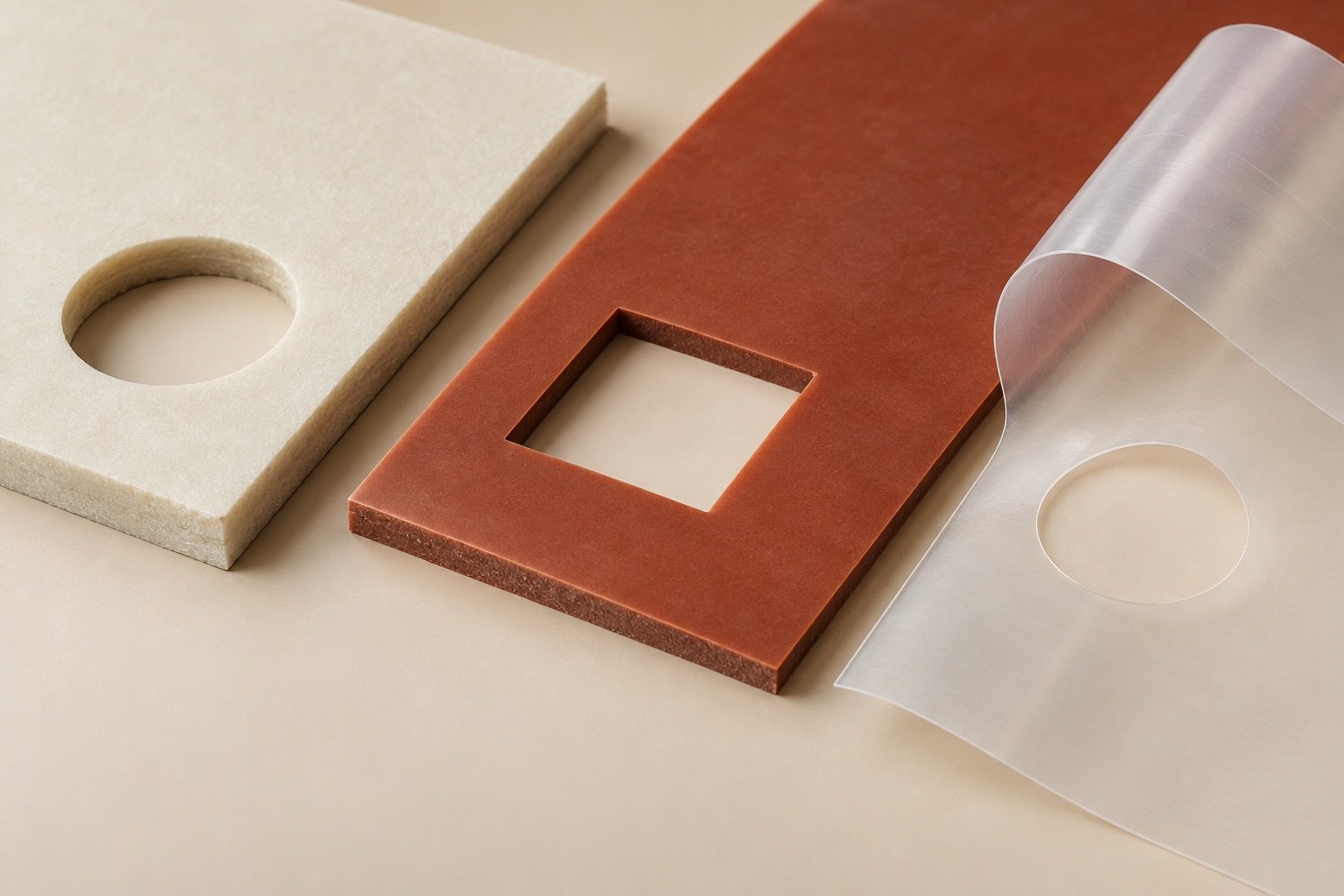
No single film or sheet is right for every assembly. Compare the required function with the material form and component geometry.
Electrical Requirement
What insulation function is required?
Thickness
What thickness fits the assembly?
Geometry
How complex is the cut profile?
Mechanical Requirement
Flexibility or structural support?
Adhesive Requirement
Is adhesive backing needed?
Operating Environment
Which project conditions matter?
FORMS / CONSTRUCTIONS
Material Forms & Constructions
An electrical insulation film or sheet can remain a single layer or become part of an adhesive-backed or laminated construction. The drawing and assembly method determine the useful form.
Films
Thin, flexible insulating layers.
Sheets
Sheet forms for barriers and spacers.
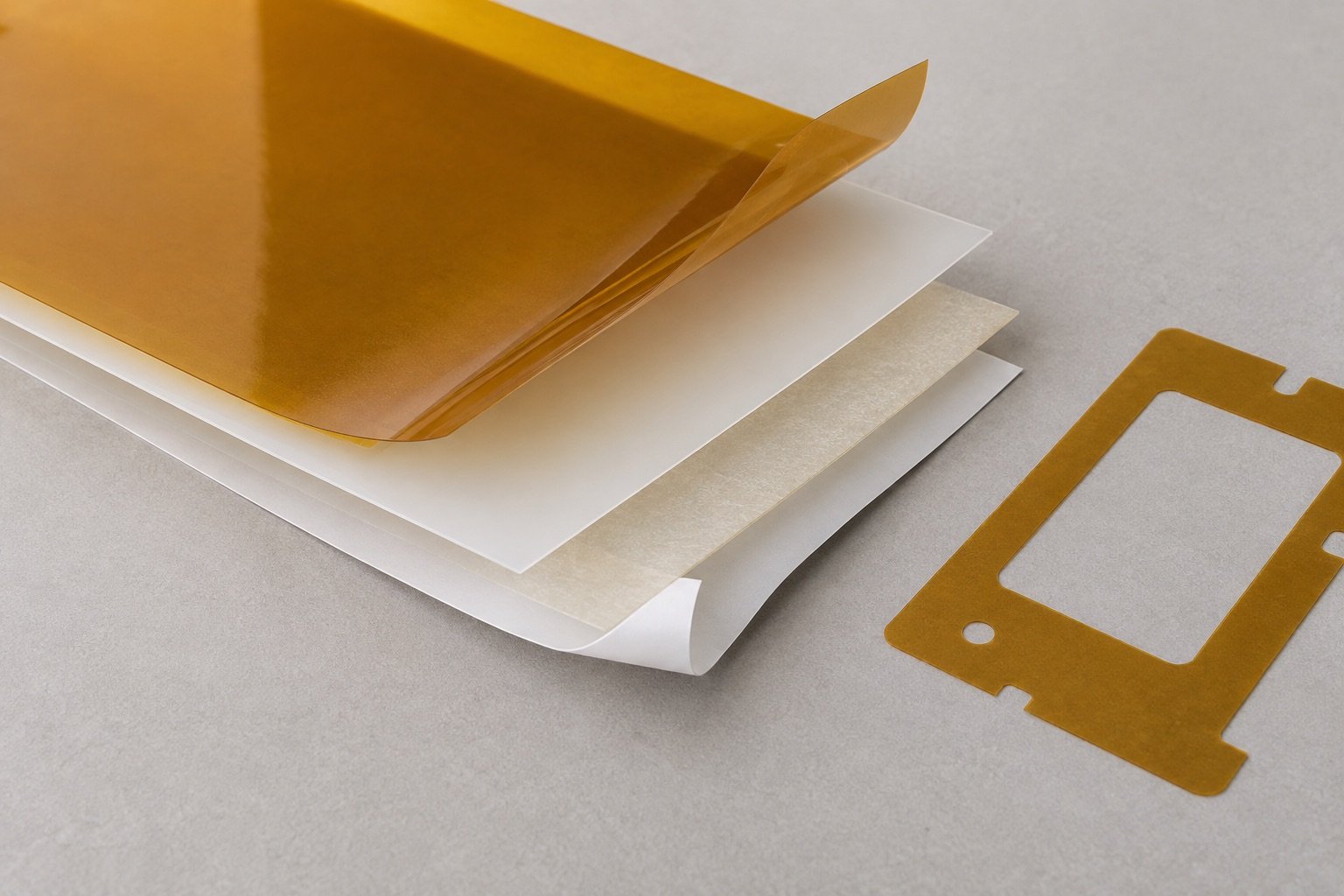
Adhesive-Backed Insulation
Backing and liner considered where placement requires them.
Laminated Insulation
Compatible layers reviewed as one construction.
Multi-Layer Constructions
Layer order defined for the intended function.
CONVERTING
From insulating material to required geometry.
Insulation films and sheets can be precision die cut and, where specified, combined with adhesive or other compatible functional layers.
ENGINEERING BRIEF
Engineering Considerations
Useful project information keeps material selection connected to fit and function. Include what is known; open points can be reviewed during quotation.
RELATED PRODUCT
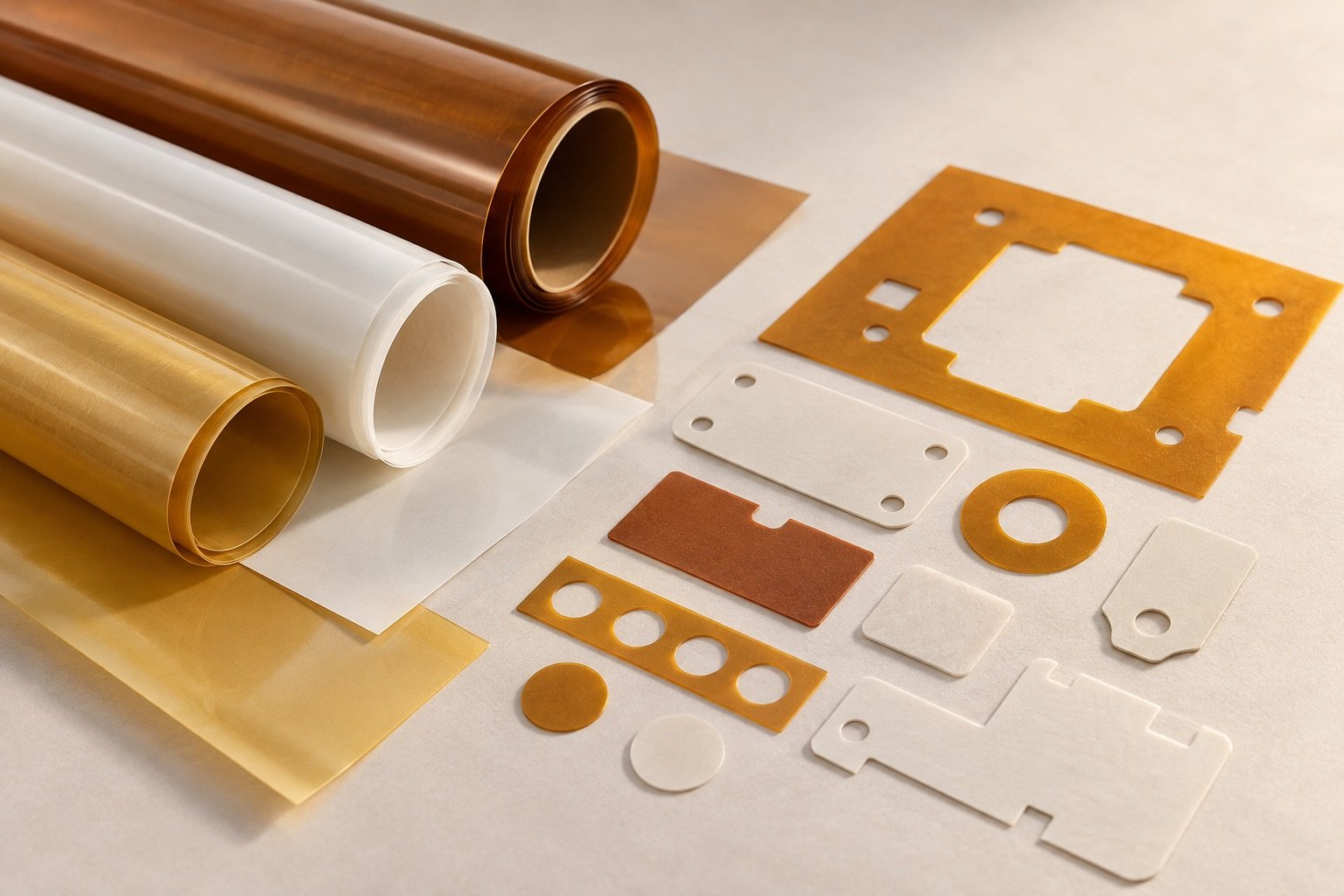
From insulation material to finished component.
This page covers the material family and its selection. The product page covers the custom die-cut barriers, pads, spacers and other finished forms made for a specified assembly.
RELATED APPLICATIONS
Insulation within electrical assemblies.
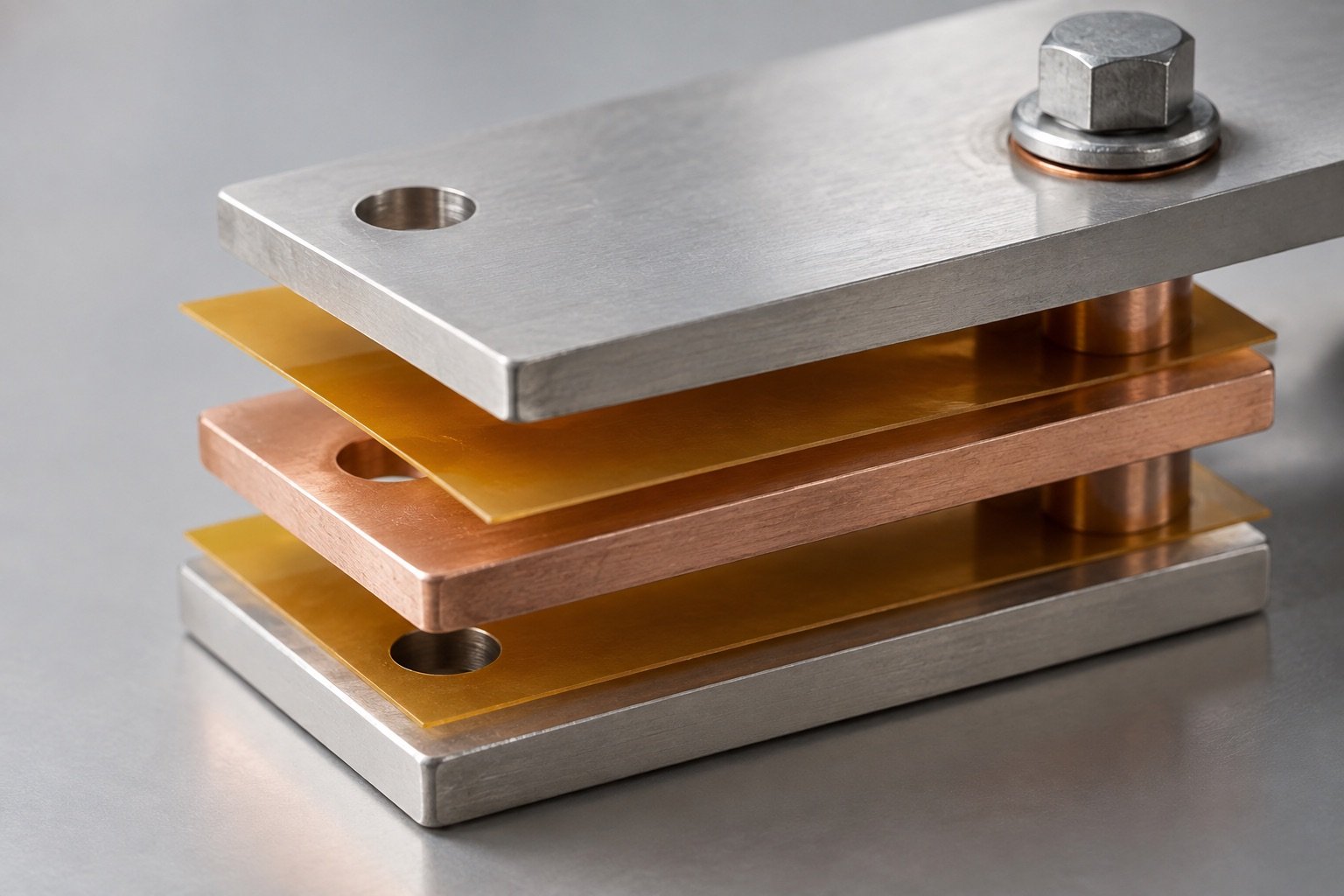
Electrical insulation sheet and film constructions may be considered where separation, fit and assembly interfaces need to be defined.
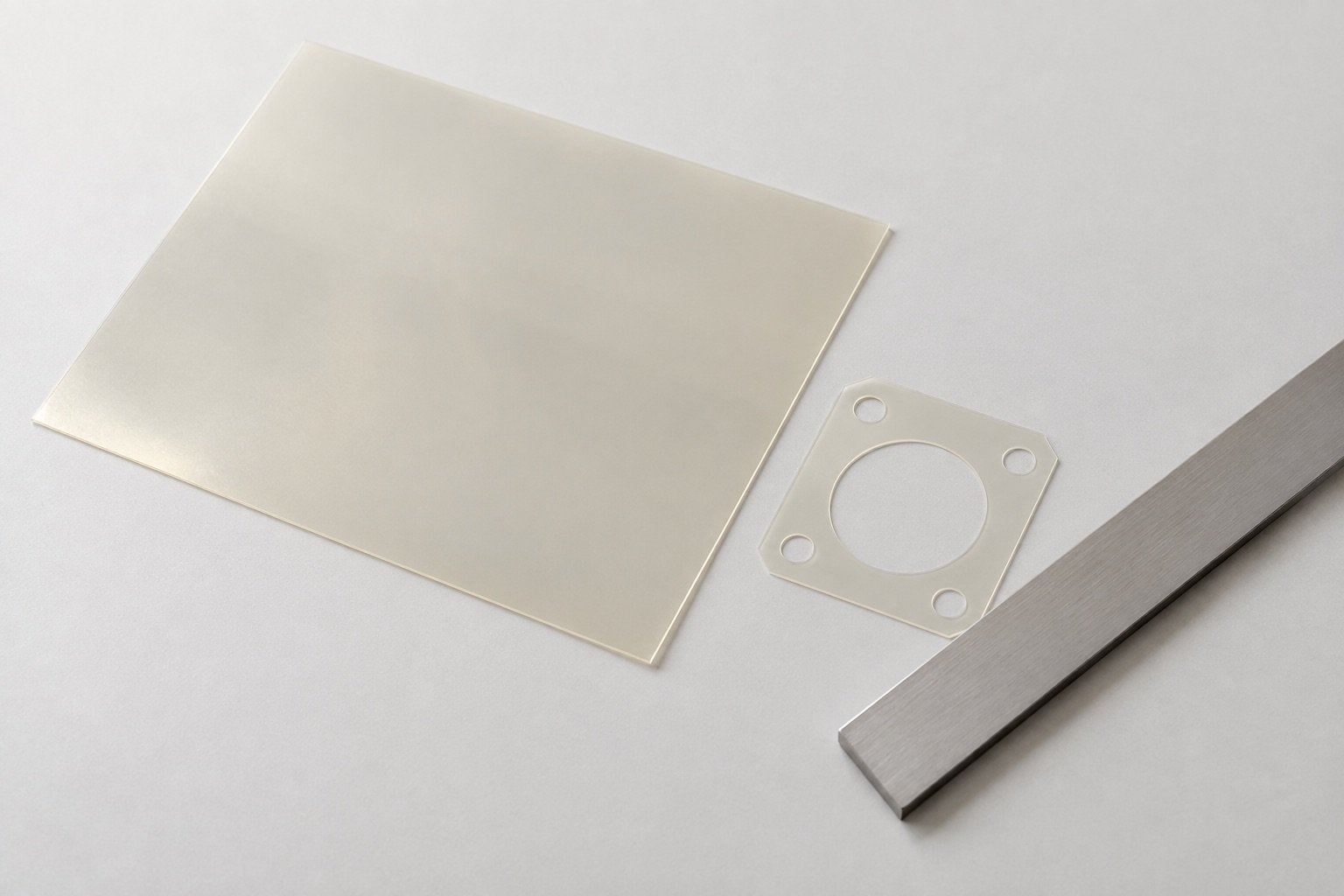
QUALITY / MATERIAL REVIEW
Project-Specific Material Verification
The drawing and material specification define the checks to discuss. These may include material and construction review, thickness confirmation, dimensional inspection and visual inspection.
Explore Quality & Tolerance ControlFAQ
Electrical insulation material questions.
Answers for material selection, construction and quotation planning.
What electrical insulation materials can be die cut?
Electrical insulation films and sheets, including polyester/PET, polyimide and polycarbonate families, can be evaluated for die cutting. The specific grade and construction depend on the drawing and application.
What is the difference between insulation film and insulation sheet?
Film usually describes a thinner, more flexible form; sheet may offer a different thickness or handling format. The required function and assembly fit determine which form to review.
Can adhesive backing be added to electrical insulation materials?
Adhesive backing and a release liner can be considered when compatible with the selected material, bonding surface and placement method.
Can insulation films be laminated with other materials?
Compatible layers can be reviewed as a laminated construction. Layer order, total thickness and bonding requirements are defined for the project.
How do I choose between polyester, polyimide and polycarbonate insulation materials?
Compare the electrical requirement, thickness, geometry, mechanical needs, operating environment and assembly method. No one family is the default best choice; the grade must be confirmed for the application.
Can you work with customer-specified insulation materials?
Customer-specified materials can be reviewed against the intended geometry and converting route. Please include the material specification and any handling requirements.
Can prototypes be made before production?
Prototype requirements can be discussed to assess material, cut geometry and assembly fit before a production construction is agreed.
What information is needed for an insulation material quotation?
Send a drawing or sample, material specification if available, thickness, dimensions, application requirements, adhesive or layer needs and estimated quantity.
RELATED COMPONENTS
Components using these materials
START A MATERIAL REVIEW
Need an insulation material for a custom component?
Send us your drawing, material specification if available, thickness, application requirements and estimated quantity for review.
Request a Quote