PRECISION CONVERTING
Precision Die Cutting
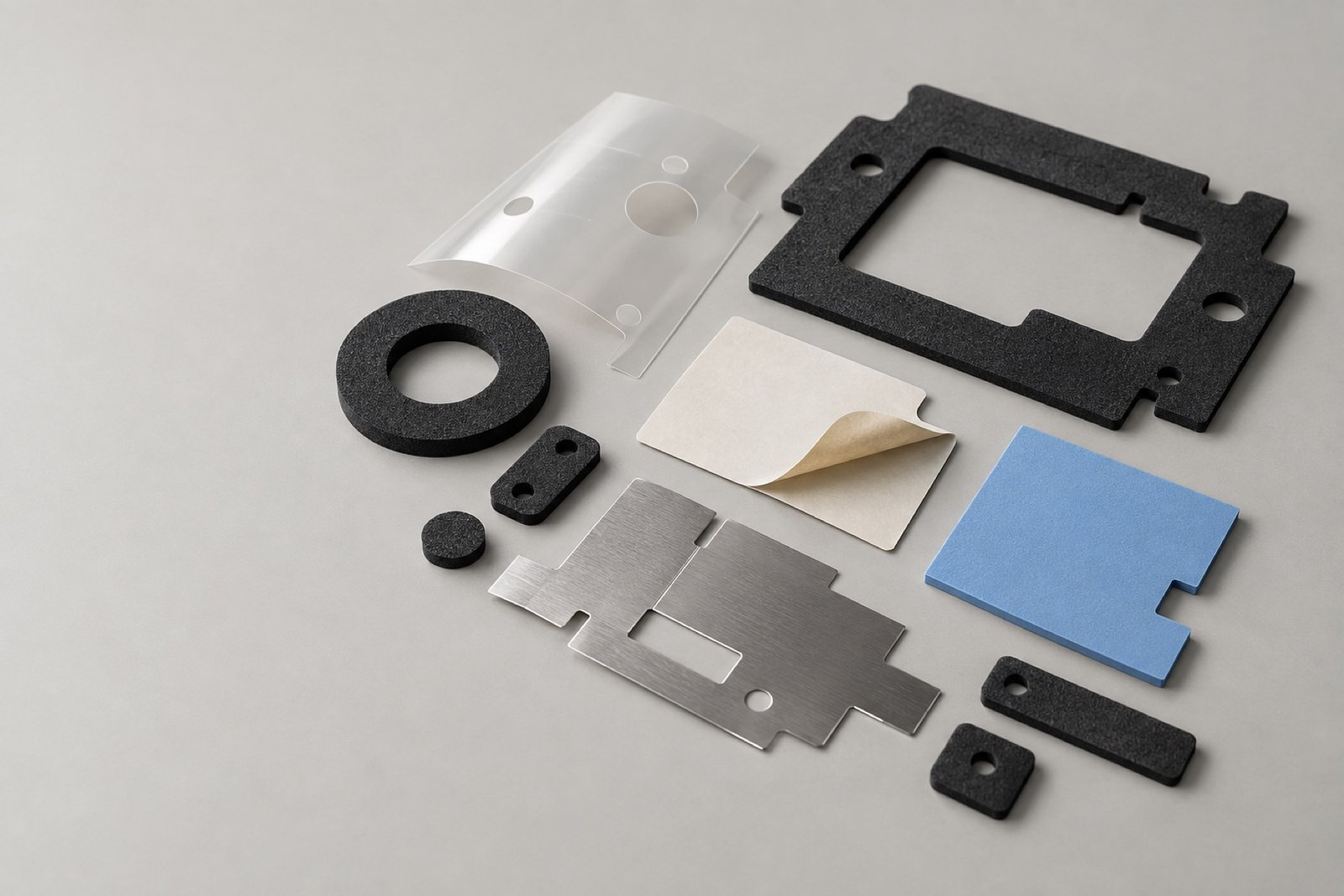
TC Components provides custom precision die cutting for functional materials used in electronic, electrical and industrial assemblies. Each project starts with the drawing, material and application requirements.
CAPABILITY OUTCOME
What Precision Die Cutting Enables
Turn flexible sheet materials into parts shaped for a defined function and assembly interface. The cut geometry, material and layer construction are considered together.
Custom geometry
Profiles, holes and cutouts follow the drawing.
Flexible materials
Films, foams and adhesive constructions can be shaped without treating them as rigid parts.
Functional construction
Adhesive-backed or layered parts can be considered when the assembly requires them.
MATERIALS
Materials We Die Cut
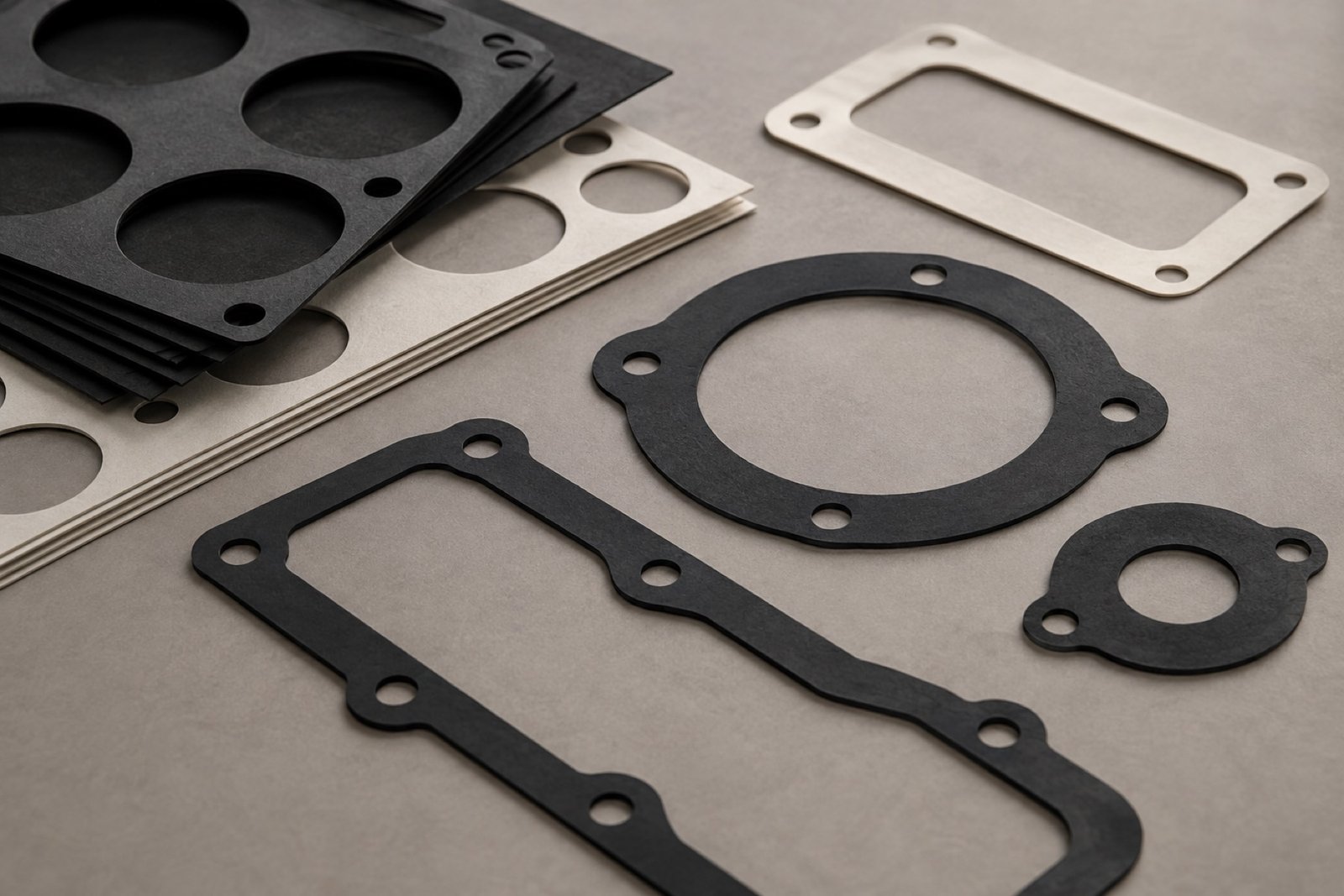
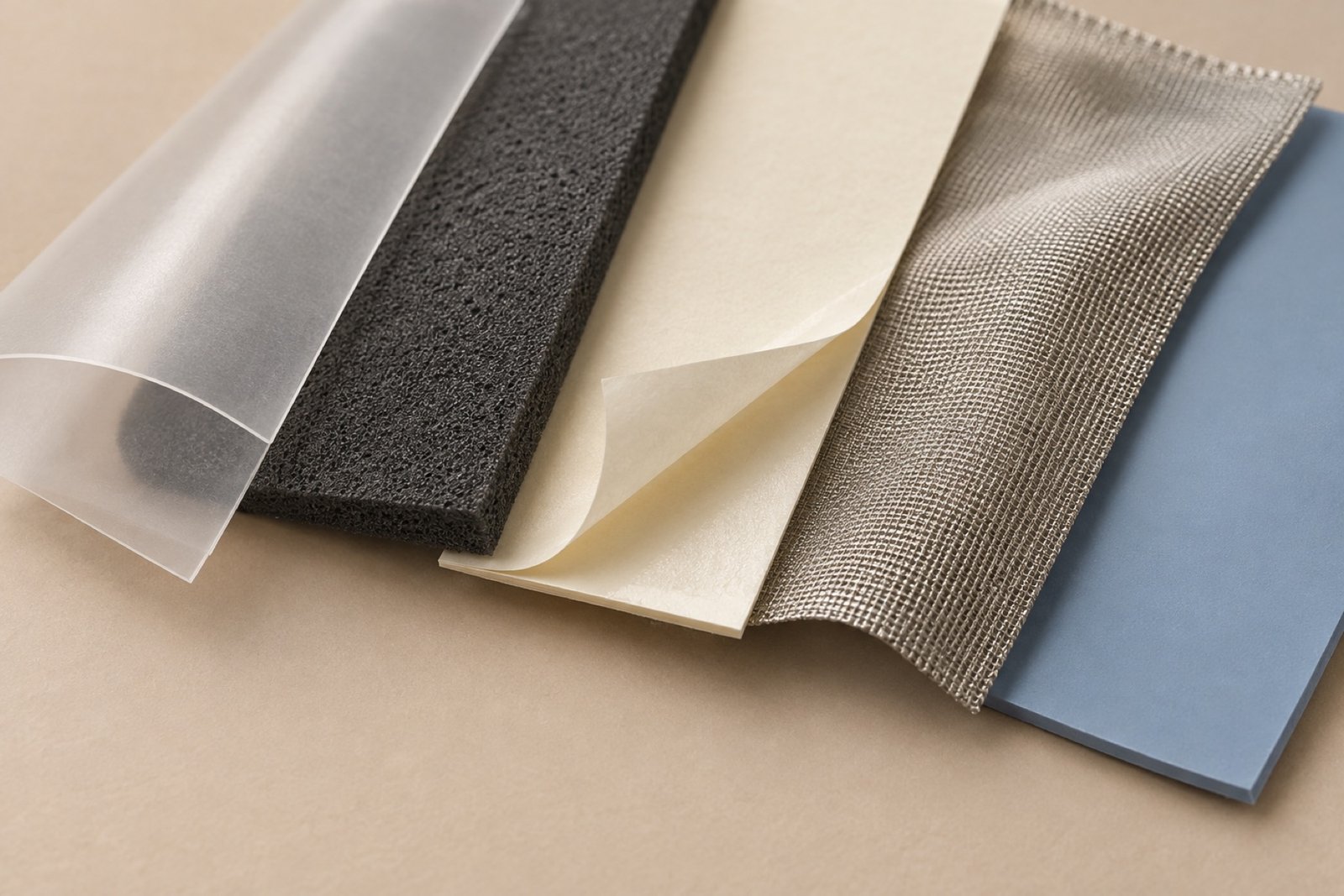
Material selection depends on function, thickness, operating conditions and the way the part will be assembled.
COMPONENT TYPES
One process. Different functional parts.
Precision die cutting is the manufacturing method. The finished product is defined by the function it performs in the customer’s assembly.
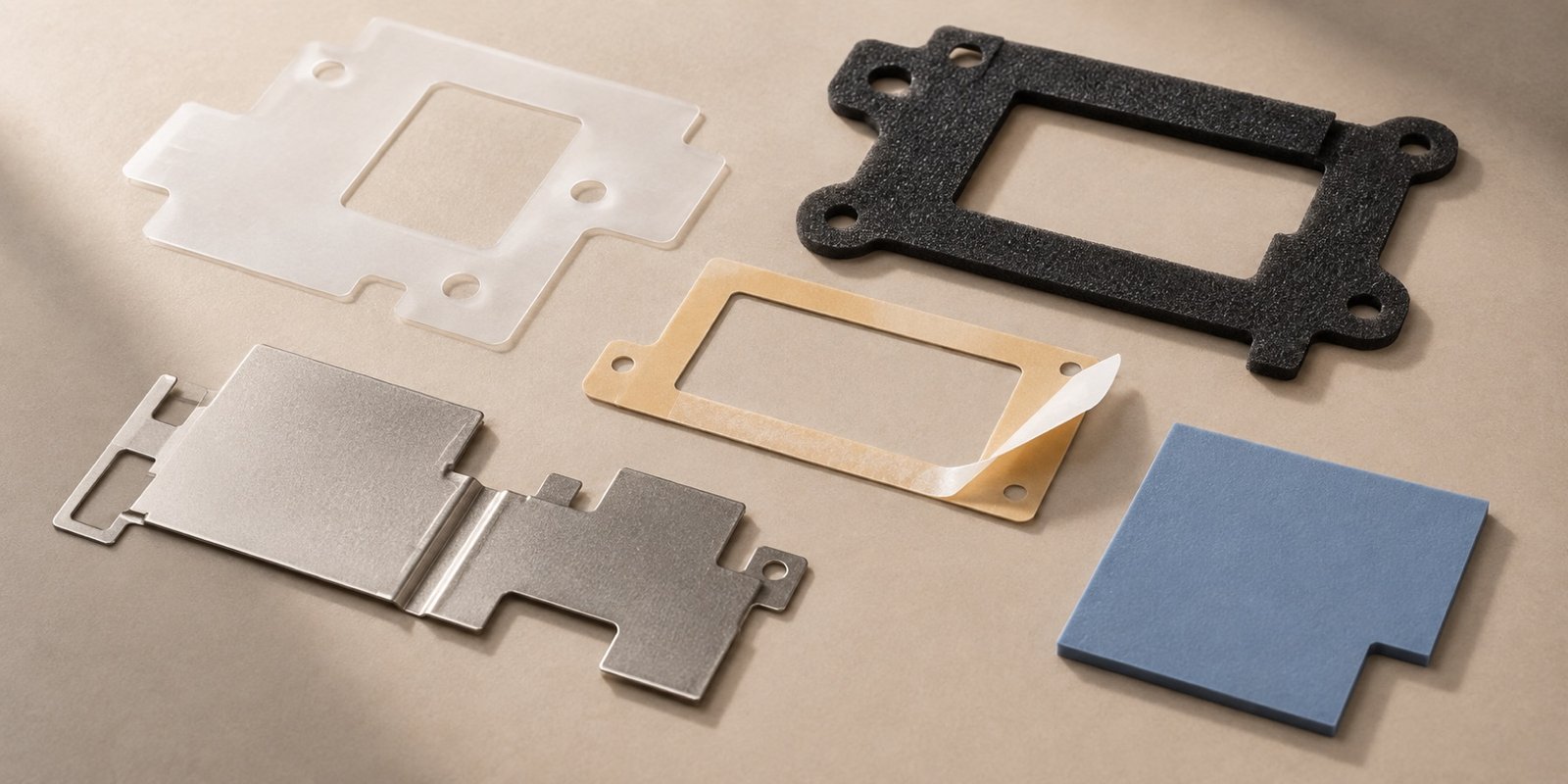
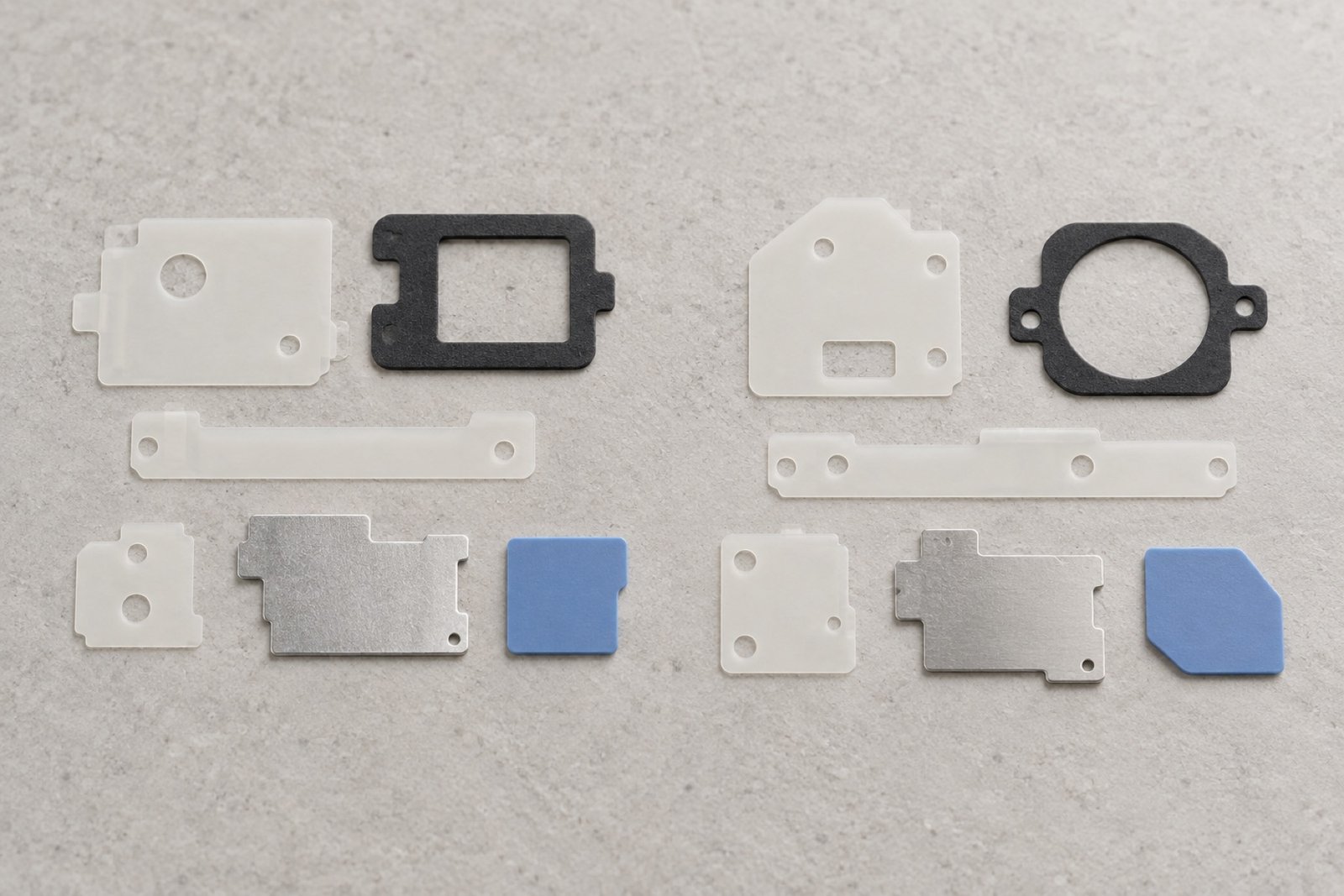
Custom precision die cutting for electronic parts can create insulation barriers, adhesive-backed pieces and shielding profiles shaped to the assembly.
ENGINEERING INPUTS
Define what the part must do—and how it must fit.
A useful drawing and application brief help align the cut profile with material behavior and assembly needs.
Material & thickness
Material family, thickness and relevant operating conditions.
Shape & openings
Overall dimensions, profiles, holes, cutouts and critical features.
Assembly & fit
Placement, adhesive need, adjacent surfaces and tolerance requirements.
DEVELOPMENT SUPPORT
Prototyping & Low-Volume Production
A die cut prototype can help review geometry, material choice and fit before a production route is agreed. Smaller-volume requirements can be evaluated against the same functional brief.
PROJECT ROUTE
From Drawing to Production
Custom precision die cutting services begin with requirements, not a fixed process assumption.
- 01
Drawing / Requirements
Function, geometry, application and quantity.
- 02
Material Review
Material, thickness and construction.
- 03
Prototype if Needed
Assess fit and sample performance.
- 04
Production
Convert to the agreed specification.
- 05
Verification
Review defined critical features.
QUALITY / VERIFICATION
Quality & Tolerance Control
Acceptance criteria are set from the drawing and project requirements. Drawing review, first-article verification, in-process checks and final inspection can be planned around the features that matter to the assembly.
Explore Quality & Tolerance Control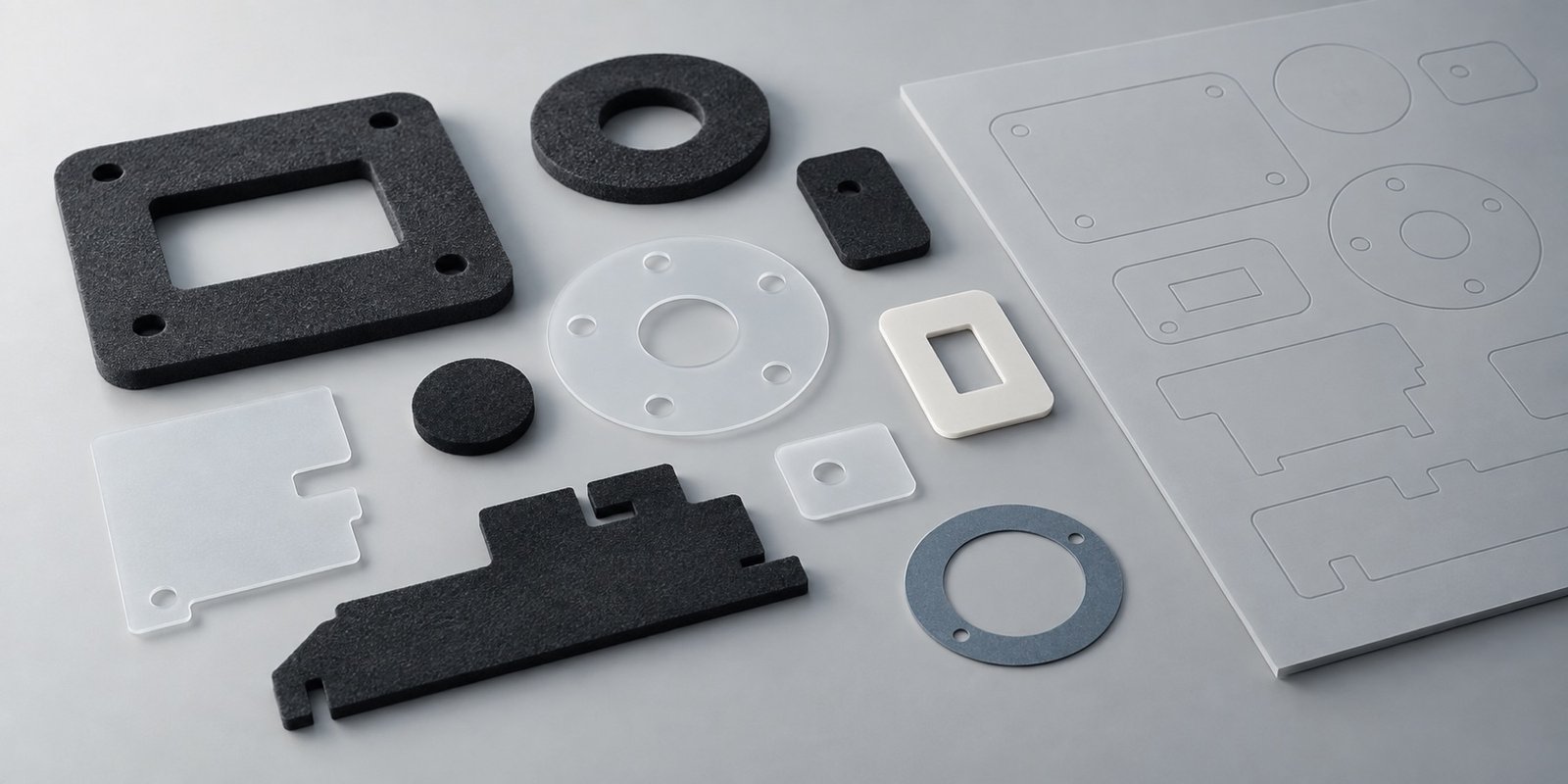
FAQ
Precision Die Cutting FAQs
Practical answers for project planning and quotations.
What materials can be precision die cut?
Flexible films, foams, rubber, silicone, adhesive constructions, shielding materials and thermal interface sheets can be considered. The grade and suitability are reviewed for each application.
What information is needed for a precision die cutting quote?
Provide a drawing or sample, dimensions, material and thickness requirements, intended function, application conditions and estimated quantity. Note any adhesive or critical-fit requirements.
Can adhesive-backed materials be die cut?
Yes. Adhesive layers and release liners can be included where the material, placement method and assembly interface call for them.
Can you produce prototypes before production?
Prototype requirements can be reviewed to evaluate material, geometry and fit before the production construction is agreed.
Can multiple layers be combined before die cutting?
Compatible films, foams, adhesives or other functional layers can be considered as a laminated construction before conversion. Layer order and bonding surfaces are project-specific.
How are dimensions and tolerances controlled?
Critical features and acceptance criteria are agreed from the drawing. The relevant first-article, in-process and final checks are then defined for the project; no universal tolerance is assumed.
Can precision die cutting be used for electronic components?
Yes. It can form insulation barriers, sealing profiles, adhesive-backed parts and other functional shapes for electronic and electrical assemblies when the material and geometry are specified.
Do you support low-volume production?
Smaller-volume project needs can be discussed alongside the prototype and production requirements. Feasibility depends on the selected material, construction and quantity.
START A PROJECT
Have a Precision Die Cutting Project?
Send us your drawing, material requirements, dimensions and estimated quantity for review.
Request a Quote