
Adhesive-Backed Foam Components
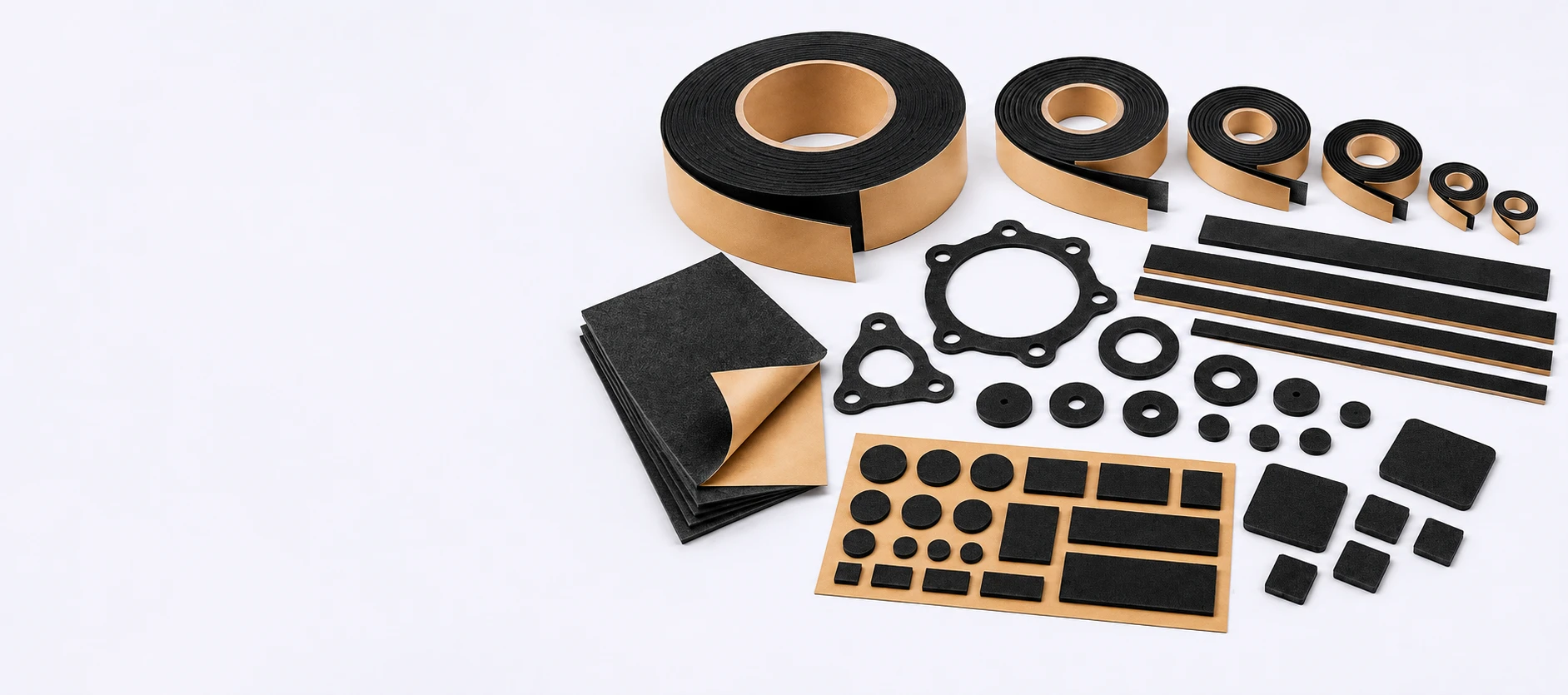
Custom die-cut foam pads, gasket frames and strips with adhesive backing for positioning, cushioning and sealing interfaces. Foam compression, bonding surfaces, adhesive coverage and liner handling are reviewed against assembly requirements.
Cushioning
FOAM GRADE · COMPRESSION
Sealing Contact
JOINT PATH · INSTALLED GAP
Adhesive Placement
The foam provides contact or cushioning, while the adhesive holds the part in its intended position. Both functions require separate material review.
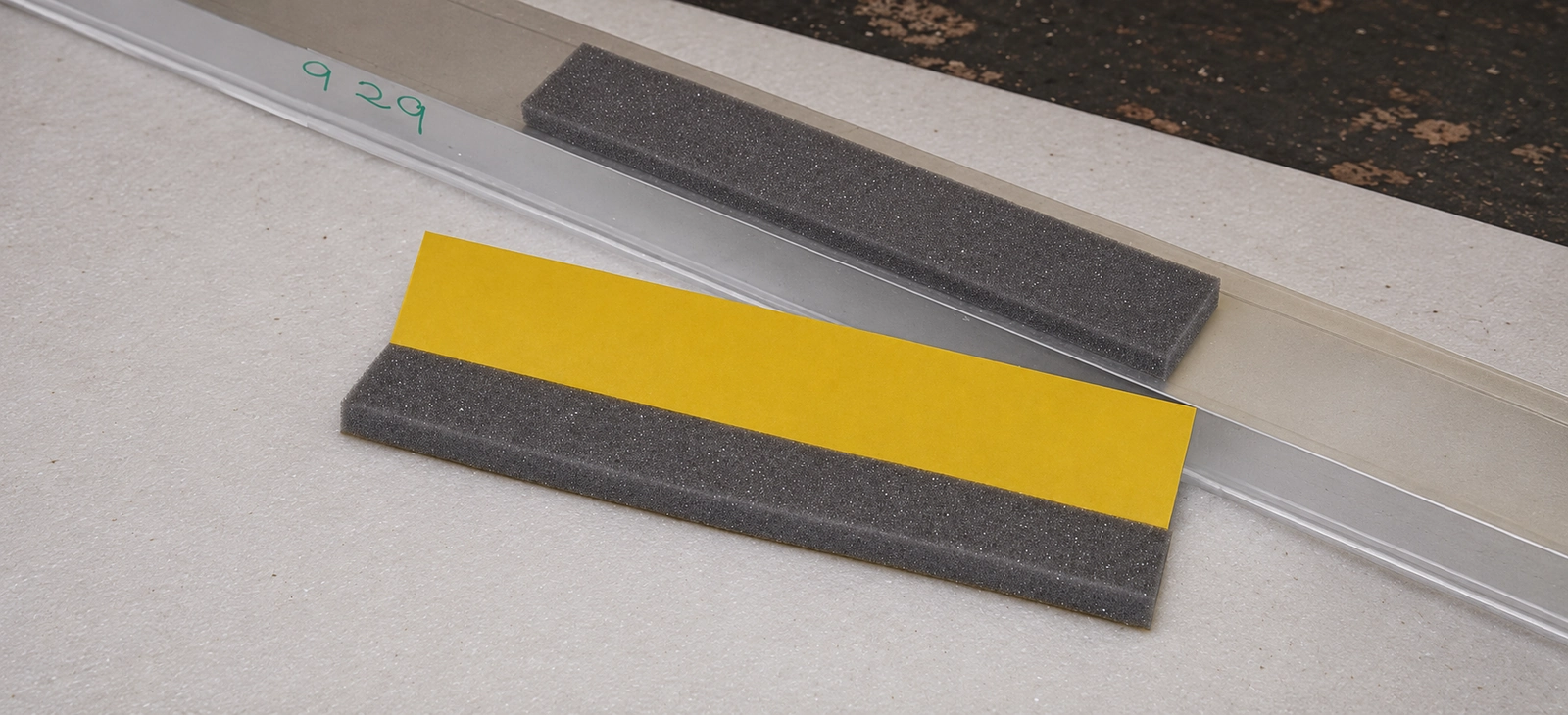
Foam Contact and Adhesive Placement in One Part
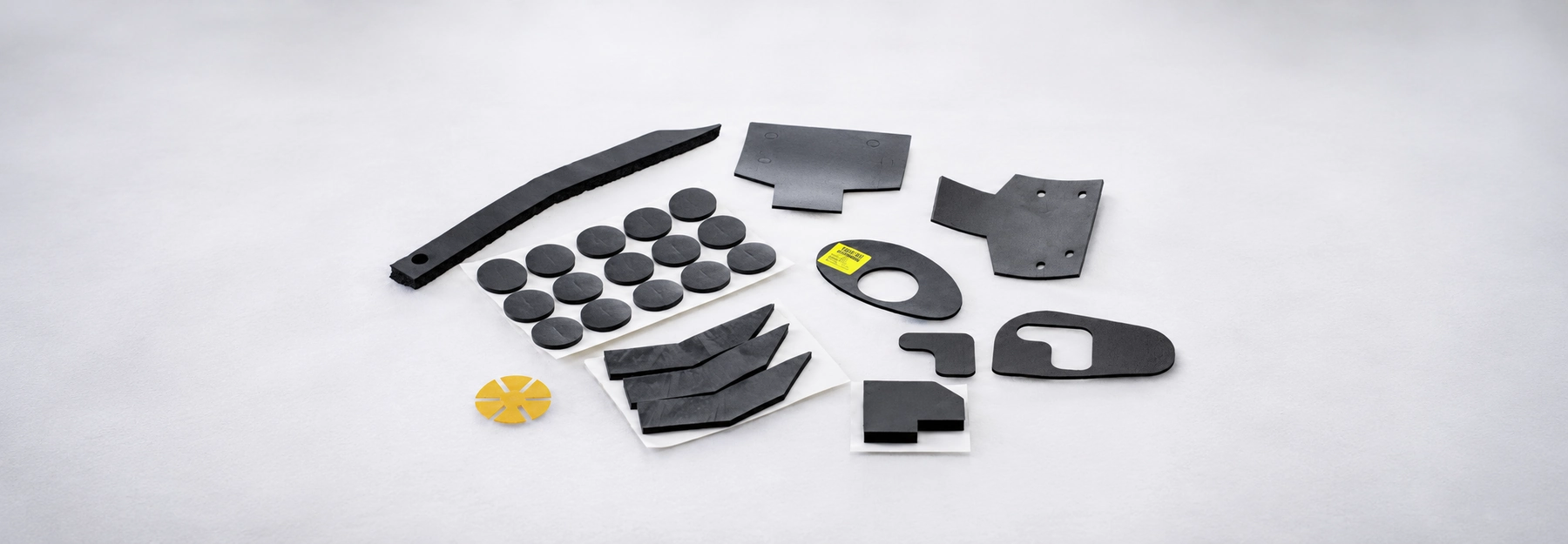
Custom adhesive-backed foam components can be die cut as gasket frames, strips, pads and shaped spacers. The foam side manages contact, spacing or cushioning, while an adhesive layer secures the part to a defined mounting surface. Specify the foam outline, adhesive footprint, installed gap and liner-removal sequence to confirm fit and handling requirements.
Materials & Constructions
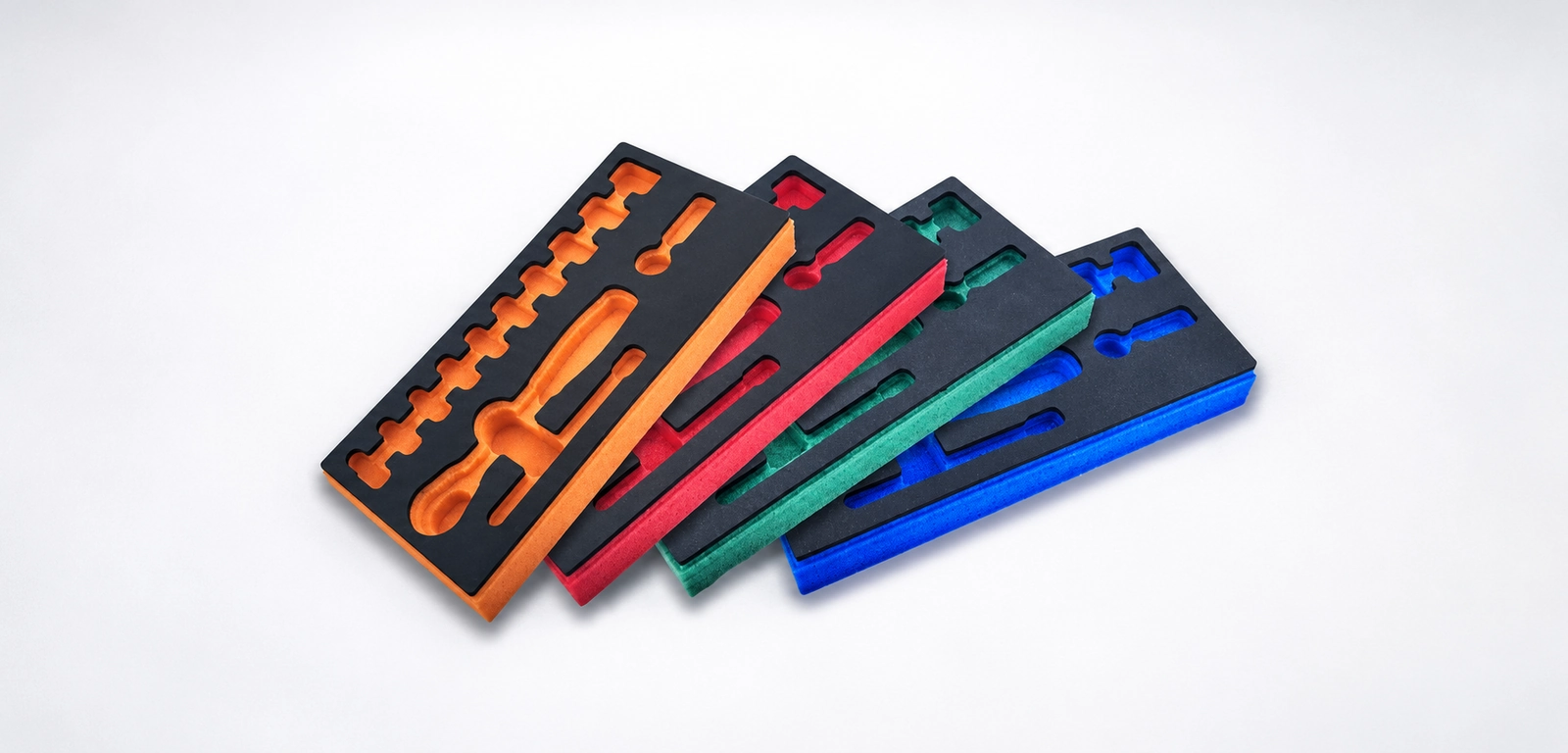
Foam Sheet
Foam material selection should consider grade, cell structure, thickness, compression behavior, recovery and service conditions before adhesive backing is confirmed.
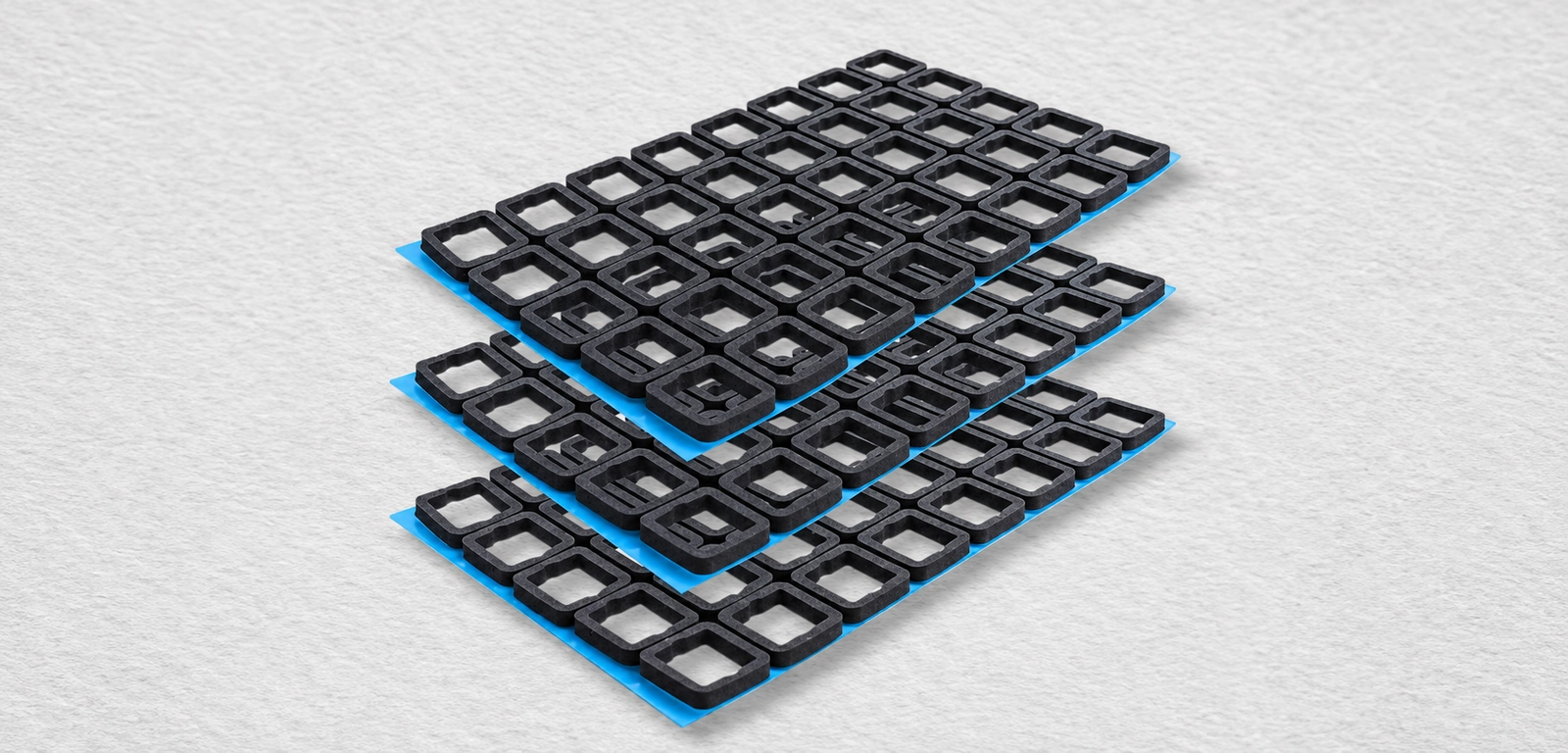
Adhesive Layer
Adhesive material selection must consider compatibility with both the foam surface and the mounting substrate, including surface finish and operating conditions.
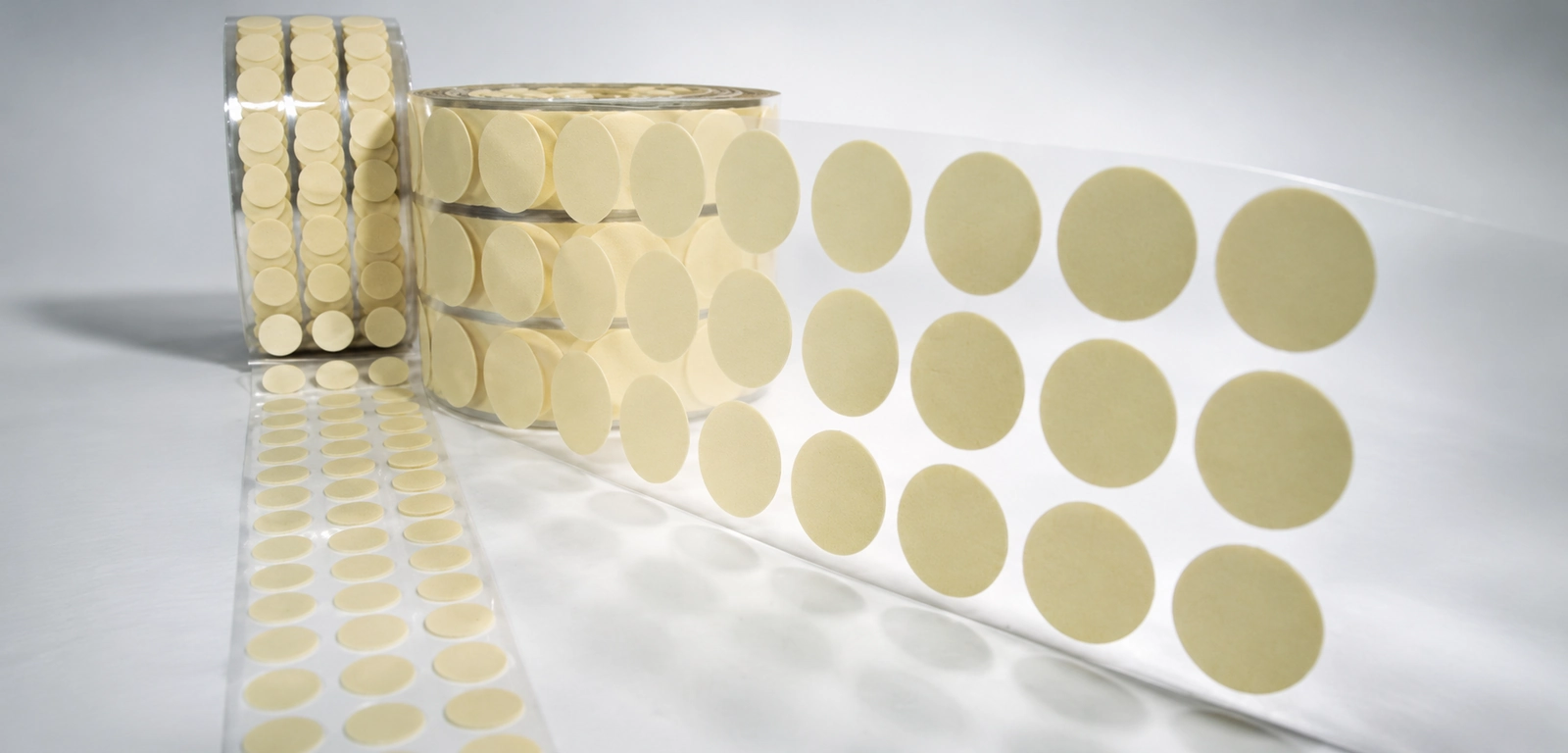
Release Liner
Define the appropriate liner material, removal direction and delivery presentation to support cutting, handling and installation.

Layered Construction
Specify the foam outline, adhesive footprint, total thickness and layer-registration requirements, especially where adhesive covers only part of the foam.
Engineering
Considerations
Foam Contact
Define the installed gap range, closure force and contact area; review foam compression and recovery for the selected grade.
Bond Surface
Identify the foam surface, mounting substrate, coating and application conditions before selecting the adhesive.
Layer Alignment
Specify foam and adhesive boundaries, critical offsets, liner orientation and cut-depth requirements in the drawing.
Where These Components Are Used
How We Manufacture Them
Lamination & Bonding
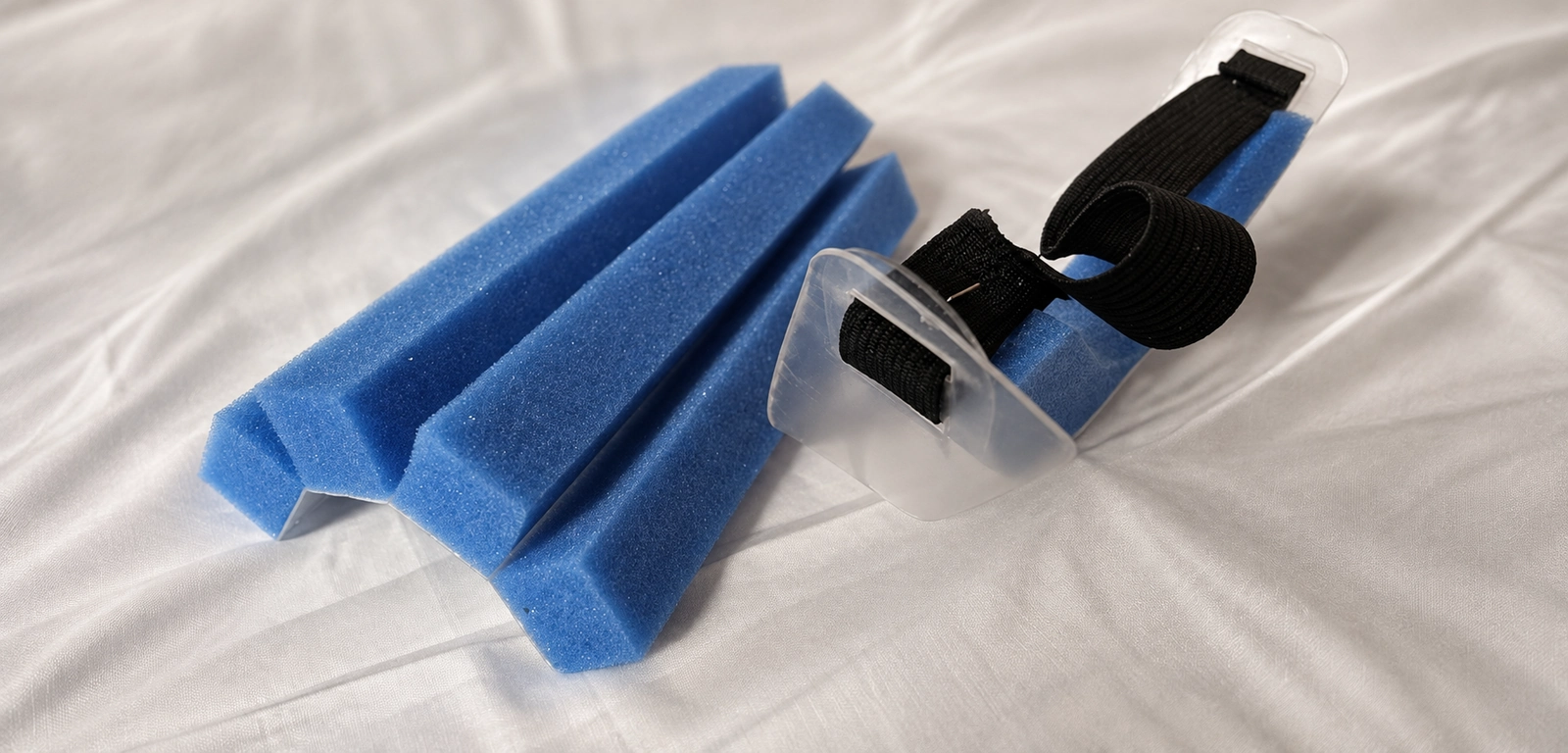
Review adhesive-to-foam compatibility, coverage, layer registration and release-liner orientation before confirming the laminated construction.
Precision Die Cutting
Evaluate outer profiles, holes, narrow features, adhesive edges and kiss-cut requirements against the selected foam-and-adhesive stack.
Quality & Tolerance Control
Check material identity, overall thickness, adhesive coverage, layer alignment, critical dimensions and liner condition against agreed requirements.
Adhesive-Backed Foam Components FAQs
Questions about the combined foam-and-adhesive structure, liner handling and interface requirements.
What is the difference between adhesive-backed foam and a plain die-cut foam gasket?
An adhesive-backed foam part combines a functional foam layer with an adhesive face for positioning or attachment. The foam may provide cushioning, spacing or sealing contact, while the adhesive secures it to a mounting surface. Plain die-cut foam gaskets may be mechanically located without adhesive, while adhesive-backed constructions add a separate bonding function. The correct construction depends on assembly conditions; adhesive attachment alone does not establish sealing performance.
What foam materials can be used for custom adhesive-backed die-cut components?
PE, PU and other specified foam sheets can be evaluated for adhesive-backed constructions. Selection depends on the foam grade, cell structure, thickness, compression-force response, recovery and operating conditions. Adhesive compatibility with the foam surface must also be reviewed. Material availability and converting feasibility are confirmed for each project rather than assumed for an entire foam family.
How do I select adhesive backing for metal, painted surfaces and plastic housings?
Identify the foam grade and the actual mounting surface, including any paint, coating or surface treatment. Low-surface-energy plastics such as PE and PP may require specially formulated pressure-sensitive adhesives or suitable surface preparation. Surface cleanliness, application pressure, temperature and expected loading also matter. Adhesion should be evaluated using representative foam and mounting materials before approval.
Can adhesive cover only part of a custom die-cut foam component?
Partial adhesive coverage can be evaluated when the design requires specific bonded areas and exposed foam contact regions. The drawing should define the foam outline, adhesive footprint, layer boundaries and critical registration tolerances. Material compatibility and lamination feasibility must be checked before production. Different adhesive and foam profiles may require additional alignment and cutting control.
How should foam compression and adhesive placement be specified together?
Start with the minimum and maximum assembled gap, available closure force and the intended foam contact area. Then define the mounting surface and adhesive footprint that keep the part positioned during installation and service. Foam compression and adhesive bonding serve different purposes. The final construction should avoid inadequate contact, excessive loading or unintended peel stress on the adhesive.
Can adhesive-backed foam parts be kiss-cut and supplied on release liners?
Release liners protect adhesive surfaces and support component handling. Where the selected foam-and-adhesive structure permits, kiss cutting may leave finished parts on an intact liner. Individual parts, sheets or roll-based formats can be evaluated according to process feasibility. Specify liner type, part spacing, orientation, peel tabs, waste-removal needs and application sequence.
What can cause adhesive-backed foam parts to lift, detach or lose adhesion over time?
Bonding problems may result from unsuitable adhesive selection, contaminated surfaces, coating incompatibility, insufficient application pressure or unfavorable loading. Temperature, humidity, chemicals and repeated mechanical movement may also affect durability. Foam compression and adhesive loads should be reviewed separately. Long-term suitability must be evaluated using the selected materials and representative assembly conditions.
How are adhesive placement, layer alignment and die-cut quality inspected?
Inspection criteria may include foam identification, overall thickness, adhesive coverage, layer registration, die-cut geometry and liner condition. Visible defects such as exposed adhesive, contamination, edge lifting or liner damage should be checked against agreed acceptance criteria. Dimensional and visual inspection confirms the construction but does not independently verify bond strength or durability.
Can adhesive-backed foam components be prototyped before volume production?
Prototype and low-volume requests can be evaluated to check foam fit, adhesive coverage, layer alignment and liner handling before regular production. Samples can also help review the installed gap and mounting sequence. Tooling requirements, minimum quantities, costs and lead times depend on material availability, construction complexity and expected production volume.
What information is needed to quote custom adhesive-backed foam die-cut parts?
Provide a drawing or sample showing the foam outline, adhesive footprint, critical dimensions and layer orientation. Identify the foam grade and thickness if known, mounting substrate, surface finish, installed gap, compression requirements and operating conditions. Include liner type, desired delivery format, quantity per design and expected production volume. If materials are undecided, describe the assembly function for initial review.
Discuss an adhesive-backed foam interface
Share the foam drawing, installed gap, mounting substrate, adhesive footprint, liner requirements and estimated quantity for review.