APPLICATION 05 / 06 · LED LIGHTING
Functional Components for LED Lighting & Lighting Equipment
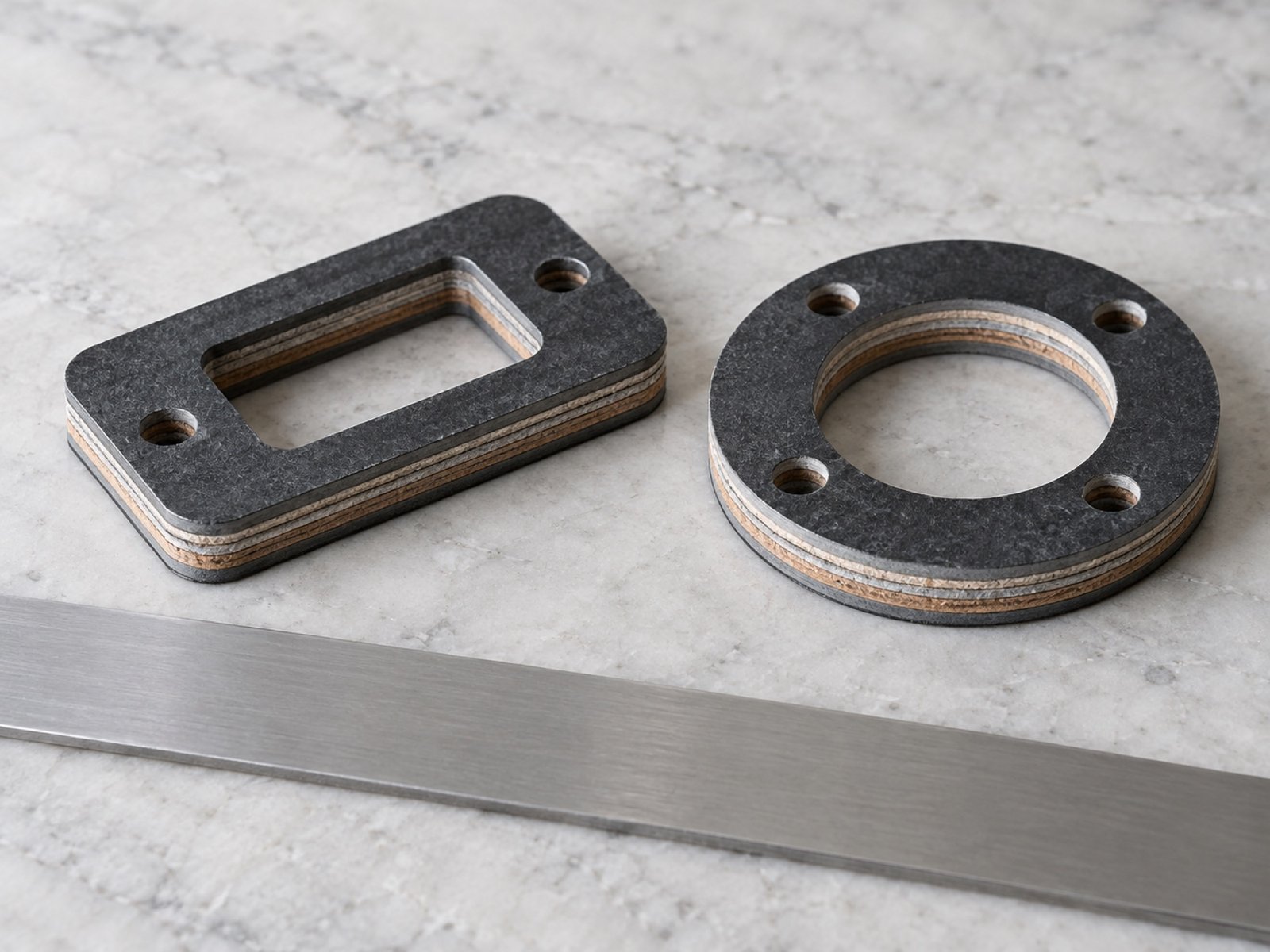
Thermal interface, insulation, adhesive and sealing parts shaped for LED lighting and driver assemblies.
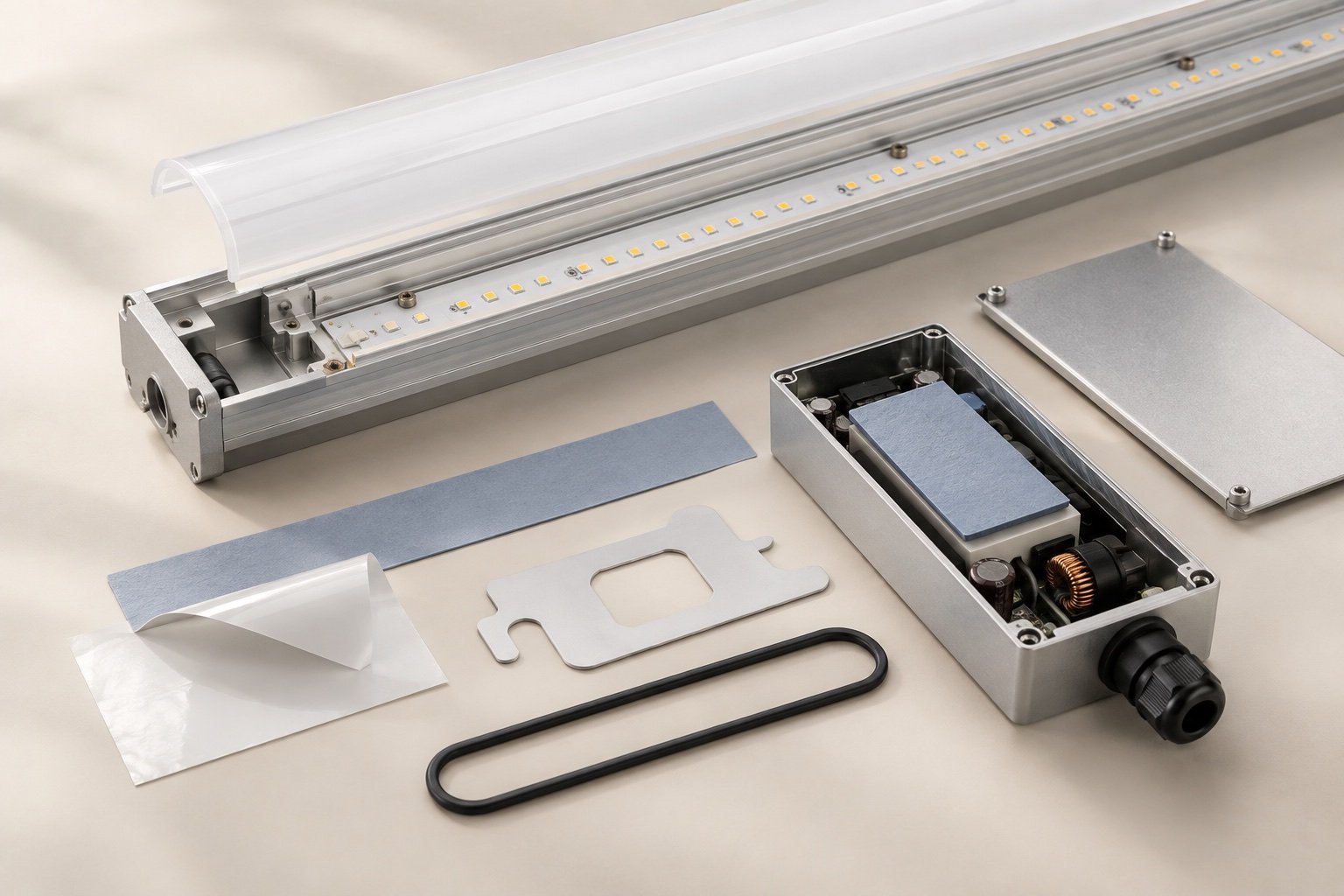
APPLICATION OVERVIEW
A lighting assembly needs more than a light source.
LED lighting equipment combines electronic drivers, heat-transfer surfaces, housings and mounting interfaces. A small die-cut layer can help connect a thermal surface, separate electrical zones or position an adhesive or seal.
TC focuses on those converted functional parts within a lighting assembly. It does not manufacture LED lamps, lighting fixtures, electronic drivers or modules.
FUNCTIONAL REQUIREMENTS
Manage heat, isolation and assembly fit.
The part location determines which functional material should be reviewed.
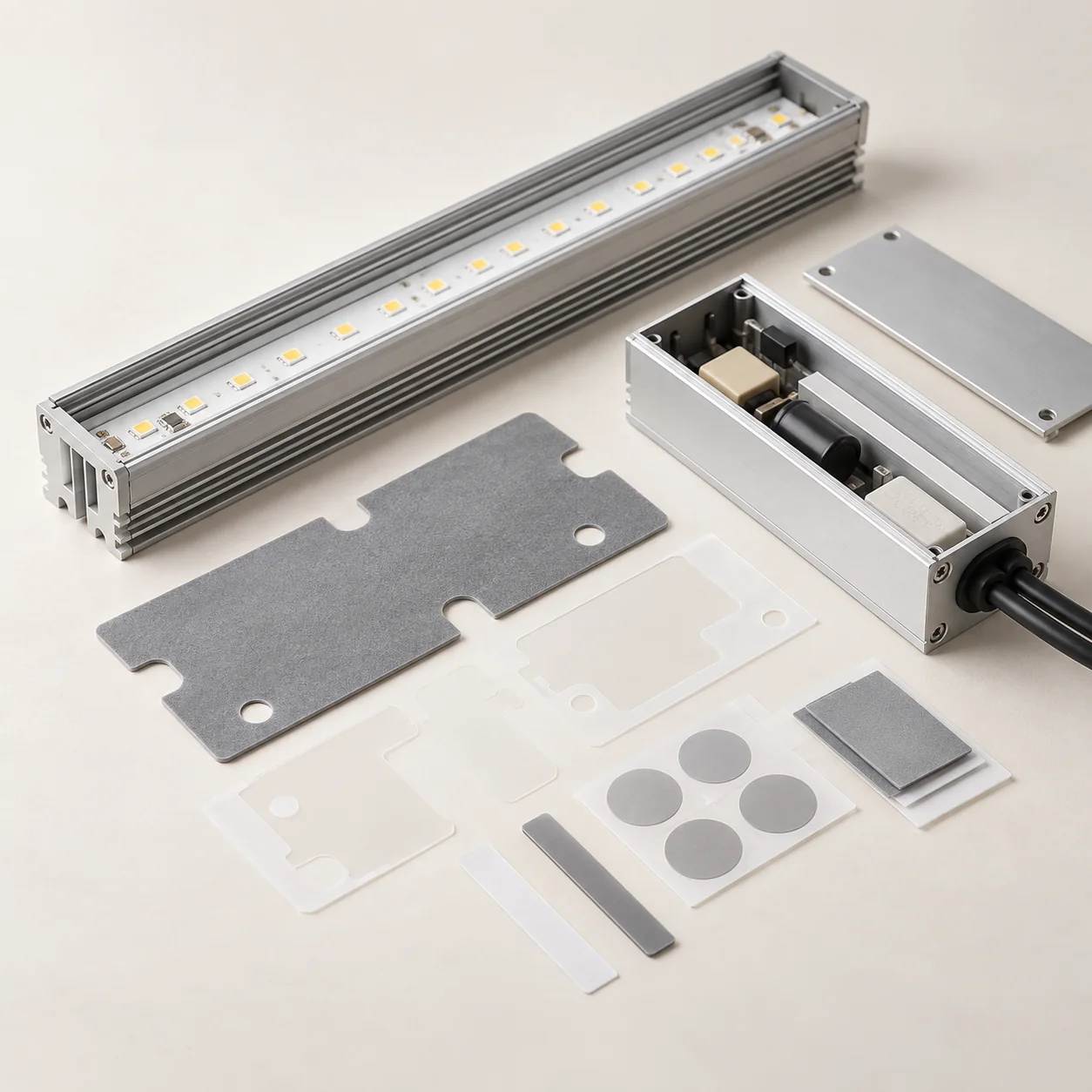
Thermal management
A cut thermal interface can match the intended contact area in a lighting or driver assembly.
Electrical insulation
Shaped film or sheet barriers can separate specified electrical regions.
Adhesive bonding
Die-cut adhesive layers can help locate or attach a functional part.
Sealing and cushioning
Flexible forms can address housing edges and local contact points.
COMPONENT SOLUTIONS
Functional layers inside lighting equipment.
These are converted component families, not finished lighting products.
Thermal Management Components
Cut thermal interface pads for a specified heat-transfer surface.
Explore component →Electrical Insulation Components
Insulating film shapes for electrical separation around drivers or boards.
Explore component →Adhesive Functional Components
Adhesive functional forms for positioning and bonding layers.
Explore component →Sealing & Cushioning Components
Flexible sealing and cushioning profiles for housing interfaces.
Explore component →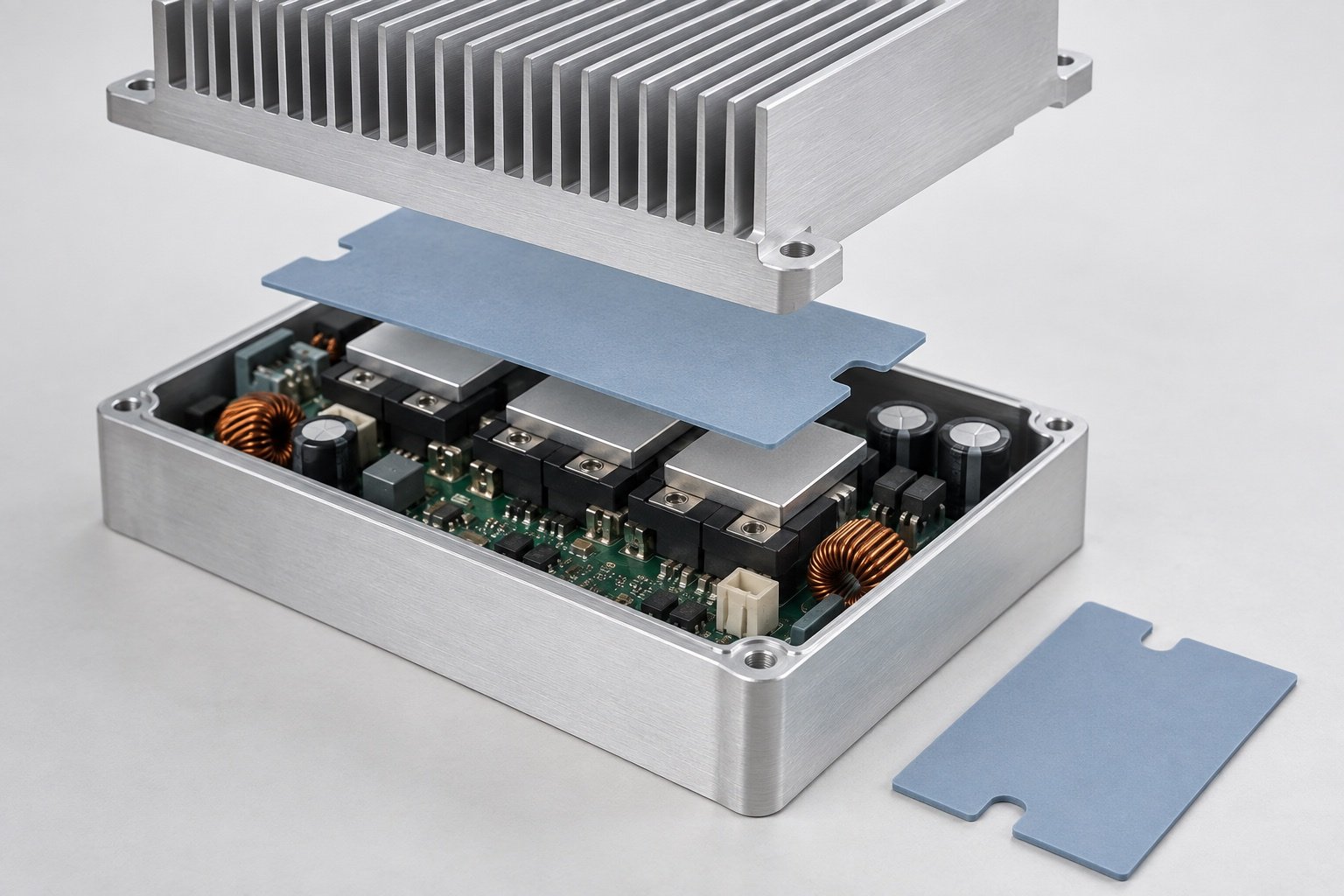
MATERIAL OPTIONS
Choose the layer for the lighting interface.
Thermal contact, electrical separation and attachment are separate material decisions.
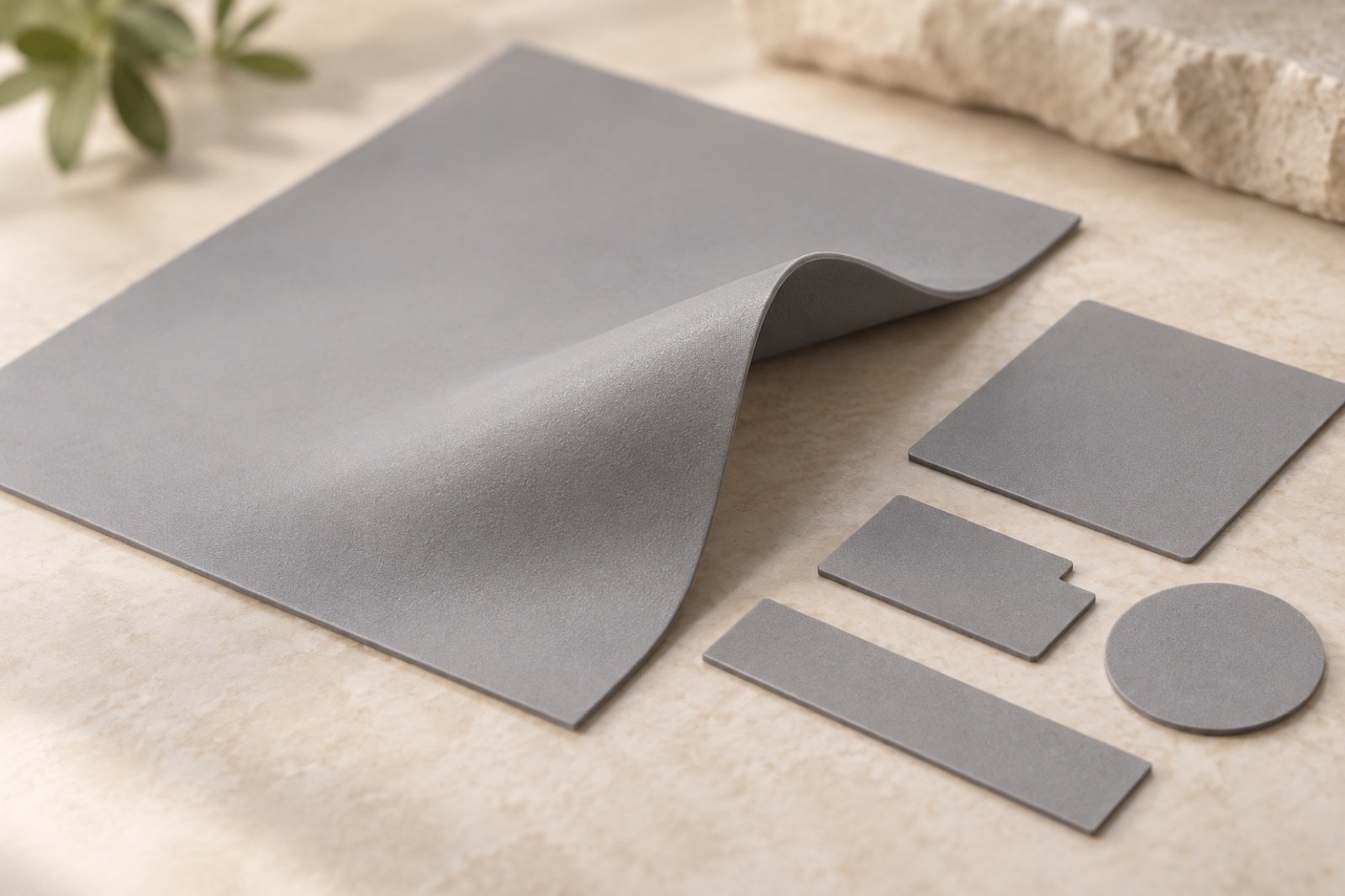
Thermal Management Materials
Sheet-form thermal materials considered for a defined contact area.
Explore material →Insulation Materials
Film and sheet materials for electrical isolation and barriers.
Explore material →Adhesive Materials
Adhesive options for bonding or part placement.
Explore material →Foam, Rubber & Silicone Materials
Flexible sheets for enclosure seals or local cushioning.
Explore material →ENGINEERING CONSIDERATIONS
Start with heat path and assembly geometry.
A lighting part is useful only when its material and profile fit the actual interface.
Heat-transfer contact
Review the mating surfaces, gap and compression at the thermal interface.
Electrical separation
Identify where film or sheet insulation is required near electronic elements.
Adhesive placement
Check the substrate and placement method for an adhesive layer.
Housing outline
Define cutouts, perimeter seals and any local cushioning features.
MANUFACTURING CAPABILITIES
Shape and combine the required layers.
The drawing determines whether the part is a single cut sheet or a laminated construction.
Precision Die Cutting
Cut thermal, insulating and flexible materials to lighting-assembly profiles.
Explore capability →Lamination & Bonding
Add an adhesive or combine layers when the part construction requires it.
Explore capability →Quality & Tolerance Control
Review critical geometry and material requirements for the project.
Explore capability →QUALITY & VERIFICATION
Verify fit at the defined interface.
For lighting assemblies, the drawing links part geometry to thermal, electrical or enclosure placement. Inspection focuses on the specified material and critical dimensions.
- Drawing review
- Material confirmation
- Dimensional inspection
- Visual inspection
- Project-specific verification
RELATED PAGES
Continue from the equipment context.
Compare another application, or return to the full application overview.
FAQ
LED lighting questions, answered.
Practical questions about this equipment application and its functional components.
Can thermal pads be die cut for LED lighting assemblies?
Yes. A sheet-form thermal interface can be shaped for the specified contact area, gap and assembly geometry.
Where might insulation film be used in a lighting product?
A driver or electronic subassembly may require a defined electrical barrier. The location and shape are set by the design drawing.
Can adhesive forms help position a thermal or insulating layer?
An adhesive or laminated construction can be reviewed when the substrate and functional requirements support it.
Can a lighting enclosure use a die-cut seal?
A flexible gasket can be considered for a defined housing interface after its profile and assembled compression are reviewed.
Do you supply LED drivers or complete luminaires?
No. This page focuses on custom die-cut functional components used within lighting equipment assemblies.
What information is needed to quote an LED component?
Send the part drawing or sample, application location, thermal or electrical requirement, material specification if available and estimated quantity.
START A PROJECT
Have an LED Lighting Component Project?
Send us your drawing, functional requirements, material specification if available and estimated quantity for review.
Request a Quote →