APPLICATION 03 / 06 · HVAC & CLIMATE CONTROL
Functional Components for HVAC & Climate Control Equipment
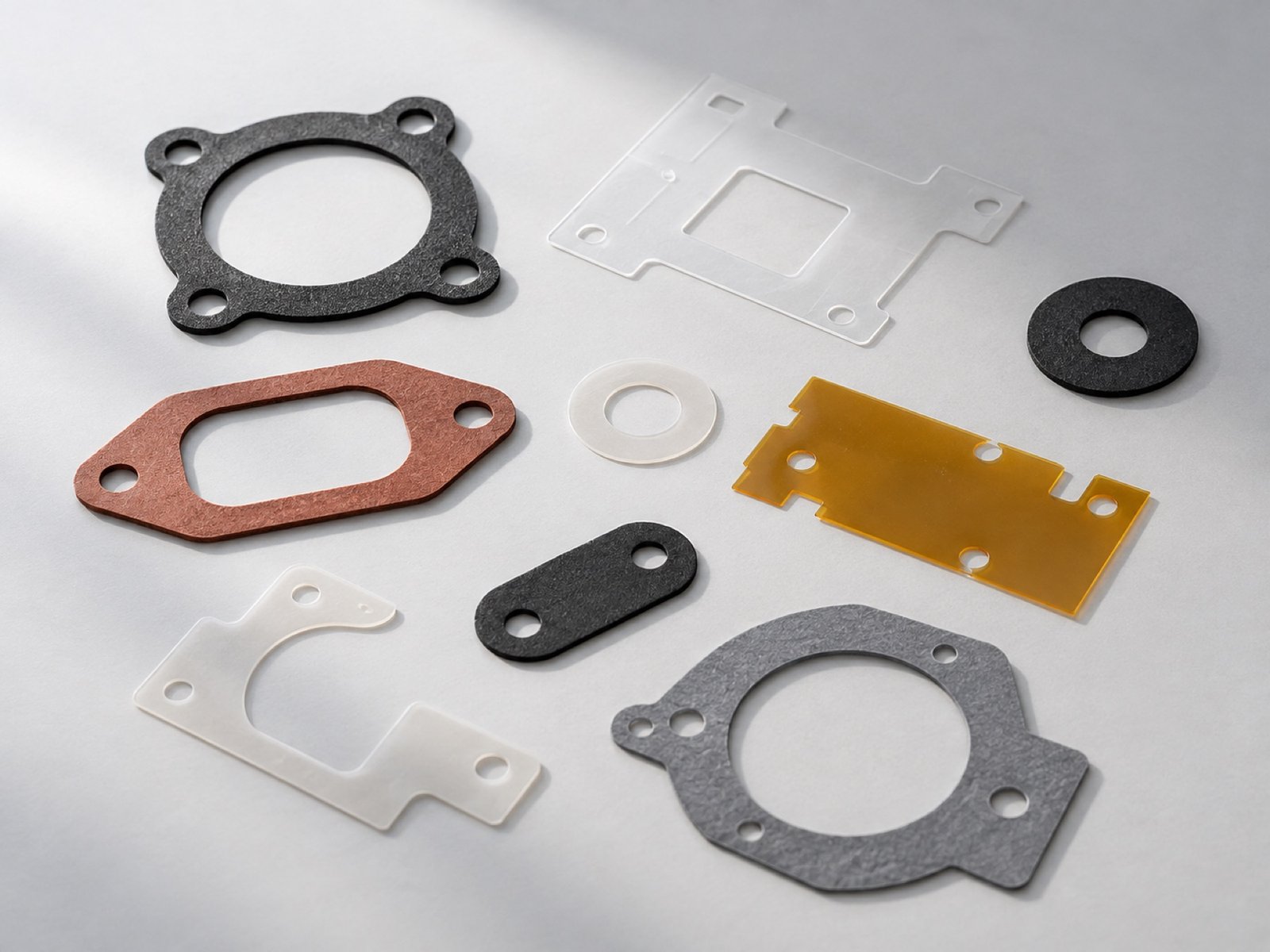
Custom die-cut gaskets, cushioning pads, insulation shapes and adhesive-backed parts for climate-control equipment assemblies.
APPLICATION OVERVIEW
A good equipment seal starts at the interface.
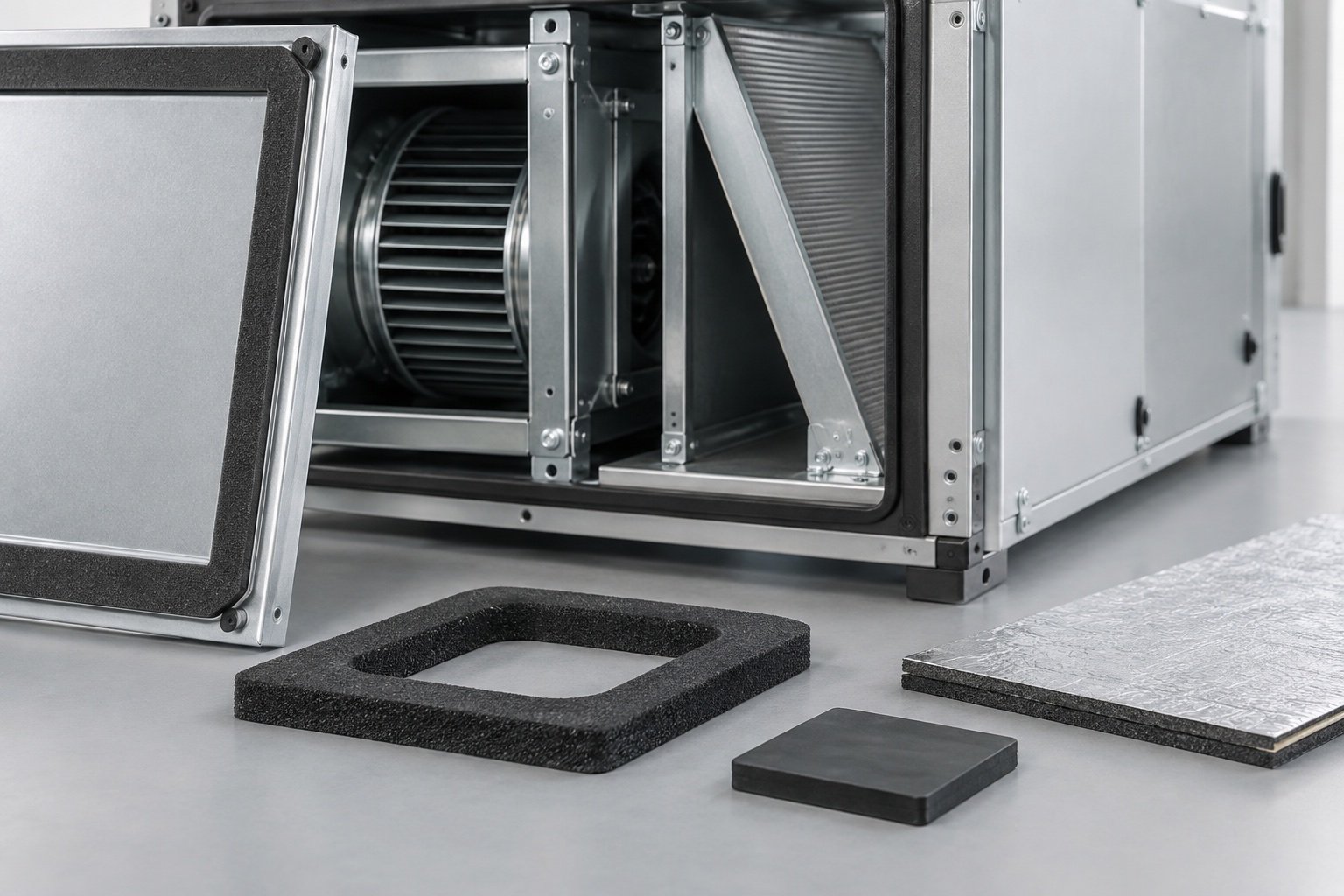
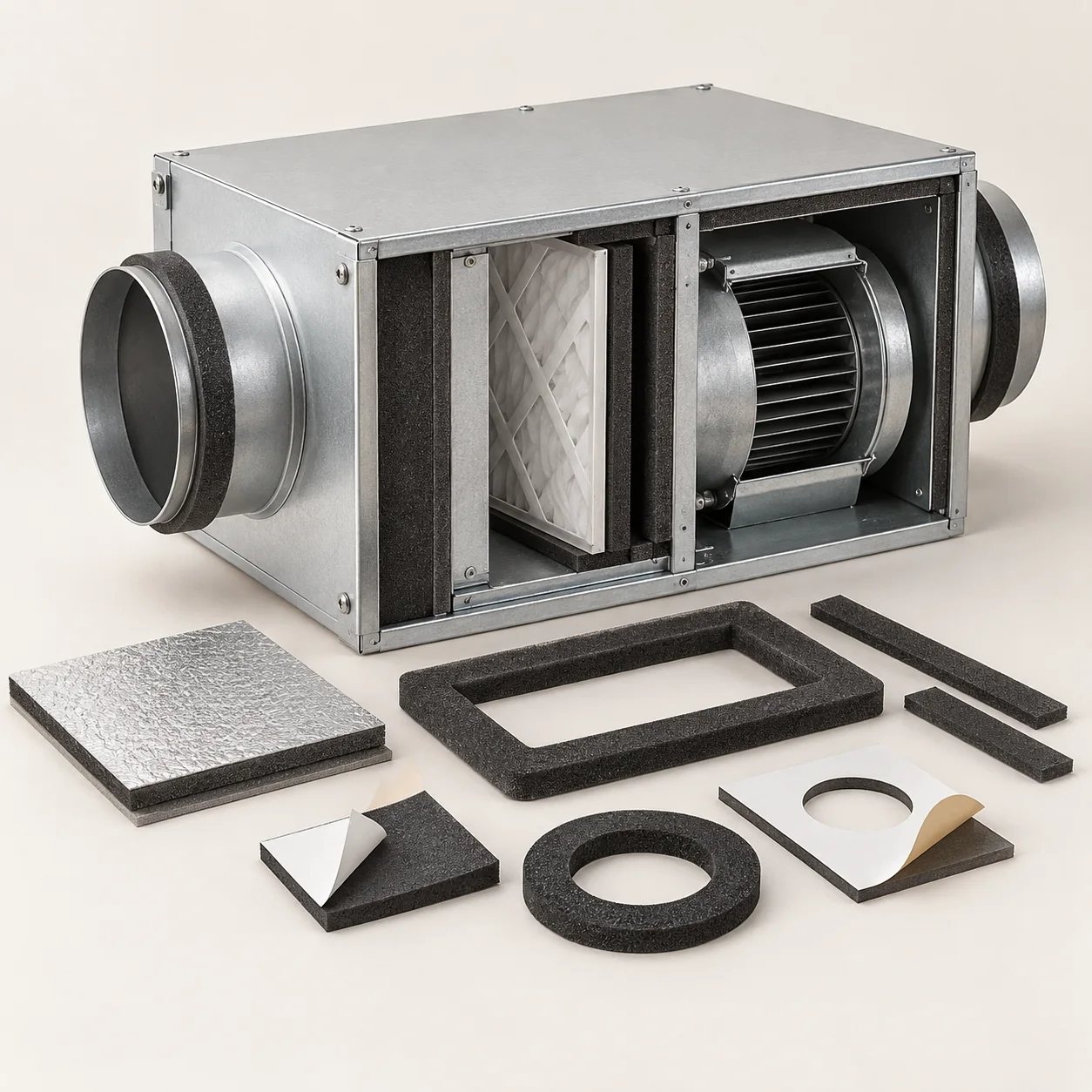
HVAC and climate-control equipment brings panel seams, air paths, housings and electrical subassemblies into one build. A flexible die-cut part can follow a sealing path, cushion a contact point or fit an insulating layer around a defined shape.
The task is to match material and geometry to the equipment interface. TC focuses on converted foam, rubber, insulation and adhesive parts—not compressors, fans or finished HVAC equipment.
FUNCTIONAL REQUIREMENTS
Sealing leads; fit completes the function.
Each flexible component is reviewed at its actual panel, housing or assembly location.
Sealing
A gasket profile can follow an equipment edge or housing opening specified on the drawing.
Cushioning
Foam or rubber pads can soften local contact or support a defined spacing requirement.
Electrical insulation
Sheet insulation can be shaped for electrical subassemblies inside the climate-control equipment.
Adhesive bonding
Adhesive backing may help position a seal or pad during assembly.
COMPONENT SOLUTIONS
Flexible parts around equipment edges.
The focus is on converted sealing and insulating components within the equipment.
Sealing & Cushioning Components
Custom gaskets, pads and spacers for specified enclosure or panel interfaces.
Explore component →Adhesive Functional Components
Adhesive-backed shapes that can aid gasket placement or layered assembly.
Explore component →Electrical Insulation Components
Insulating cut parts for electrical subassemblies where the design requires separation.
Explore component →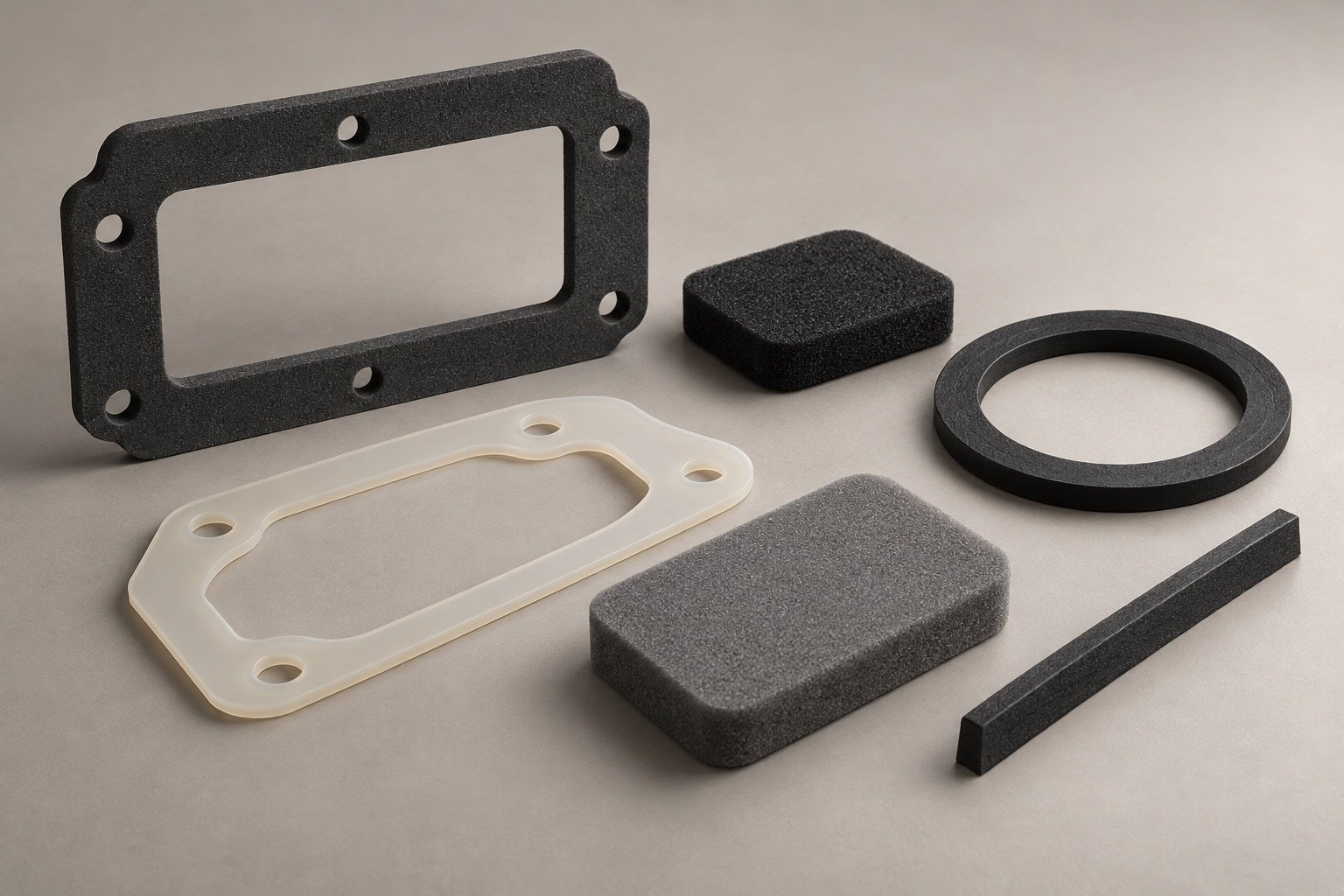
MATERIAL OPTIONS
Flexible material families for the interface.
Compression, contact surface and equipment environment guide the material review.
Foam, Rubber & Silicone Materials
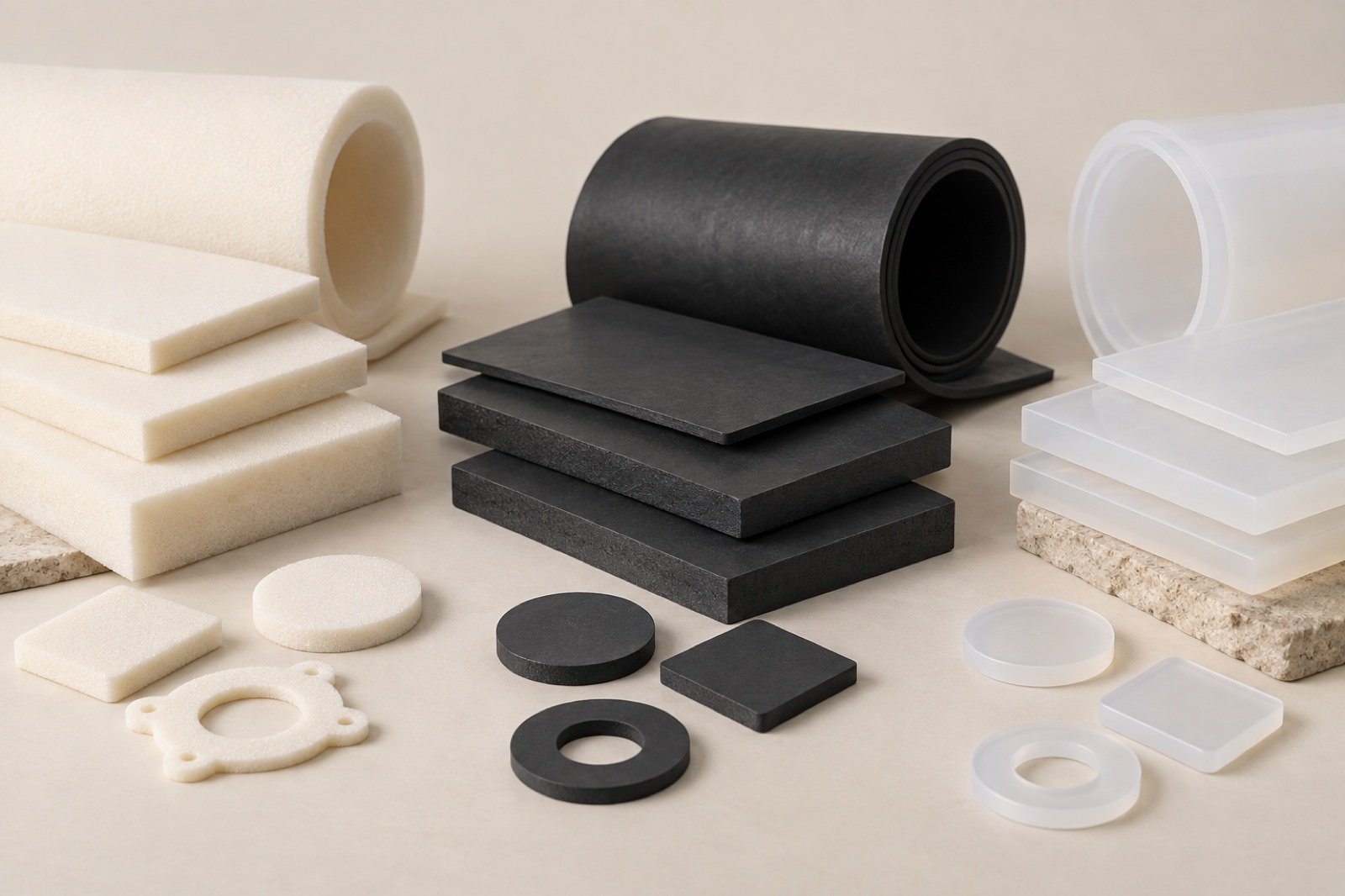
Foam, rubber and silicone sheets considered for sealing, cushioning or spacing.
Explore material →Adhesive Materials
Adhesive material options when a gasket or pad needs placement support.
Explore material →Insulation Materials
Film and sheet insulation for electrical zones inside the equipment.
Explore material →ENGINEERING CONSIDERATIONS
Specify the gasket path, not a generic pad.
A useful drawing shows the interface the flexible part must follow.
Seal path
Identify the panel edge, openings and fastener locations that define the gasket outline.
Compression
Review the assembled gap and contact pressure before choosing thickness and material.
Equipment environment
Consider the temperature and exposure conditions the selected sheet must handle.
Attachment
Confirm whether the part is mechanically retained or needs adhesive backing.
MANUFACTURING CAPABILITIES
Convert the gasket to the equipment drawing.
The cut profile and optional backing are chosen around the assembled interface.
Precision Die Cutting
Die-cut flexible sheet materials into defined gasket, pad and spacer shapes.
Explore capability →Lamination & Bonding
Laminate adhesive backing or another functional layer when specified.
Explore capability →Quality & Tolerance Control
Review material and critical dimensions for project-specific fit.
Explore capability →QUALITY & VERIFICATION
Verify the gasket against its drawing.
A flexible part is checked against the specified profile, openings and material. Verification is agreed for the particular HVAC equipment project.
- Drawing review
- Material confirmation
- Dimensional inspection
- Visual inspection
- Project-specific verification
RELATED PAGES
Continue from the equipment context.
Compare another application, or return to the full application overview.
FAQ
HVAC component questions, answered.
Practical questions about this equipment application and its functional components.
What kind of die-cut gasket can be used in HVAC equipment?
Foam or rubber sheet can be converted into a custom gasket profile for a defined panel, housing or air-path interface. The drawing and assembled gap guide the review.
How do I choose between foam and rubber for a seal?
Start with the sealing path, compression, contact surfaces and equipment environment. Those requirements determine which material family should be evaluated.
Can an HVAC foam gasket include adhesive backing?
Yes, an adhesive-backed construction can be considered when it helps position the gasket and suits the substrate and assembly conditions.
Can a die-cut part provide cushioning as well as sealing?
A compliant material can address both functions where the design supports it. The assembled compression and geometry still need project review.
Can insulation film be used in climate-control equipment?
Electrical subassemblies may require a shaped film or sheet barrier. Its location and material are defined from the electrical design.
What should I provide for an HVAC component quotation?
Share the equipment interface drawing or sample, seal path, assembled gap, material specification if available and estimated quantity.
START A PROJECT
Have an HVAC Component Project?
Send us your drawing, functional requirements, material specification if available and estimated quantity for review.
Request a Quote →