DIE-CUT COMPONENTS
Die-Cut Foam Gaskets
Custom foam profiles for sealing, cushioning and spacing at defined assembly interfaces.
PRODUCT OVERVIEW
A gasket shaped around the contact area
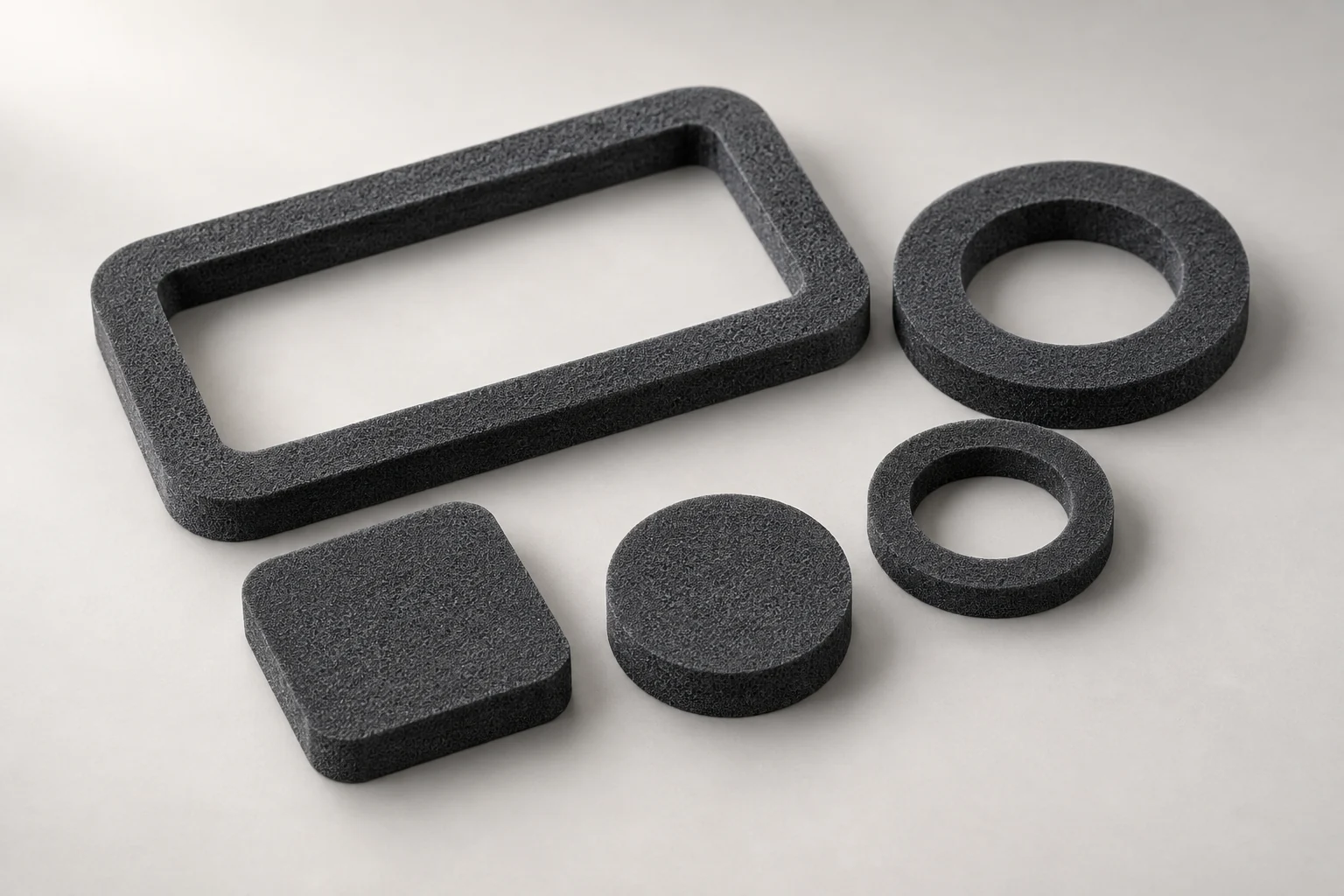
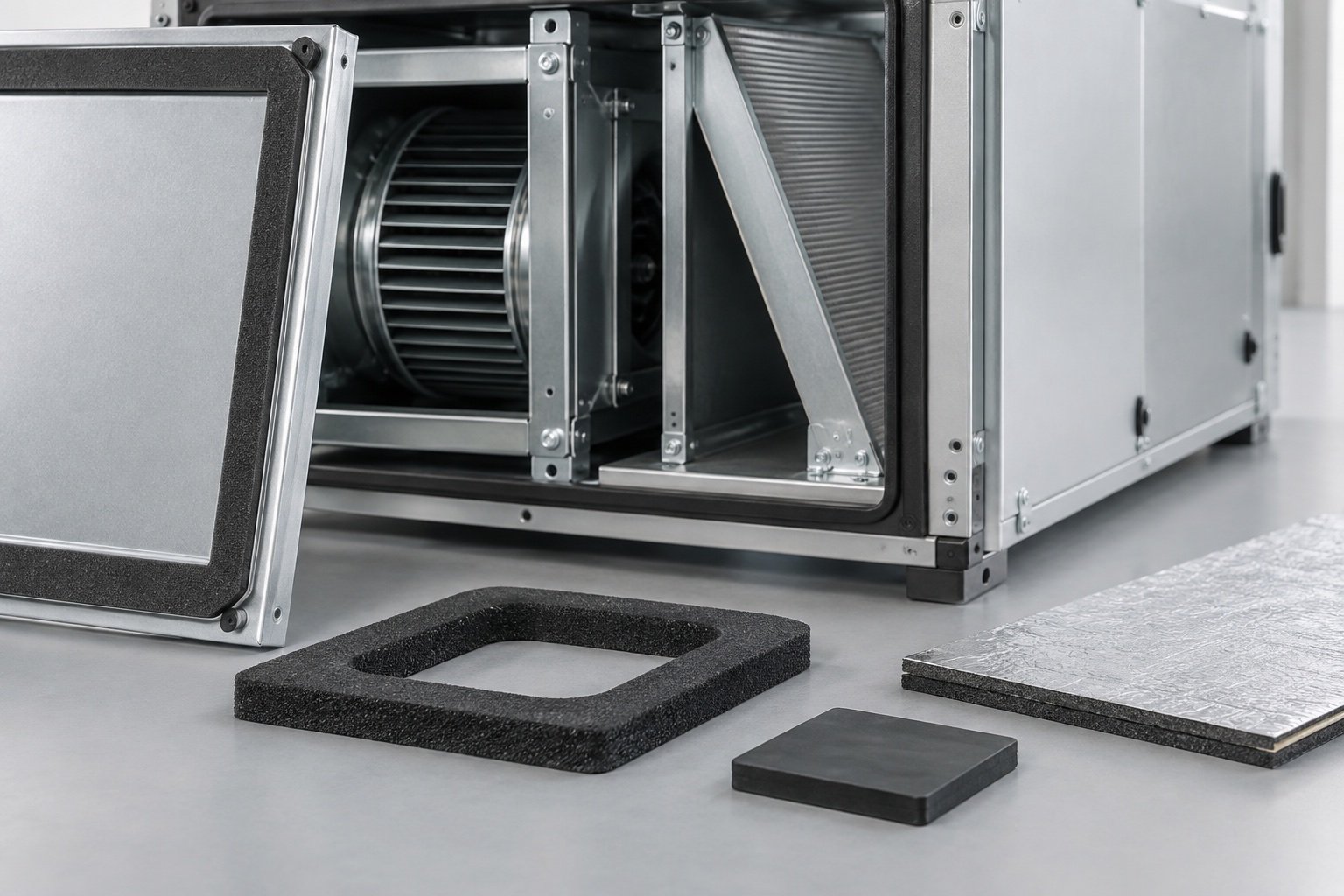
A die-cut foam gasket is a sheet-foam part cut to the footprint of an enclosure, panel or component interface. Its outline, openings and thickness are specified together so the part sits where contact is needed, rather than forcing a standard gasket into an irregular space. Foam can also be supplied as a pad, frame or ring when the task is cushioning or controlled spacing rather than sealing.
COMPONENT FORMS
Typical Forms for Die-Cut Foam Gaskets
Choose the outline from the mating surface; then assess how the foam should contact it.
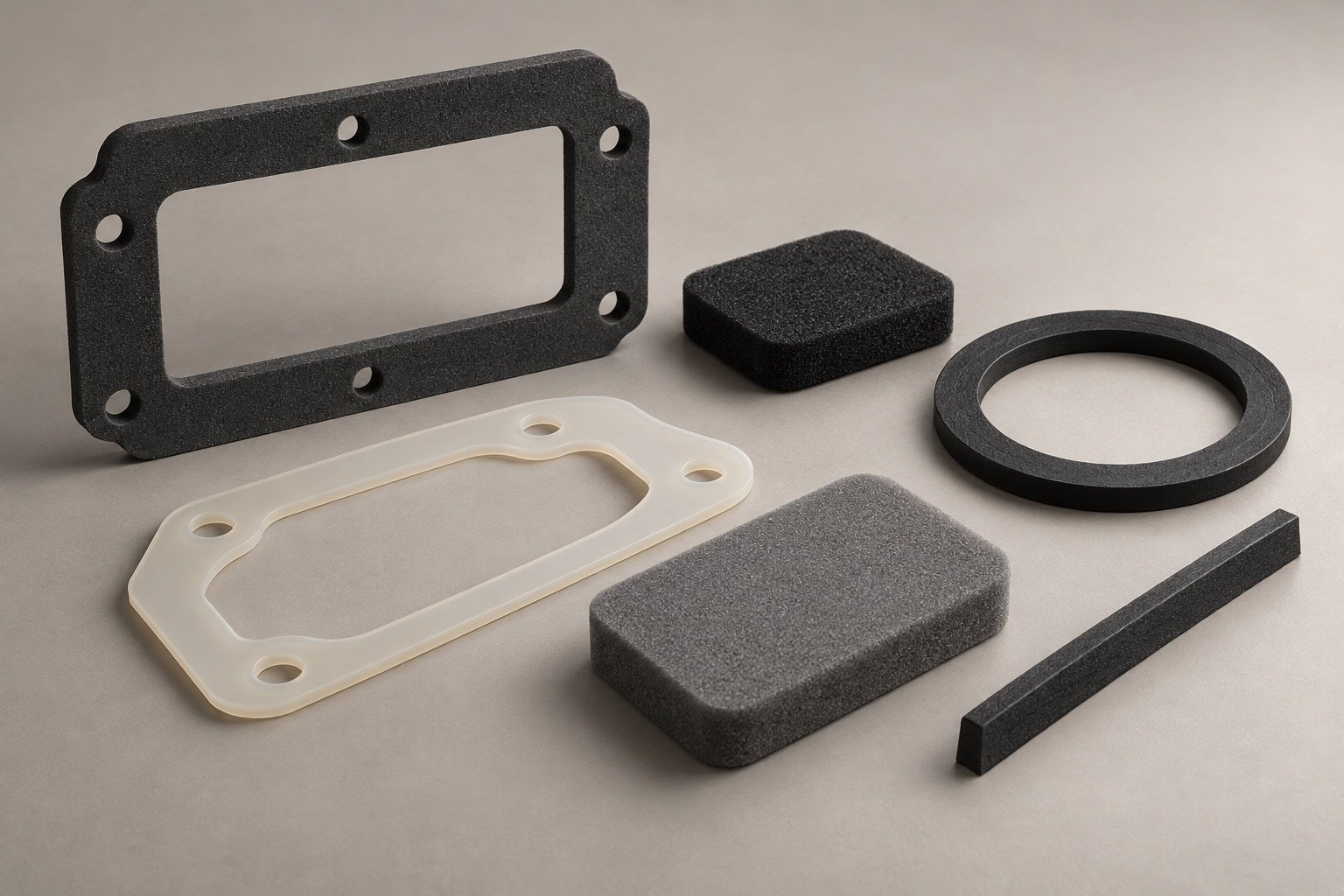
Foam gaskets
Profiles around joints and contact surfaces.
Foam pads
Individual pieces for cushioning or spacing.
Foam frames
Open-center shapes around openings or assemblies.
Sealing rings
Closed profiles around circular features.
Cushioning pads
Local contact protection within an assembly.
Adhesive-backed gaskets
A foam profile with a specified adhesive layer for placement.
MATERIAL OPTIONS
Foam selection follows the interface
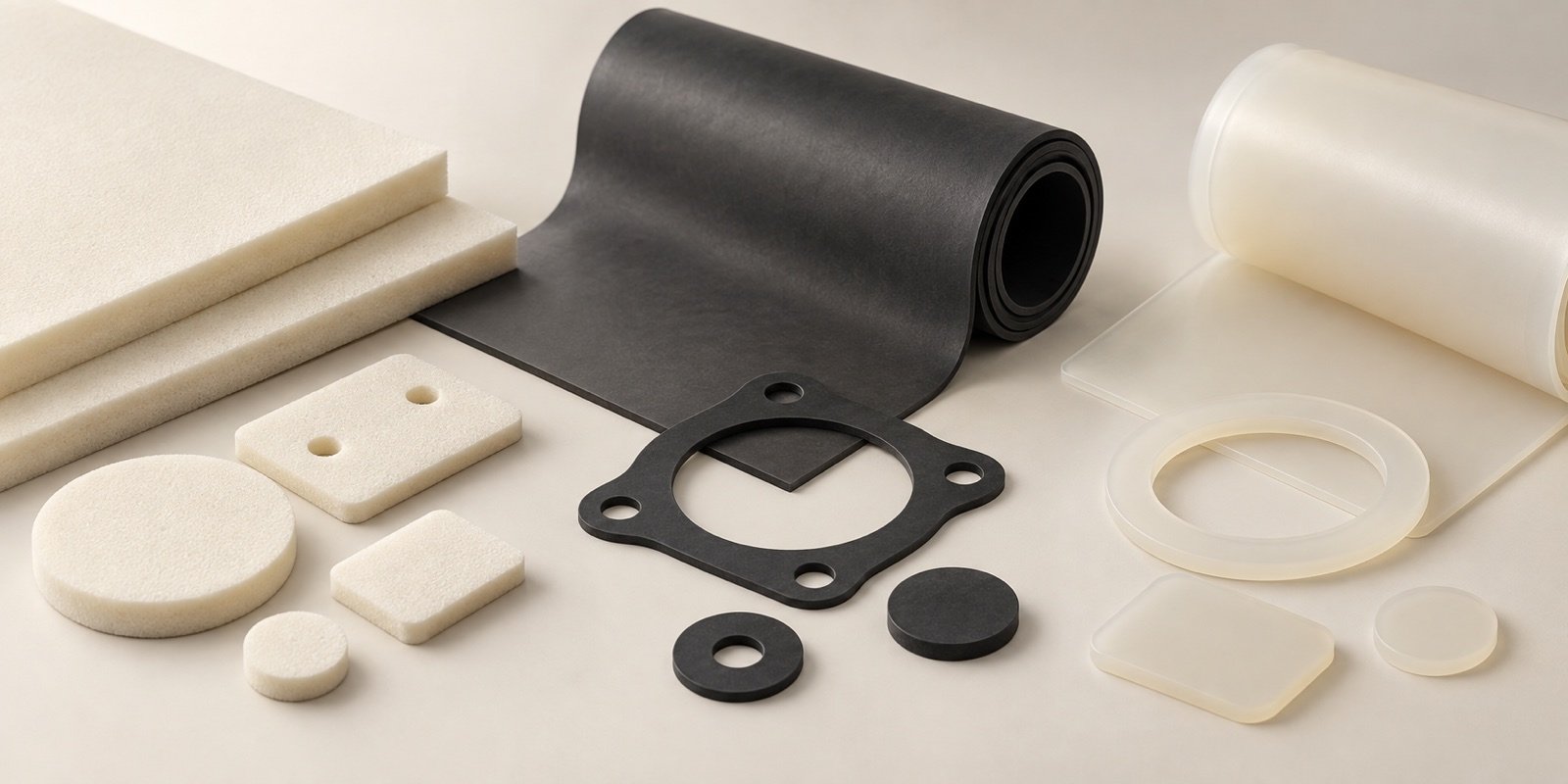
Polyethylene and polyurethane foam sheets are starting points for discussion. The intended compression, mating surfaces, exposure and assembly method determine whether a proposed sheet is suitable. A customer-specified foam can be reviewed against the drawing and use conditions; no material property is assumed from the family name alone.
- Polyethylene foam sheet
- Polyurethane foam sheet
- Other project-specific foam sheets
ENGINEERING CONSIDERATIONS
Design factors for Die-Cut Foam Gaskets
The drawing should make the contact path and available space clear.
Thickness & compression
Define the assembled gap and the contact the gasket must make.
Sealing geometry
Locate openings, corners and edges against the mating surfaces.
Placement & backing
Identify whether the part is located mechanically or with adhesive.
MANUFACTURING CAPABILITIES
Manufacturing path for Die-Cut Foam Gaskets
The material and construction determine the converting route.
Precision Die Cutting
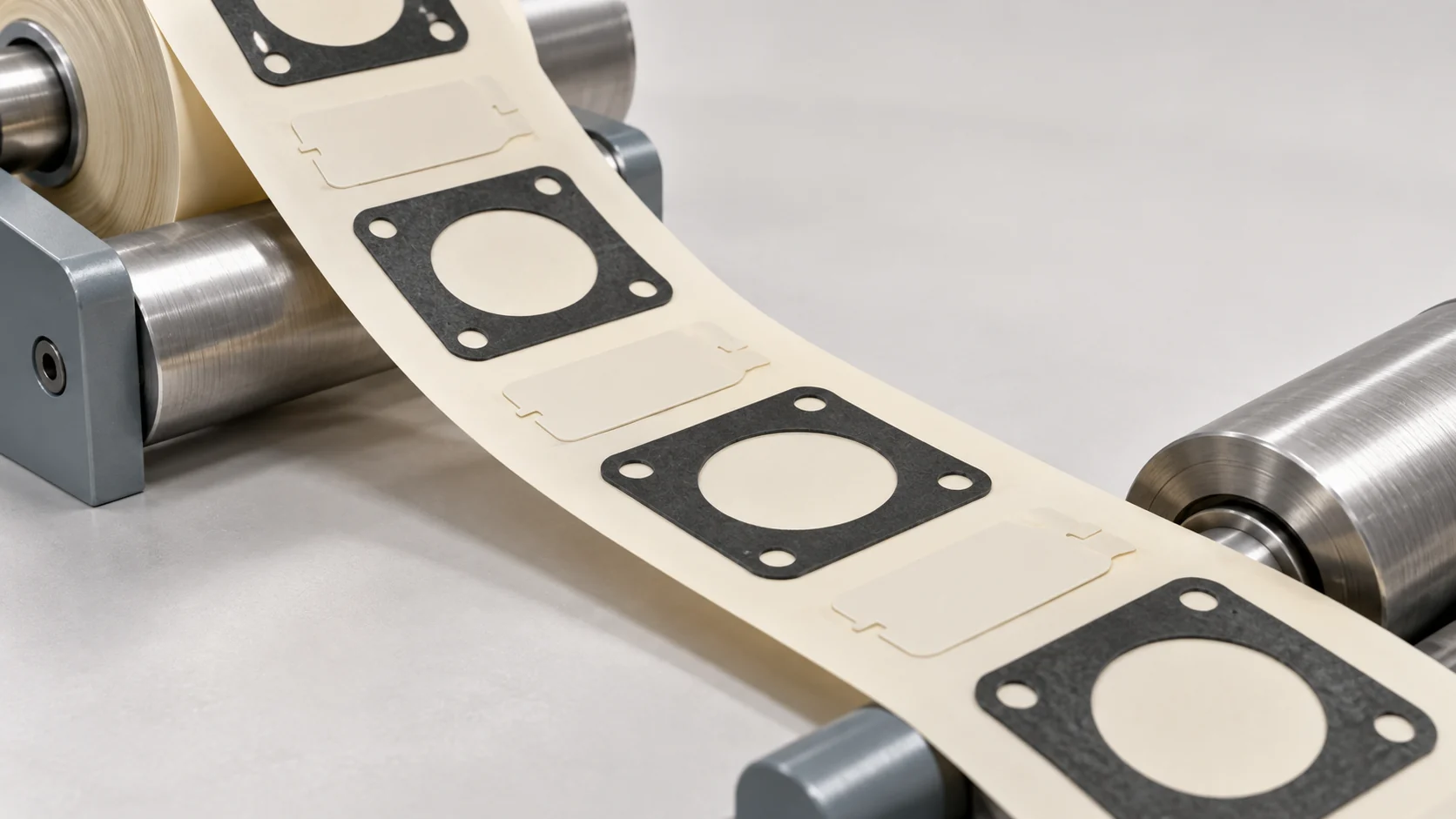
Profile, openings and critical cut features are reviewed against the material and drawing.
Lamination & Bonding
Adhesive or other specified layers are evaluated as part of the construction.
Quality & Tolerance Control
Material, dimensions and visible construction are checked to agreed project criteria.
APPLICATIONS
Equipment contexts for Die-Cut Foam Gaskets
Foam profiles are considered where equipment housings and interfaces need defined contact or cushioning.
QUALITY / VERIFICATION
Check the profile against the drawing
Review the selected sheet, outline, openings and thickness against the agreed drawing. Dimensional and visual checks focus on the features that control placement and contact; any project-specific acceptance criteria must be agreed before production.
- Drawing and material confirmation
- Profile and cutout review
- Dimensional and visual inspection
FAQ
Die-Cut Foam Gaskets FAQs
Answers about construction, drawings and project requirements.
How do I specify a foam gasket shape?
Send a drawing or sample showing the perimeter, openings, mating surface and assembled gap. These details guide the profile and thickness review.
Can a foam gasket include adhesive backing?
An adhesive layer and release liner can be considered for placement. The substrate, contact area and assembly sequence should be specified first.
Is a foam pad the same as a gasket?
A pad may cushion or space a local contact area; a gasket usually follows an interface that needs a defined contact path. The same foam family can form either shape.
Which foam sheets can be considered?
Polyethylene and polyurethane foam sheets, or a customer-specified foam, can be assessed. The final material depends on the application requirements.
Can a prototype be reviewed before a production order?
Share the intended fit and quantity with the drawing. Prototype or low-volume requirements can be discussed as part of the project review.
What should I include in an RFQ?
Provide the drawing, foam preference if known, thickness, assembled gap, adhesive requirement, operating context and expected quantity.
START A PROJECT
Have a Die-Cut Foam Gaskets Project?
Send us your drawing, material specification if available, dimensions, quantity and application requirements for review.
Request a Quote