FLEXIBLE MATERIALS
Foam, Rubber & Silicone Materials
TC Components converts flexible foam, rubber and silicone sheet materials into custom die-cut components for sealing, cushioning, vibration control, spacing and gap management.
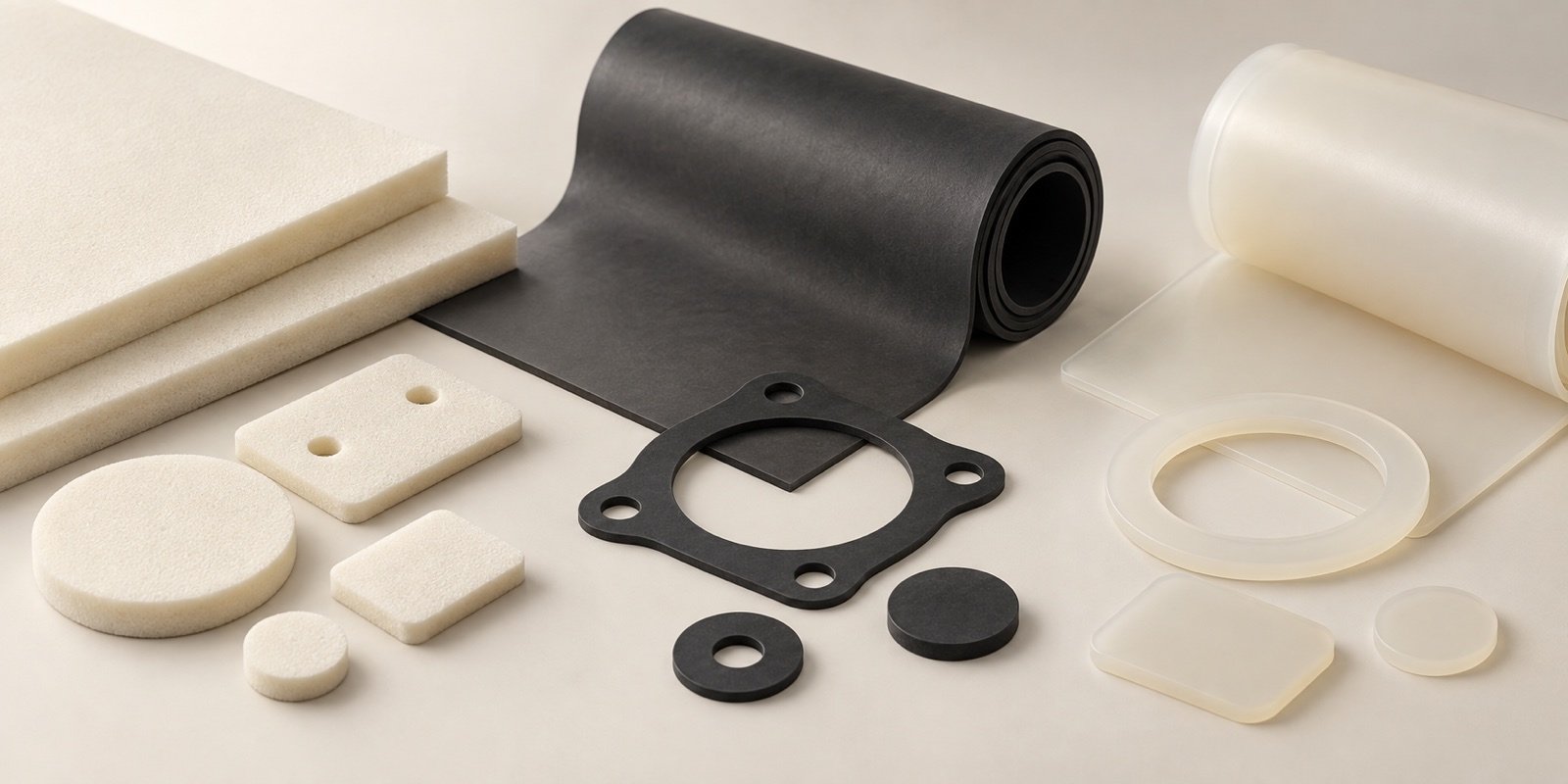
MATERIAL OVERVIEW
Flexible Materials for Sealing, Cushioning and Protection
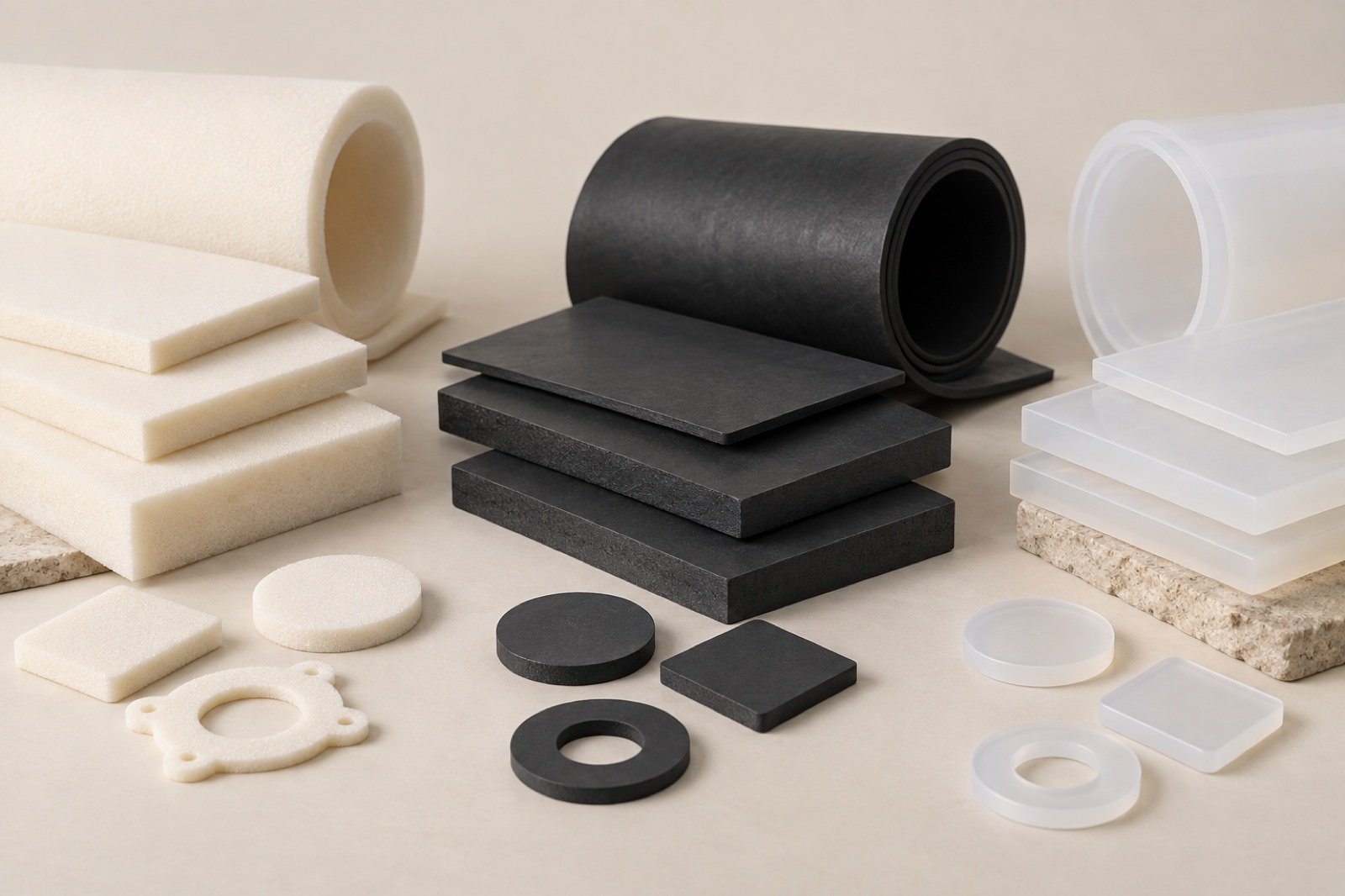
Foam, rubber and silicone sheet materials bring different forms of compression, cushioning, sealing, vibration control and surface contact to an assembly.
The useful material is selected against the part geometry, installation method and operating conditions. No material family is a default answer for every project.
01 / MATERIAL FAMILY
Foam Materials
Foam sheets may be evaluated for pads, gaskets, spacers and cushioning components where the assembly calls for compression, gap filling or surface protection.
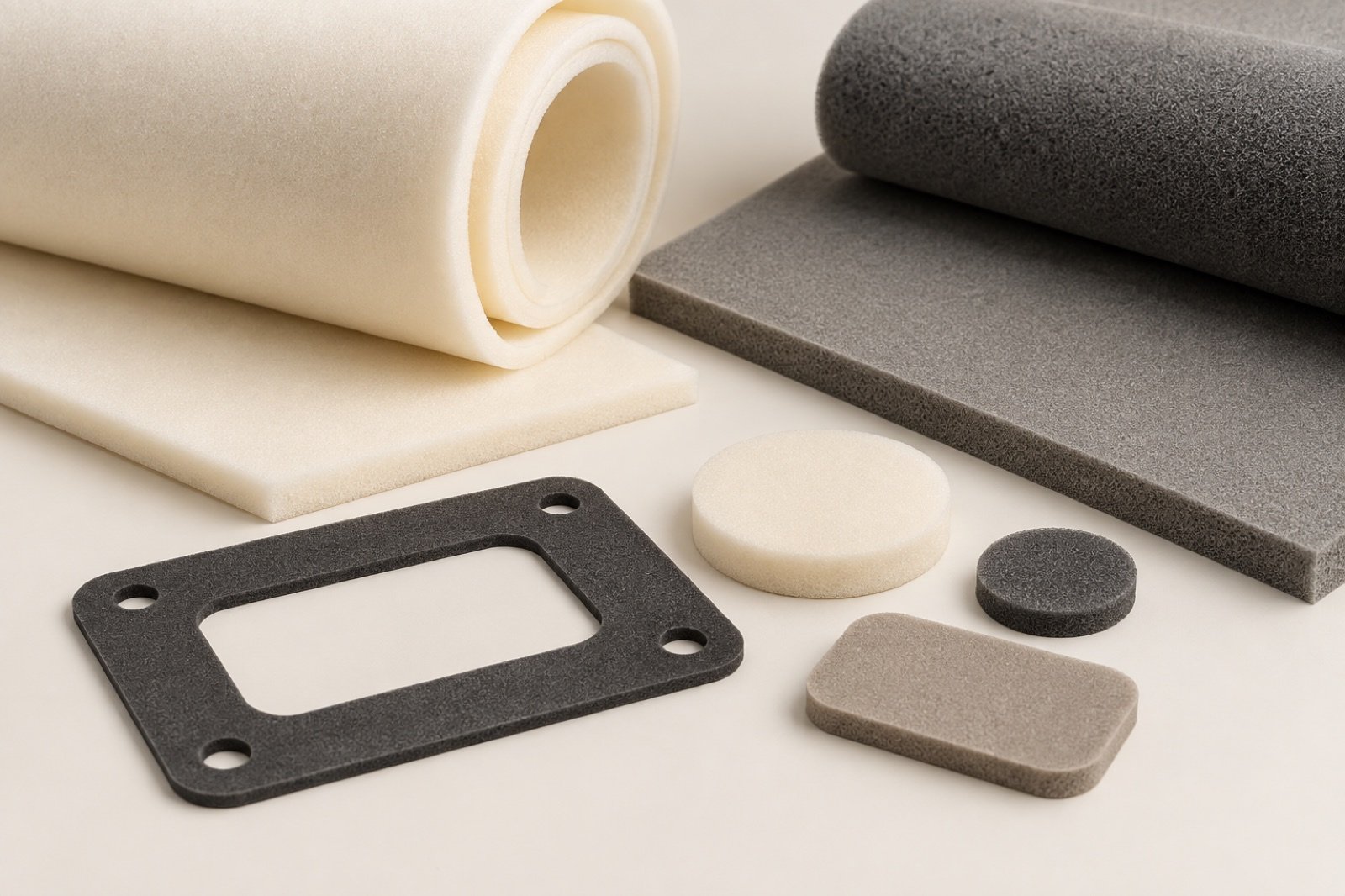
Polyethylene Foam
Polyethylene foam sheet may be considered for cushioning, spacing, protection and project-specific sealing applications.
Polyurethane Foam
Polyurethane foam sheet may be reviewed where cushioning, contact support or conformability is required within an assembly.
02 / MATERIAL FAMILY
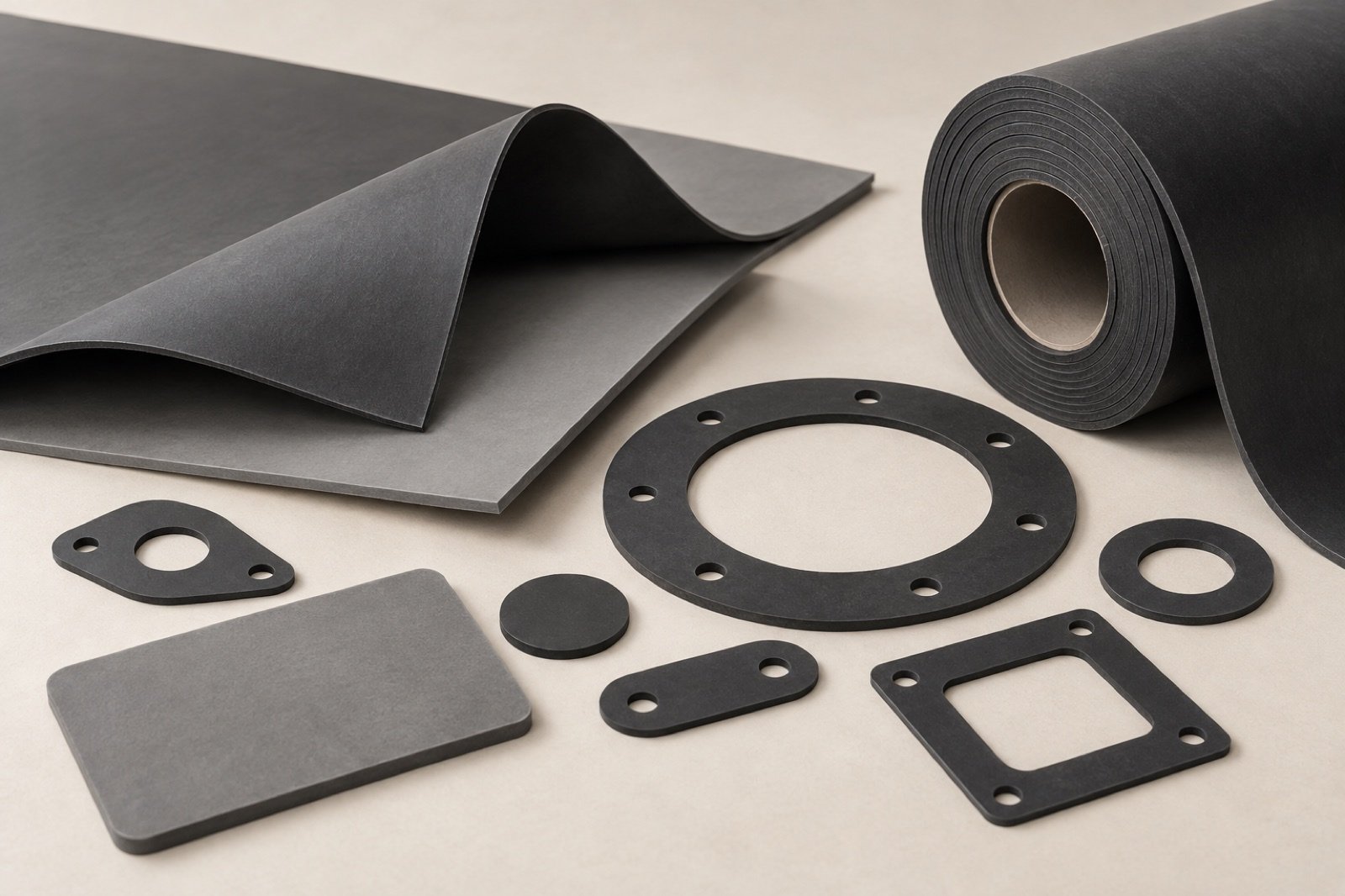
Rubber Materials
Rubber sheet materials can be evaluated for sealing, cushioning, vibration control and contact applications against project-specific mechanical and environmental requirements.
EPDM Rubber
EPDM rubber sheet may be considered where a flexible rubber construction and application-specific environmental performance are required.
Neoprene Rubber
Neoprene rubber sheet can be reviewed for custom shapes when its material properties fit the intended sealing, cushioning or vibration-control function.
Other Industrial Rubber Sheets
Customer-specified industrial rubber sheet constructions can be reviewed against the drawing and application.
03 / MATERIAL FAMILY
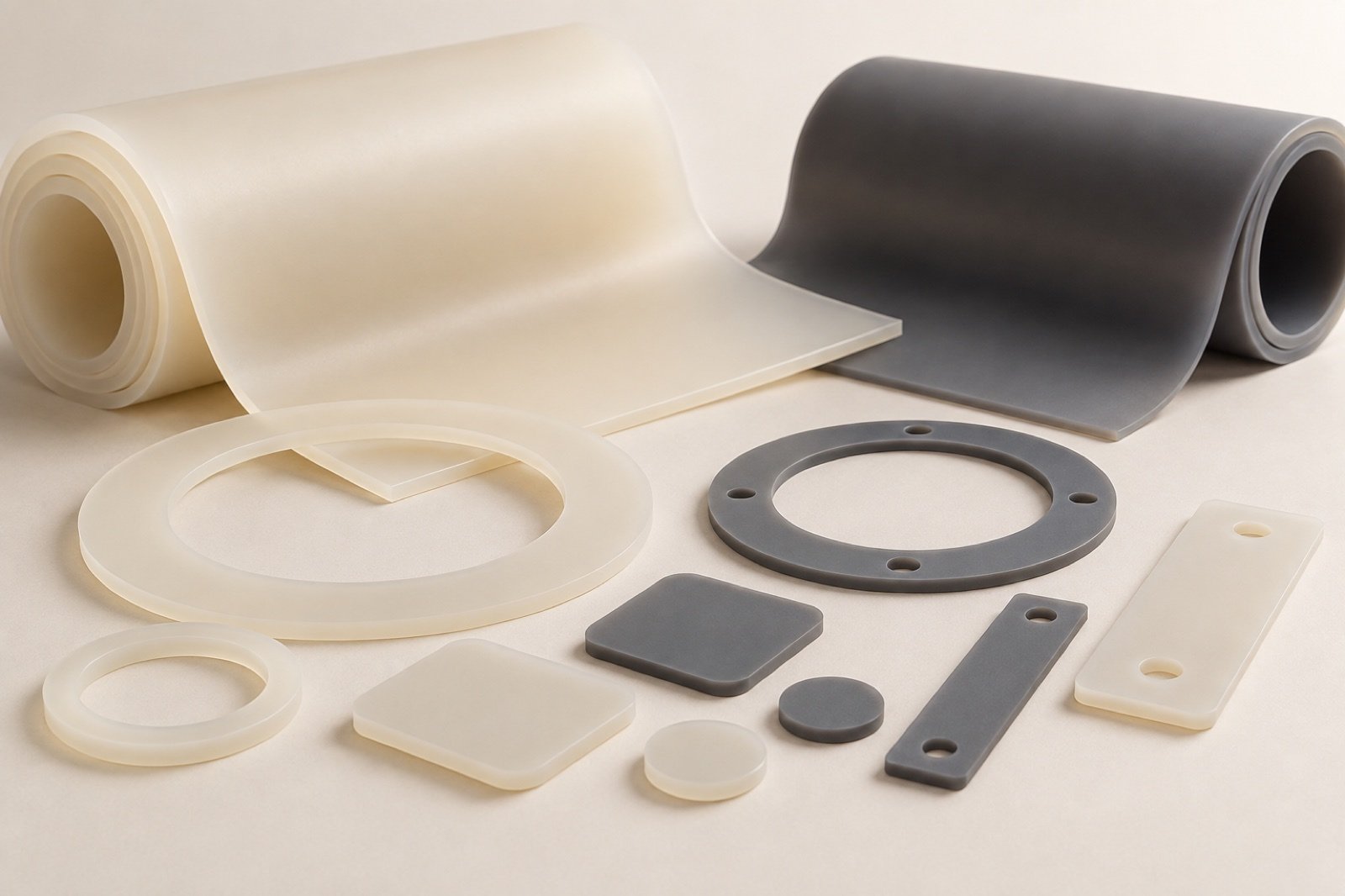
Silicone Rubber Sheet Materials
Solid silicone rubber sheet or other flexible silicone sheet materials may be reviewed for die-cut pads, gaskets and spacers when the specified material fits the component’s function and environment.
MATERIAL SELECTION
Selecting Foam, Rubber or Silicone Materials
Selection starts with the function and how the part will sit in the assembly—not a simple winner table between material families.
Function
What must the component do?
Compression
What cushioning or compression is needed?
Thickness
What thickness fits the assembly?
Surface Contact
How does the part meet adjacent surfaces?
Adhesive Requirement
Is adhesive backing needed?
Environment
Which operating conditions matter?
Assembly
How will the component be installed?
FORMS / CONSTRUCTIONS
Material Forms & Constructions
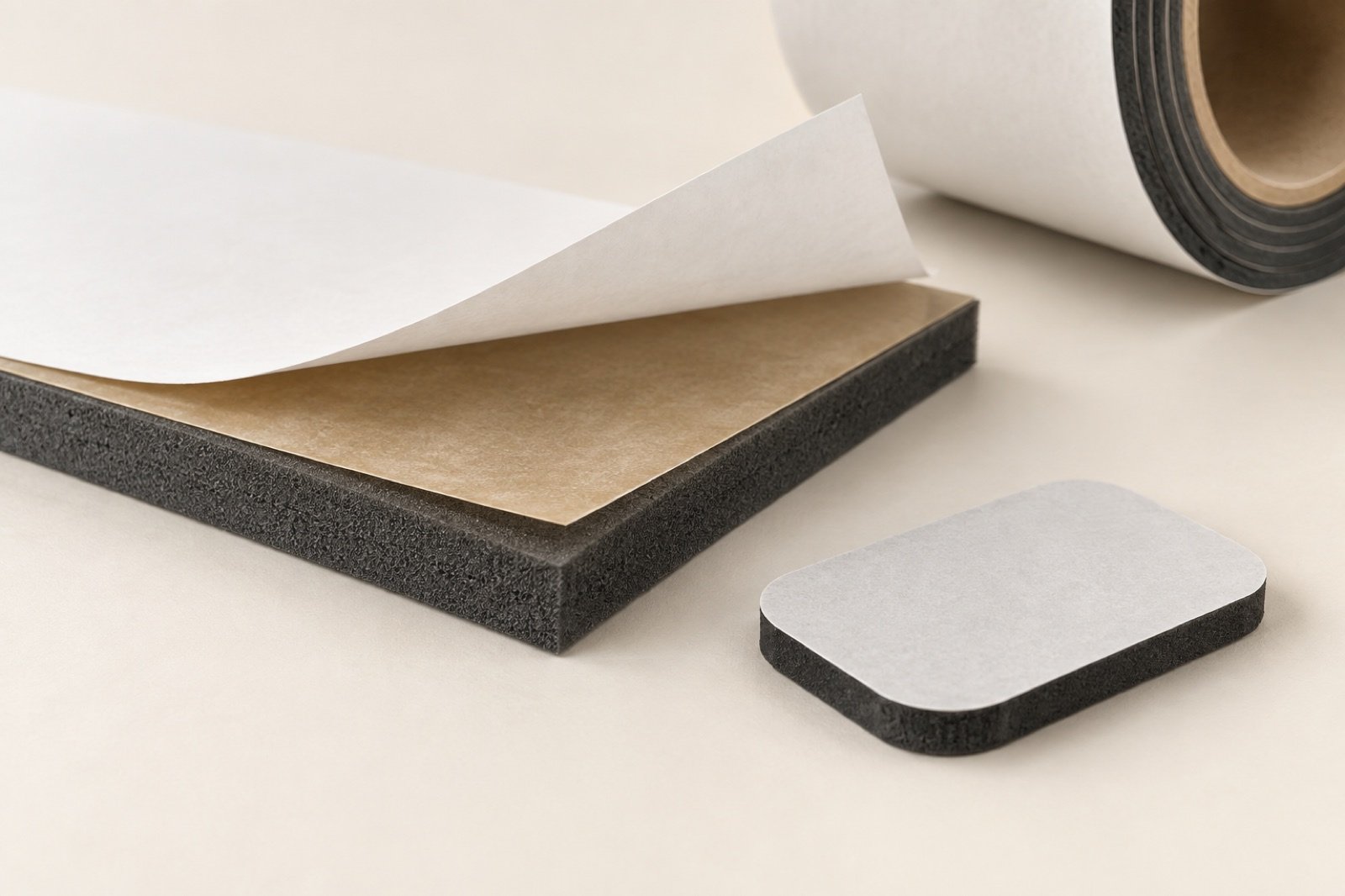
A flexible sheet may be die cut as a single layer or specified with an adhesive backing or compatible laminated layer. Construction follows the drawing and assembly method.
Foam Sheets
Flexible sheet form for converted pads and gaskets.
Rubber Sheets
Flat rubber stock reviewed by project requirement.
Silicone Rubber Sheets
Solid flexible sheet form for die cutting.
Adhesive-Backed Materials
Backing and liner considered for placement.
Laminated Foam Constructions
Compatible layers reviewed as one structure.
Multi-Layer Flexible Structures
Layer order defined for fit and function.
CONVERTING
From flexible sheet to custom geometry.
Foam, rubber and silicone sheet materials can be converted into custom geometries and, where required, combined with adhesive or other functional layers.
ENGINEERING BRIEF
Engineering Considerations
Provide the requirements already known. Material selection and construction can then be reviewed around fit, contact and function.
RELATED COMPONENTS
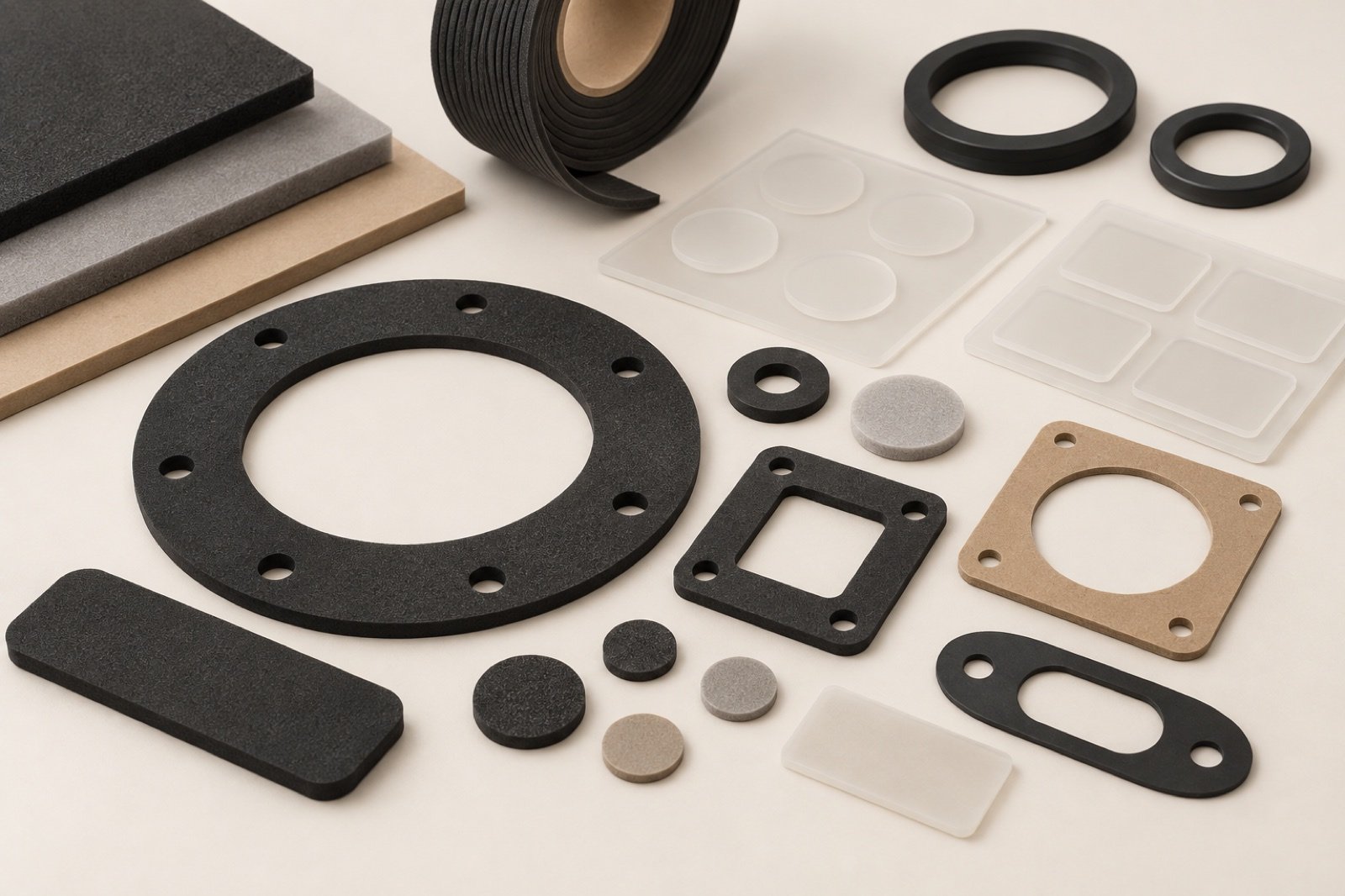
Materials become parts for a defined assembly.
This page covers flexible sheet families and selection. The product page covers finished custom die-cut gaskets, pads and cushioning components made to a specified geometry.
RELATED APPLICATIONS
Flexible materials across industrial assemblies.
The required component function and contact surfaces vary by application. Review the material and construction against the actual project.
QUALITY / MATERIAL REVIEW
Project-Specific Material Verification
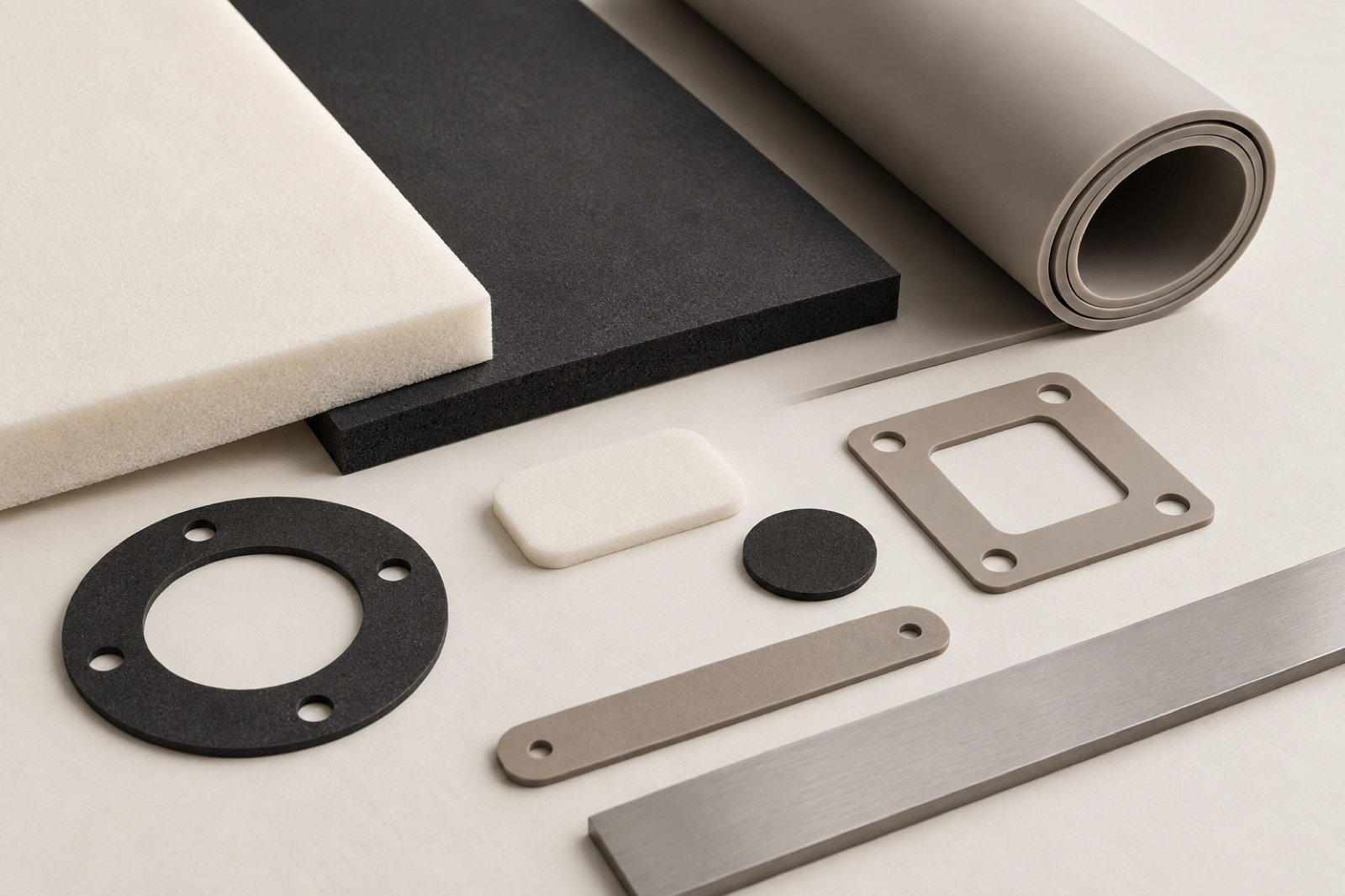
The drawing and material specification define the checks to discuss. These may include material and construction review, thickness confirmation, dimensional inspection and visual inspection.
Explore Quality & Tolerance ControlFAQ
Flexible material questions.
Practical answers for sheet selection, constructions and quotation planning.
What foam materials can be die cut?
Flexible foam sheets, including polyethylene and polyurethane families, can be reviewed for die cutting. The specific material and construction depend on the drawing and application.
Can polyethylene and polyurethane foam be custom die cut?
These foam sheet families may be evaluated for custom profiles, pads and gasket forms. The grade, thickness and geometry must be confirmed for the project.
What rubber sheet materials can be converted?
EPDM, neoprene and customer-specified industrial rubber sheets may be reviewed for converting when their material properties fit the project requirements.
Can silicone rubber sheet be die cut into custom components?
Solid silicone rubber sheet can be reviewed for flat die-cut pads, gaskets and spacers. The grade and geometry are confirmed for the particular application.
How do I choose between foam, rubber and silicone?
Compare the function, required compression, thickness, surface contact, environment, adhesive need and assembly method. The material grade is selected for the particular application.
Can adhesive backing be added to foam, rubber or silicone?
Adhesive backing may be considered where it is compatible with the specified sheet material, bonding surface and placement method.
Can these materials be laminated with films or adhesives?
Compatible flexible layers can be reviewed as a laminated construction. Layer order, bonding requirements and total form are set by the project.
What information is needed for a quotation?
Send a drawing or sample, material specification if available, thickness, functional requirements, adhesive or layer needs, application conditions and estimated quantity.
RELATED COMPONENTS
Components using these materials
START A MATERIAL REVIEW
Need a foam, rubber or silicone material for a custom component?
Send us your drawing, material specification if available, thickness, functional requirements and estimated quantity for review.
Request a Quote