
Functional Die-Cut Solutions for Industrial Applications
TC Precision Components provides custom insulation, sealing, adhesive, shielding and thermal components for electronic, electrical and industrial equipment.

Components Designed Around the Application
Industrial equipment often needs functional parts for electrical separation, enclosure sealing, cushioning, bonding, EMI shielding or thermal contact.
The right die-cut component depends on where it fits, what conditions it faces and which dimensions matter. Start with the assembly interface, then review the material, geometry and construction.
Where functional components work.
Explore six equipment applications and the insulation, sealing, bonding, shielding or thermal interfaces that may require custom die-cut parts.
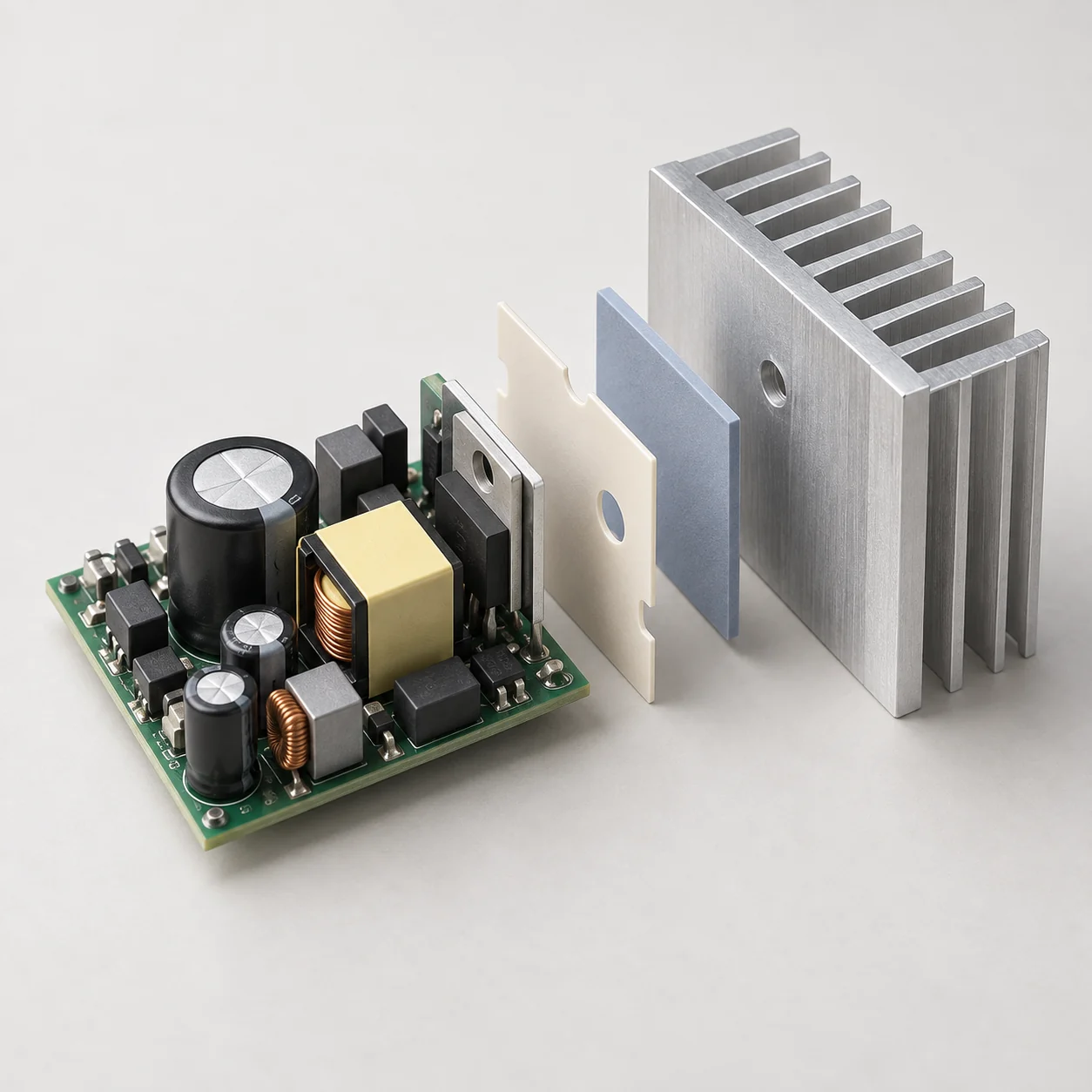
Power Electronics & Power Supplies
Die-cut insulation barriers, thermal pads and adhesive or shielding parts for defined interfaces in power supplies and converters.
- Insulation
- Thermal interface
- EMI shielding
- Bonding
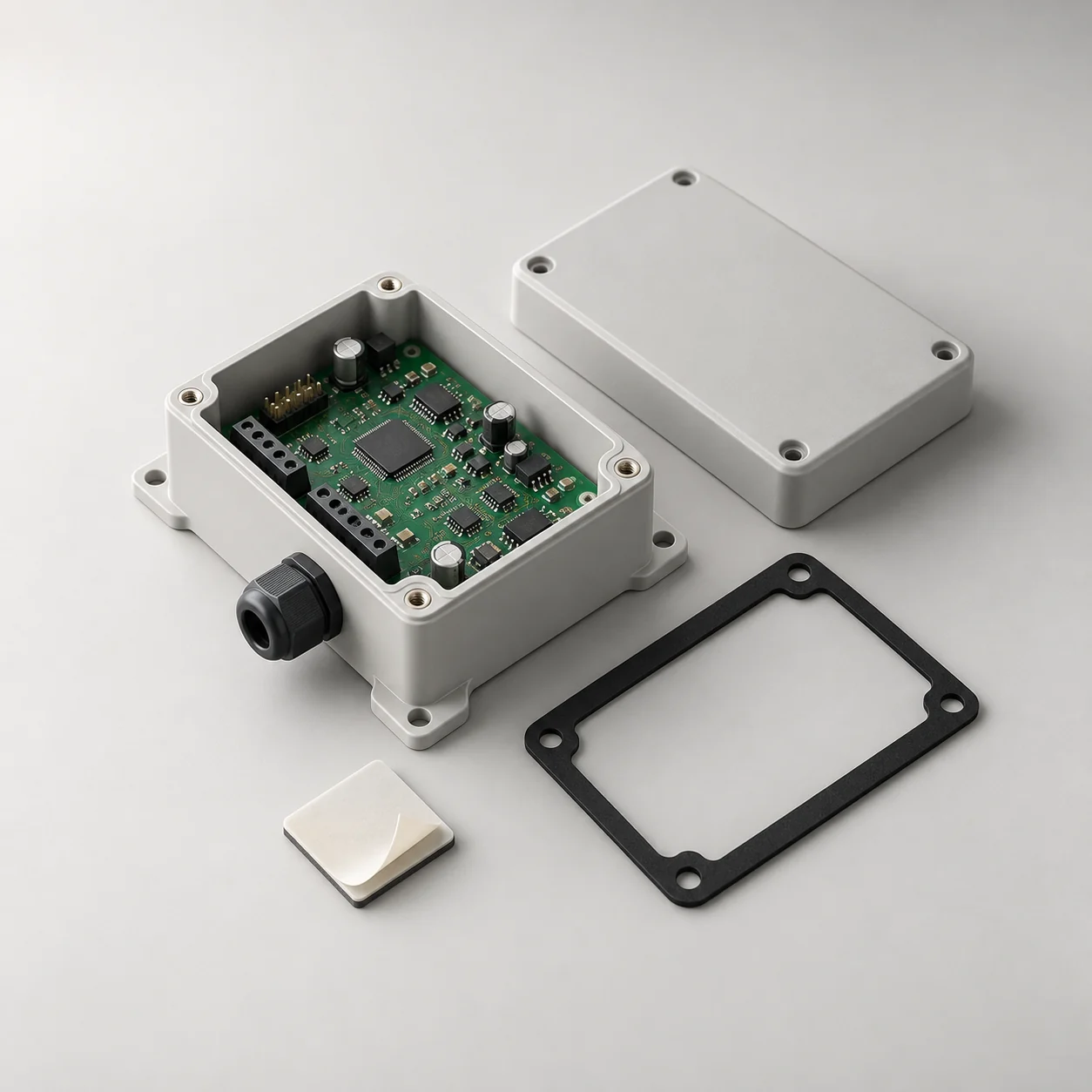
Industrial Automation & Control Systems
Custom insulation barriers, enclosure gaskets, adhesive-backed parts and shielding profiles for control panels and automation equipment.
- Insulation
- Sealing
- Adhesive mounting
- EMI shielding
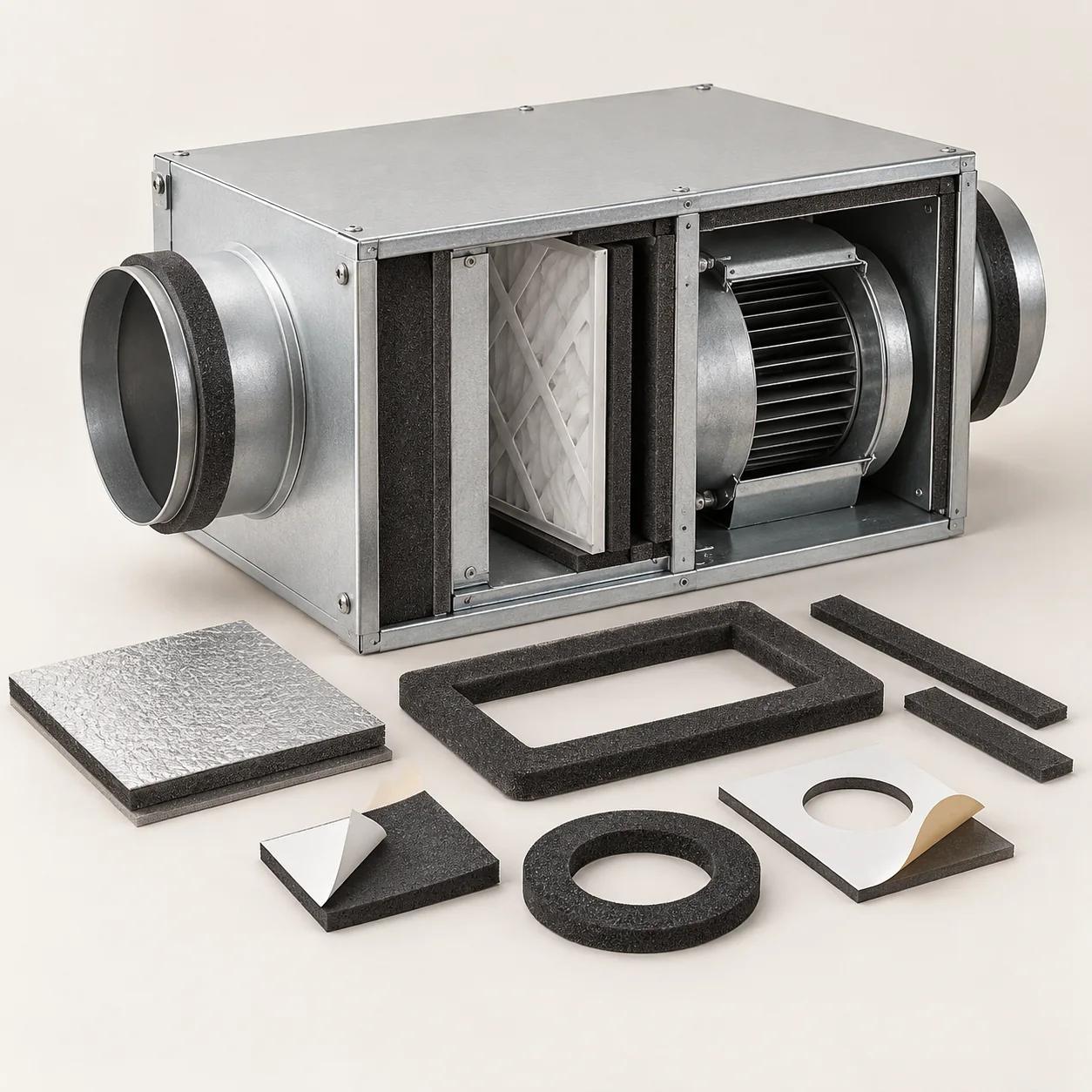
HVAC & Climate Control Equipment
Die-cut foam or rubber gaskets, cushioning pads, insulation films and adhesive-backed parts for ventilation housings and climate-control assemblies.
- Sealing
- Cushioning
- Insulation
- Bonding
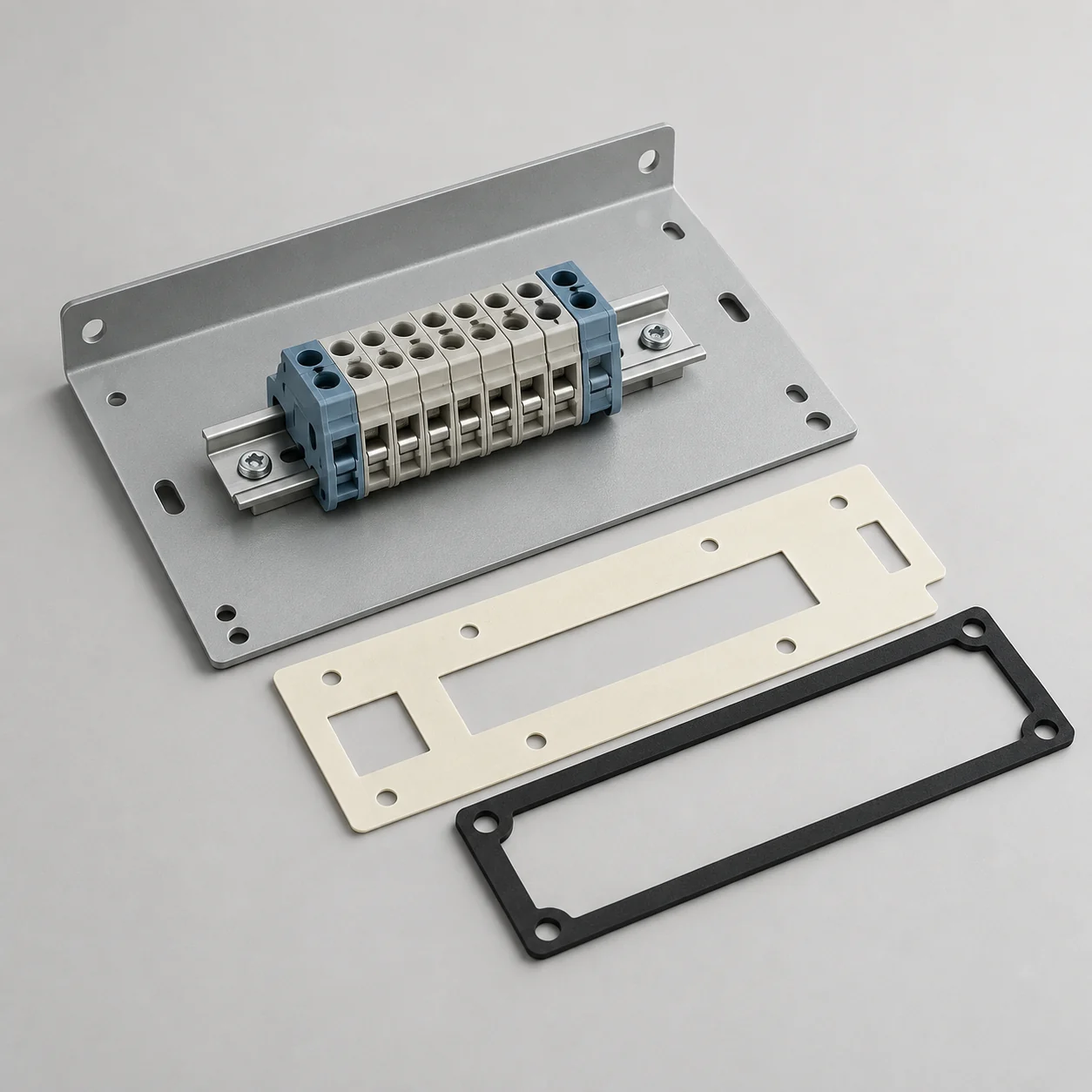
Electrical Distribution, Motors & Drives
Insulation barriers, enclosure gaskets and thermal interface parts for electrical distribution equipment, motor assemblies and drive electronics.
- Insulation
- Thermal interface
- Sealing
- Adhesive parts
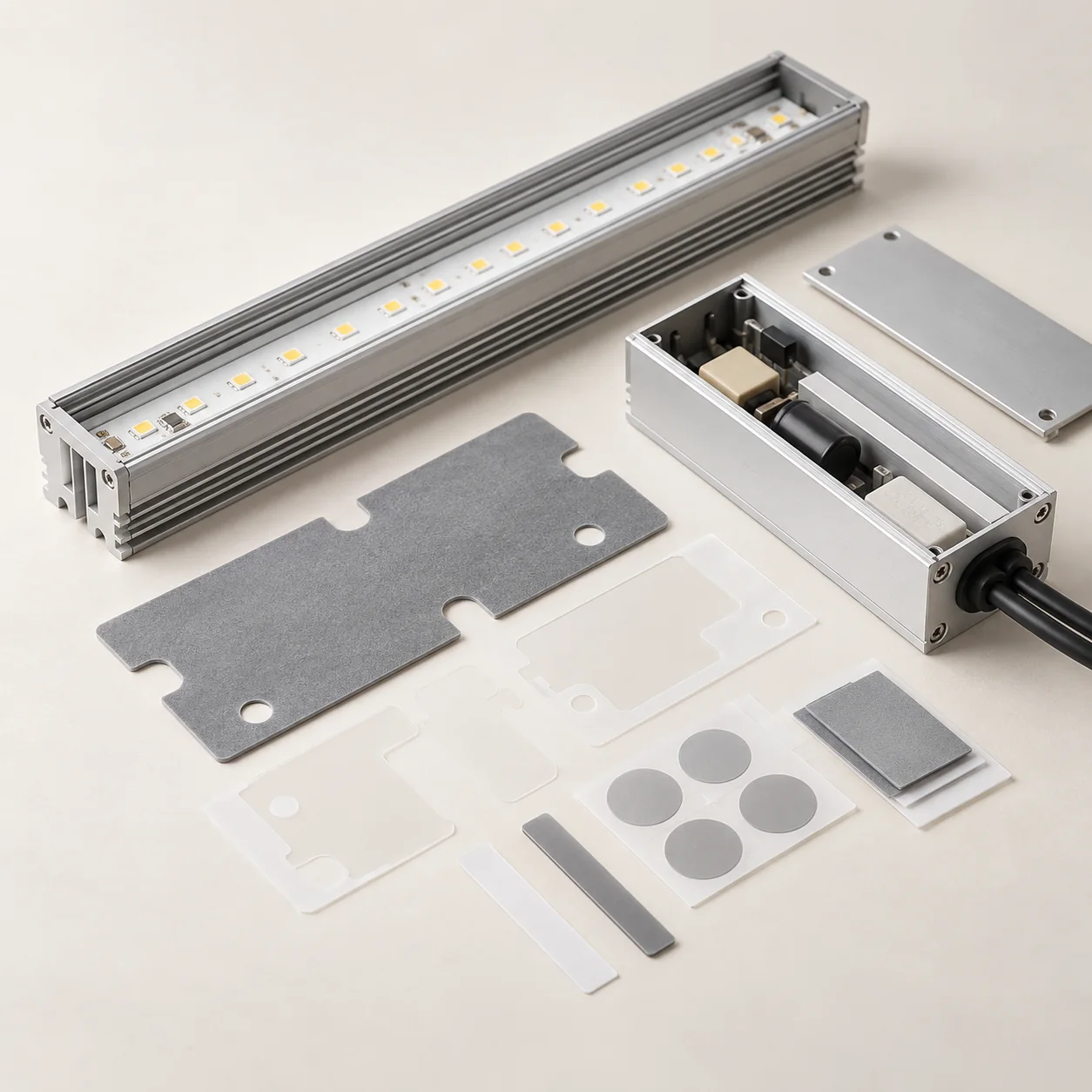
LED Lighting & Lighting Equipment
Thermal interface pads, insulation films, adhesive mounting parts and enclosure seals for LED modules, drivers and lighting housings.
- Thermal management
- Insulation
- Bonding
- Sealing
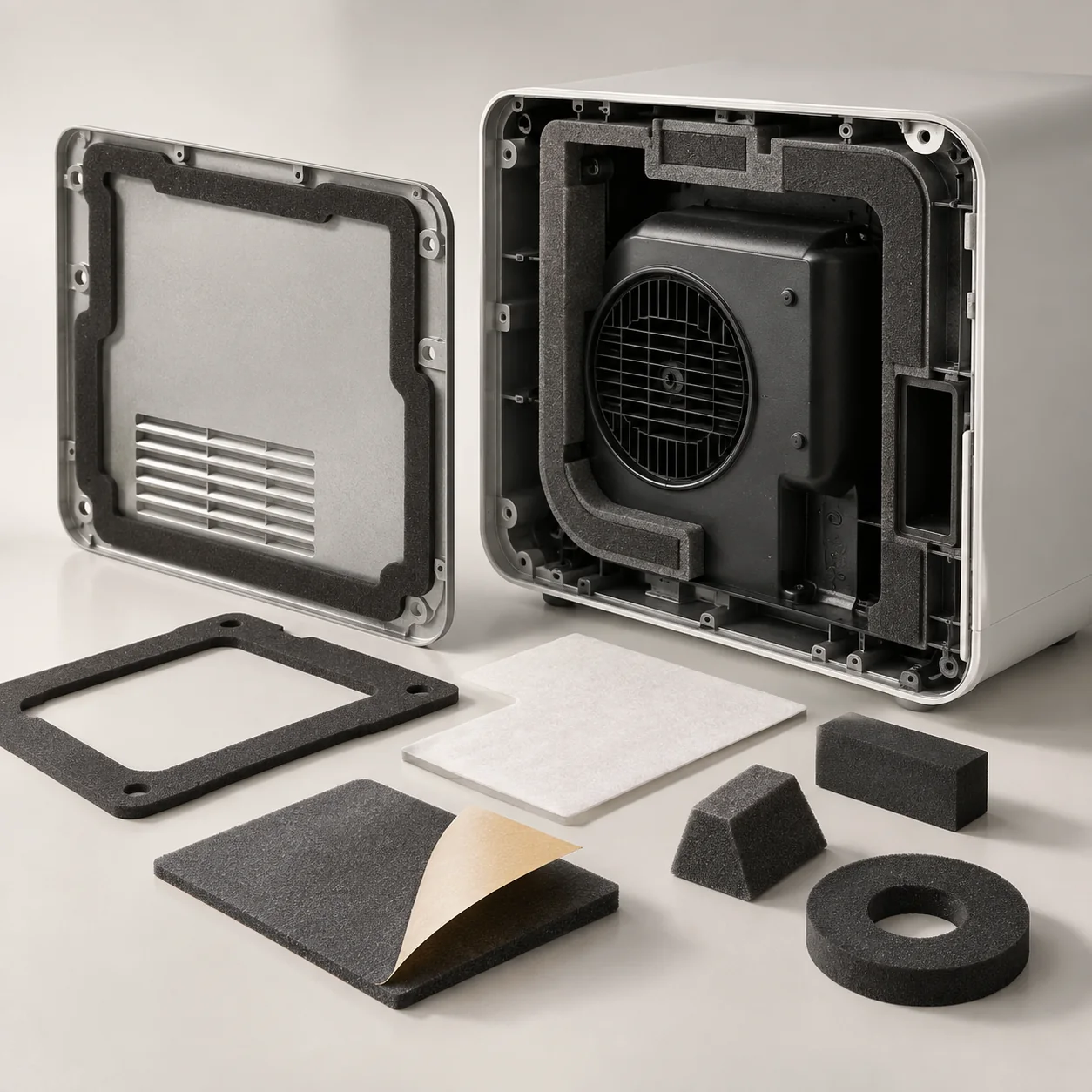
Home & Commercial Appliances
Custom insulation films, sealing gaskets, cushioning pads and adhesive-backed components for appliance panels, covers and electrical subassemblies.
- Sealing
- Cushioning
- Bonding
- Insulation
Different equipment. Shared functional needs.
The same function may be required in different equipment, but material selection, interface geometry and acceptance criteria depend on the individual assembly.
Power electronicsInsulation · Thermal · EMI
HVAC equipmentSealing · Cushioning · Adhesive
LED lightingThermal · Insulation · Adhesive
From Application Requirement to Custom Component
A useful component review starts with the equipment interface and required function. Material behavior, critical dimensions and assembly conditions then guide the converting route.
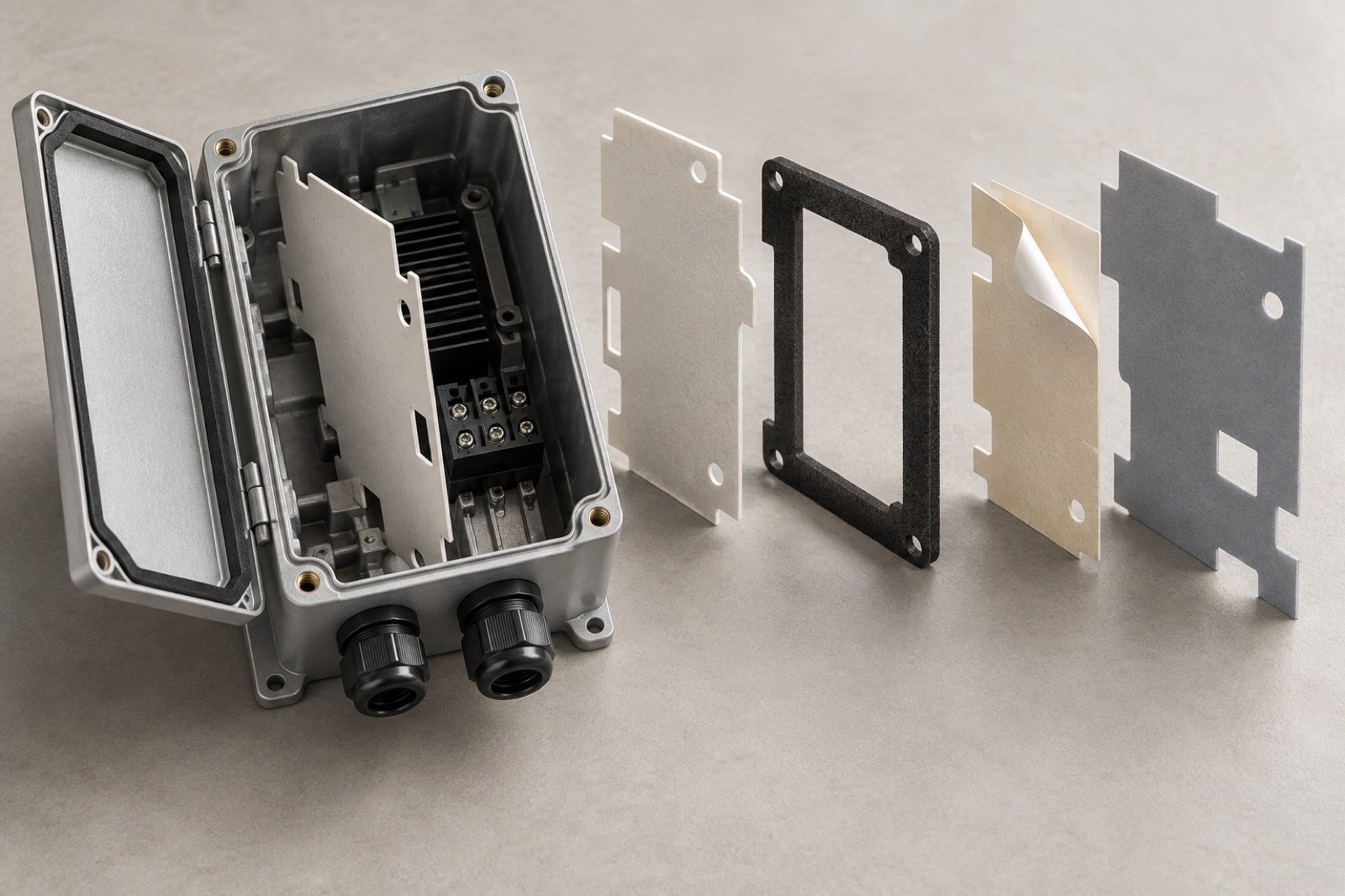
- 01Application
- 02Functional requirement
- 03Material selection
- 04Die cutting / lamination
- 05Finished component
LED lighting:defined thermal contact → suitable interface sheet → die-cut pad
HVAC equipment:panel sealing path → specified foam or rubber → die-cut gasket
The application defines where. The product defines what.
Choose the component family that addresses the required assembly function, then review material, geometry and manufacturing details on the product page.
Application questions, answered.
Answers on equipment interfaces, material selection, custom part geometry, manufacturing feasibility and project quotations.
How do I identify the right die-cut component for my equipment application?
Start with the function required at the assembly interface, such as electrical insulation, sealing, cushioning, bonding, EMI shielding or thermal management. Then review operating conditions, material properties, available space and assembly geometry. These requirements help determine the appropriate custom component and manufacturing route.
What functional die-cut components are used in power electronics and LED lighting assemblies?
Power supplies and LED drivers may require insulation films, thermal interface pads, adhesive parts or EMI shielding components at different assembly locations. Electrical isolation and heat transfer are separate design requirements that may need to work together. Material selection depends on voltage, temperature, interface geometry and applicable equipment requirements.
What die-cut components are commonly needed in industrial control systems, motors and electrical equipment?
Depending on the assembly, these systems may use insulation barriers, sealing gaskets, cushioning pads, adhesive-backed components and conductive shielding interfaces. The required construction depends on electrical separation, enclosure fit, vibration, environmental exposure and any intended conductive contact. Drawings help identify the critical interfaces.
How do sealing and cushioning requirements differ between HVAC equipment and appliance assemblies?
HVAC equipment may need gaskets around air-handling paths, access panels and equipment housings. Home and commercial appliances may require sealing or cushioning at panels, covers and vibrating interfaces. Material and geometry selection depend on the actual gap, compression, temperature, moisture exposure and expected service conditions.
How do operating conditions affect material selection for industrial die-cut components?
Material selection depends on the part's function and exposure to temperature, humidity, oils, chemicals, vibration or repeated compression. Electrical, adhesive and thermal properties may also matter. The selected material grade should be reviewed against the operating environment and validated where the application requires it.
Can custom die-cut parts be designed to fit existing equipment housings and assemblies?
Custom profiles, mounting holes, slots and cutouts can be reviewed against customer drawings or reference samples. Material thickness, assembly clearances, feature spacing and critical tolerances affect manufacturability. A drawing review helps identify fit constraints and potential adjustments before tooling or production.
Can different functional materials and adhesive layers be combined for equipment assembly?
Compatible insulation films, foams, adhesive layers and release liners can be evaluated for multi-layer die-cut constructions. The design must define each layer's function, total thickness, bonding surfaces and assembly sequence. Any electrical isolation, conductive contact or thermal interface requirements need separate consideration.
Can prototype die-cut components be evaluated before regular production?
Prototype and low-volume requests can be reviewed to check dimensions, material suitability, placement and assembly fit before regular production. Application-specific performance testing may also be needed. Sample feasibility, tooling, minimum quantities and lead times depend on the material, part design and expected production volume.
How are quality requirements defined for die-cut components used in industrial equipment?
Quality criteria should be based on approved drawings, material specifications, critical dimensions and agreed acceptance requirements. Inspection may cover thickness, cut quality, layer alignment and dimensional accuracy. Electrical, sealing, thermal or EMI performance must be validated according to the relevant application and agreed test responsibilities.
What information should I provide for an application-specific die-cut component quotation?
Share the latest part drawing or sample and identify the equipment subassembly, installation location and required function. Include critical dimensions, tolerances, material or layer construction if known, operating conditions and estimated quantities. Note any electrical, thermal, sealing or EMI performance requirements and the inspection documents needed. These requirements should be reviewed and agreed for the specific project.
Have an Application That Requires a Custom Functional Component?
Send us your drawing, equipment application, functional requirements, material specification if available and estimated quantity for review.