DIE-CUT COMPONENTS
Conductive Foam Die-Cut Parts
Shaped conductive foam contacts for shielding, grounding and defined assembly interfaces.
PRODUCT OVERVIEW
A compliant conductive interface
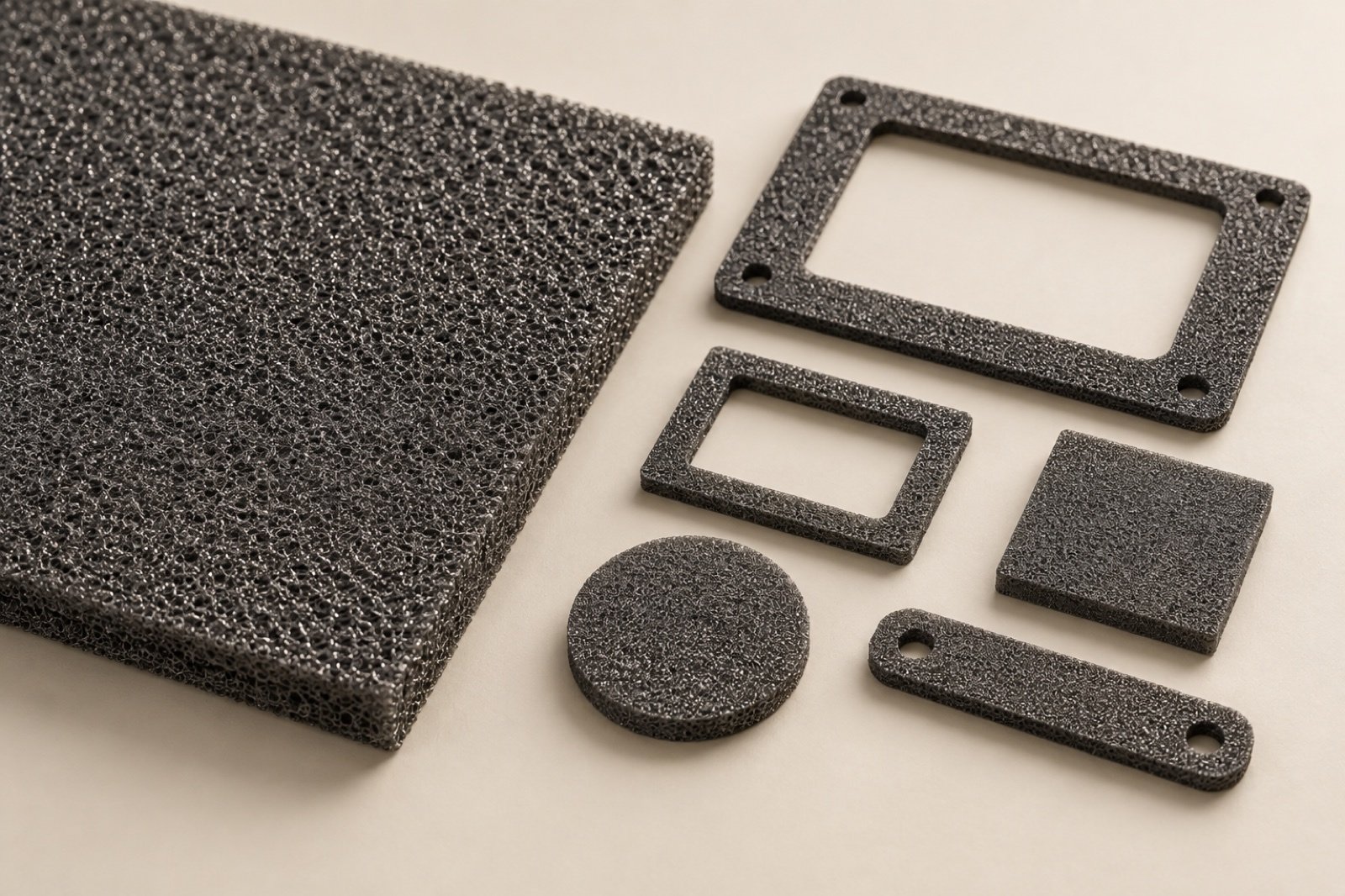
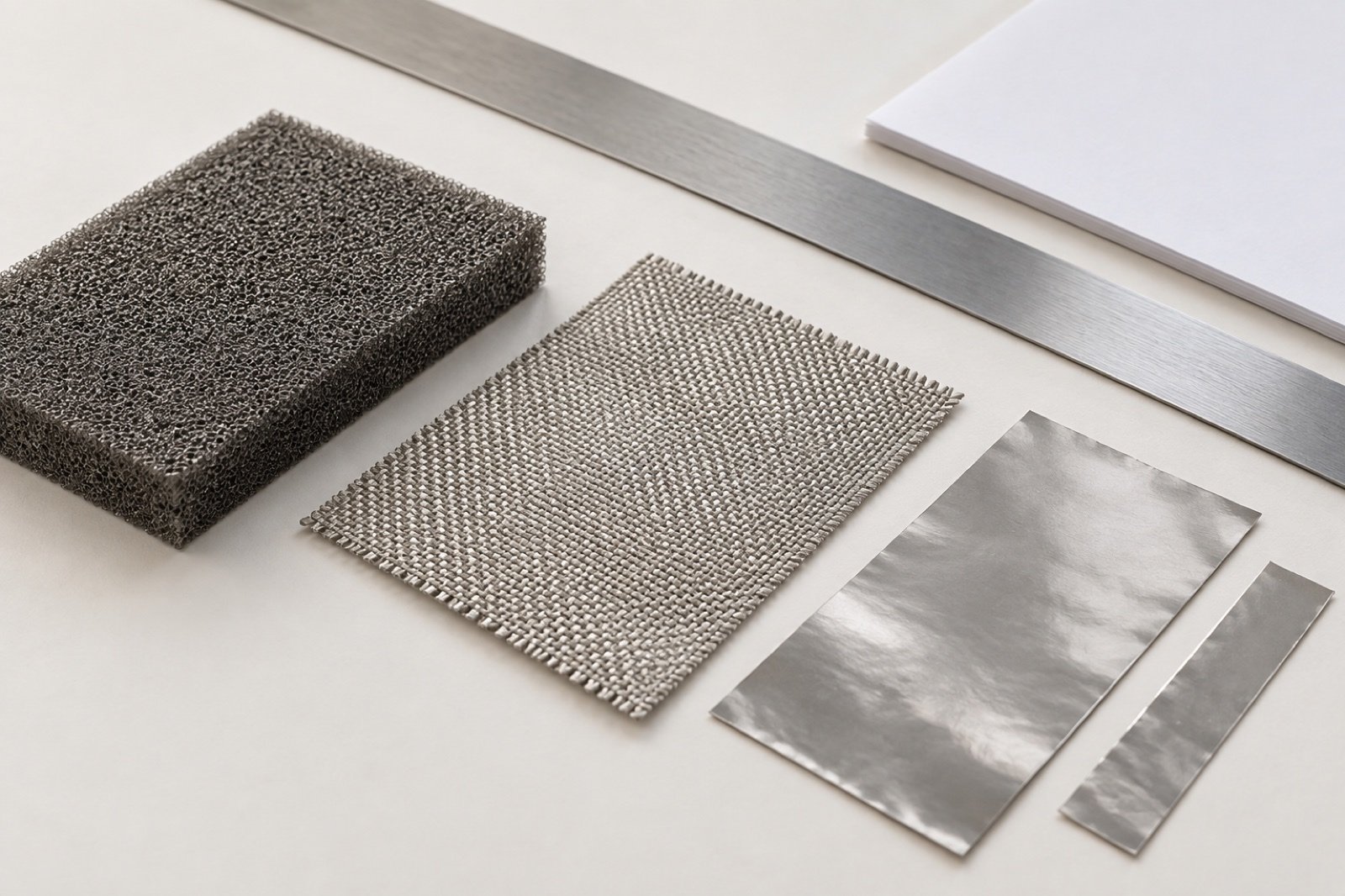
Conductive foam combines a compressible form with an electrically conductive surface or construction. A die-cut gasket or pad can be shaped around an enclosure interface, a contact point or a local grounding path. Material construction and contact geometry must be evaluated together; the term conductive foam alone does not establish shielding performance.
COMPONENT FORMS
Typical Forms for Conductive Foam Die-Cut Parts
The contact path and compression space determine the useful shape.
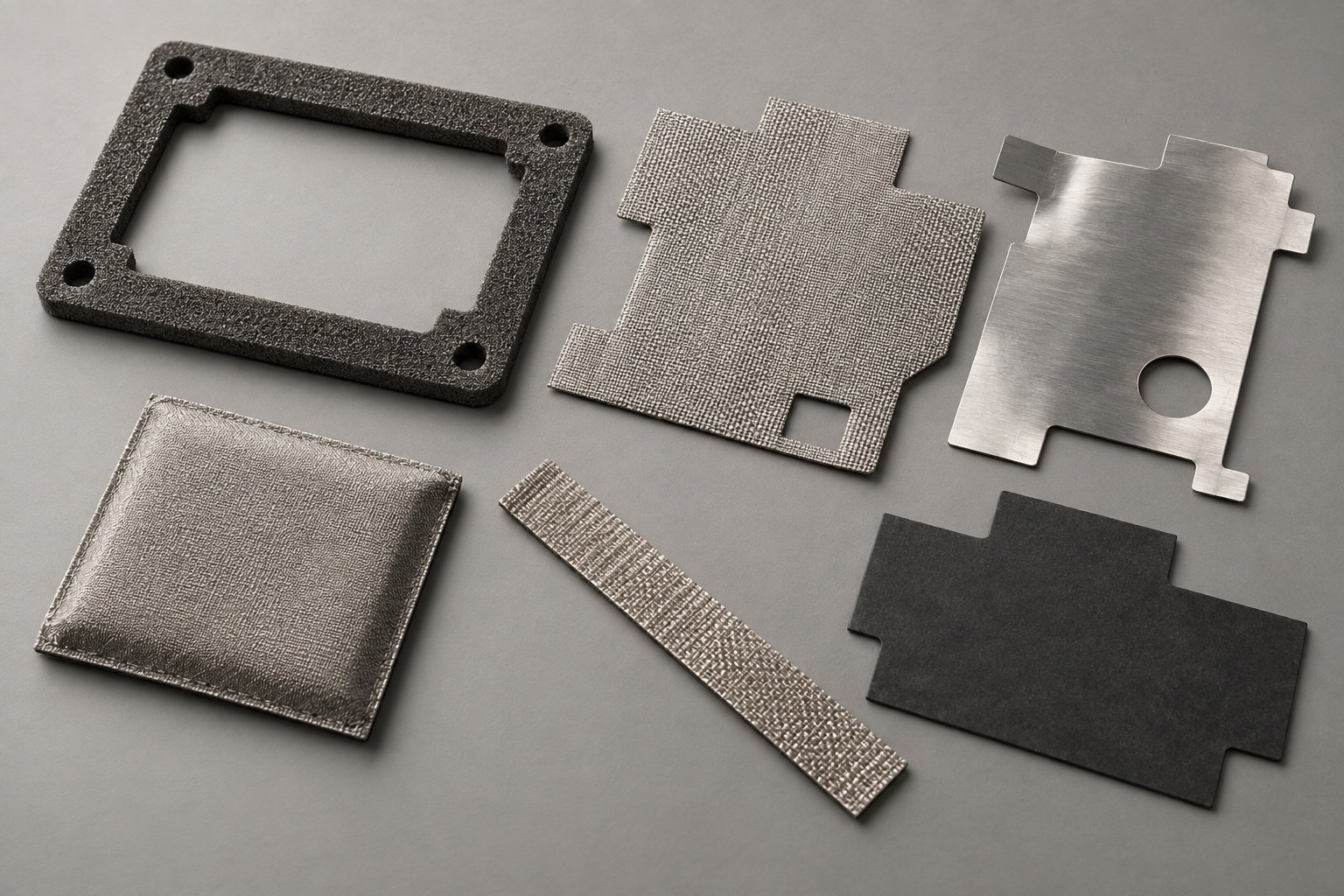
Conductive foam gaskets
Profiles at enclosure contact paths.
Conductive foam pads
Local compressible contact pieces.
Shielding frames
Open-center shapes around openings.
Grounding interface parts
Shapes placed between specified contact surfaces.
Adhesive-backed foam
Conductive foam with a reviewed placement layer.
MATERIAL OPTIONS
Construction determines contact behavior
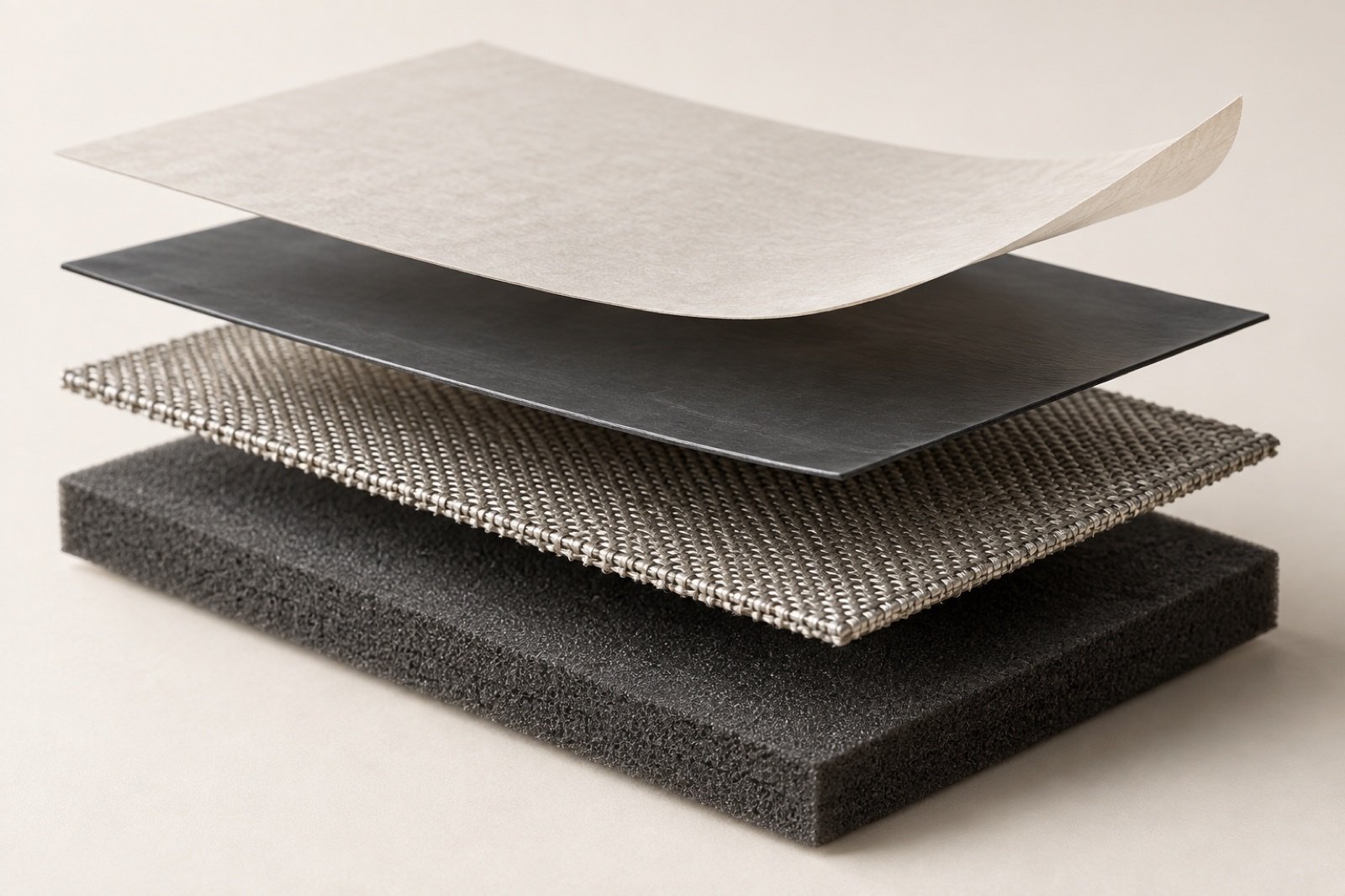
The conductive foam construction, surface finish, compressibility and optional adhesive backing require project-level review. Specify the mating surfaces and how electrical contact is intended to occur. Material and shielding values must come from the selected material data and application validation.
- Project-specified conductive foam
- Optional adhesive-backed construction
- Compatible liner where specified
ENGINEERING CONSIDERATIONS
Design factors for Conductive Foam Die-Cut Parts
Geometry, compression and electrical contact are linked.
Contact location
Define the conductive path and mating surfaces.
Compression space
Provide the available gap and assembly constraints.
Backing & orientation
Identify where adhesive can be used without obstructing contact.
MANUFACTURING CAPABILITIES
Manufacturing path for Conductive Foam Die-Cut Parts
Cutting establishes contact geometry; any layered construction is reviewed separately.
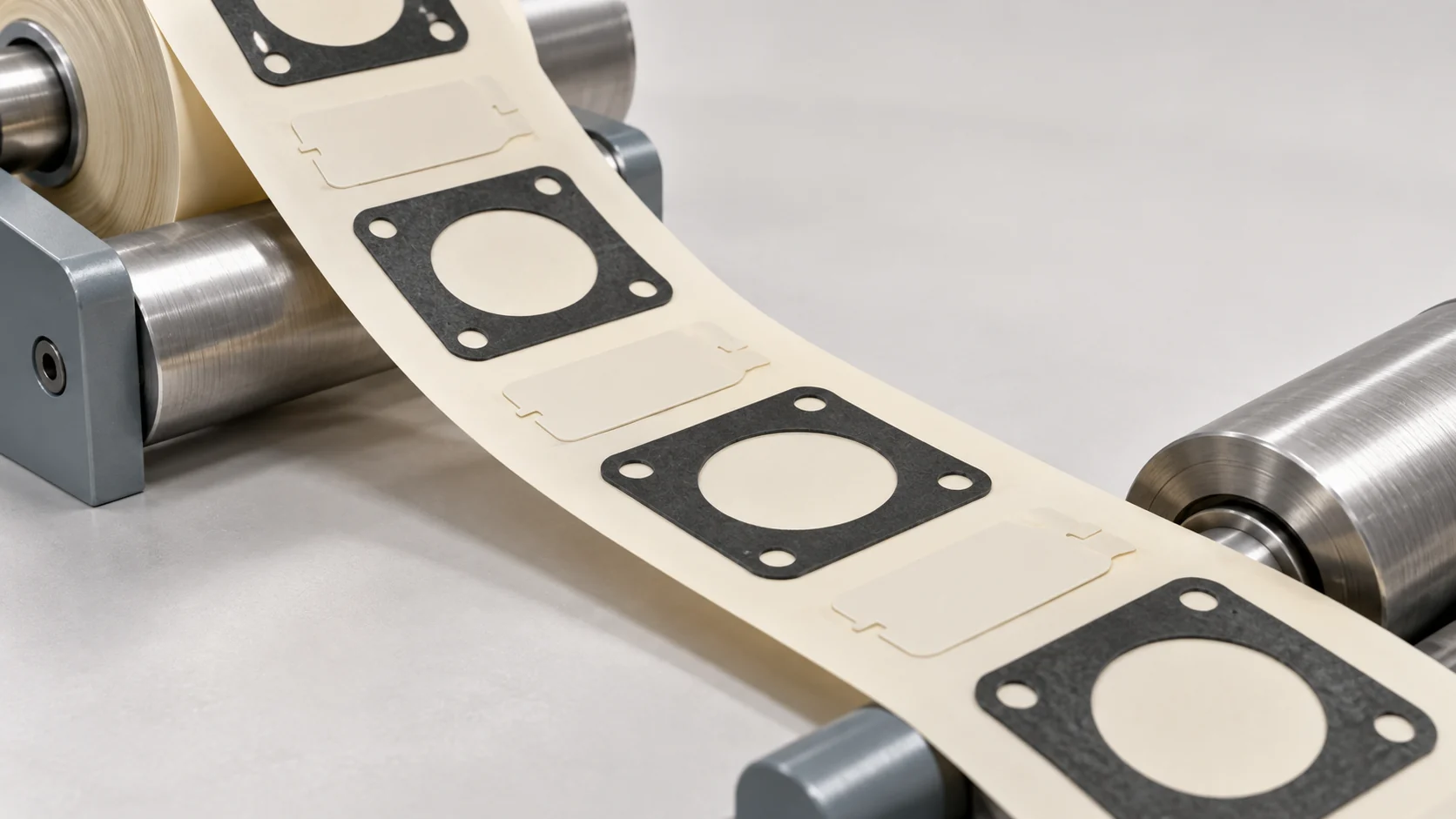
Precision Die Cutting
Profile, openings and critical cut features are reviewed against the material and drawing.
Lamination & Bonding
Adhesive or other specified layers are evaluated as part of the construction.
Quality & Tolerance Control
Material, dimensions and visible construction are checked to agreed project criteria.

APPLICATIONS
Equipment contexts for Conductive Foam Die-Cut Parts
Conductive foam can be considered at selected power and control-equipment interfaces.
QUALITY / VERIFICATION
Verify the specified contact construction
Confirm material identity, cut profile and intended contact faces against the drawing. Dimensional and visual inspection can check geometry and visible construction. Shielding or electrical performance is not inferred from these checks and needs project-specific criteria.
- Material construction confirmation
- Contact-face and profile review
- Dimensional and visual inspection
FAQ
Conductive Foam Die-Cut Parts FAQs
Answers about construction, drawings and project requirements.
What makes conductive foam different from ordinary foam?
Its specified construction is intended to provide an electrical contact path as well as compliance. Actual performance depends on the material and assembly.
Can a conductive foam gasket be adhesive-backed?
A backing can be considered for placement if it does not interfere with the intended conductive contact surfaces.
How is the contact path defined?
Provide the mating surfaces, enclosure geometry, available compression space and grounding or shielding objective.
Are shielding values available for every part?
No universal value applies. Material data and the finished assembly need project-specific evaluation.
Can frames and pads be cut from conductive foam?
Gaskets, pads and frames can be reviewed from a drawing and selected material specification.
What is needed for a quote?
Send a drawing, material specification if known, contact surfaces, gap, backing need, application and estimated quantity.
START A PROJECT
Have a Conductive Foam Die-Cut Parts Project?
Send us your drawing, material specification if available, dimensions, quantity and application requirements for review.
Request a Quote